
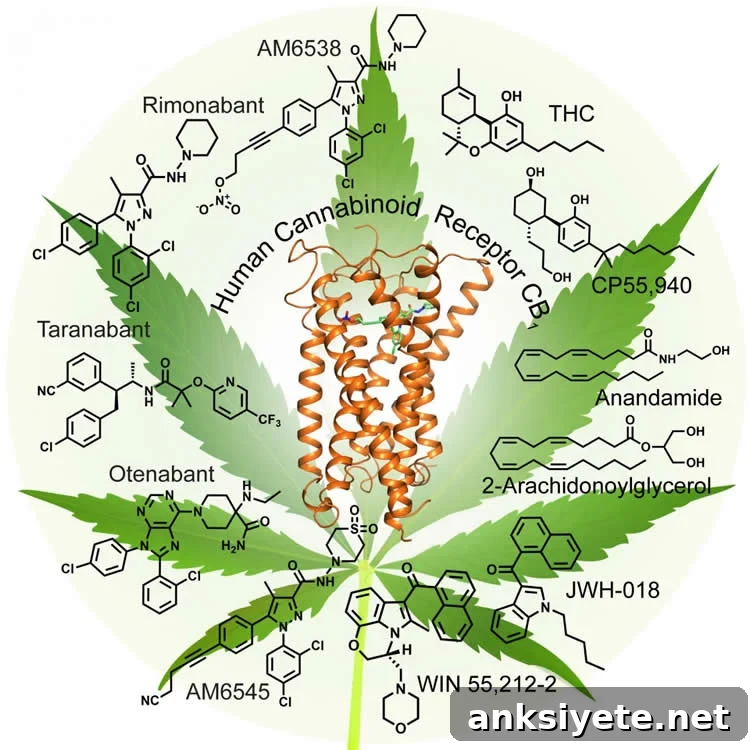
Summary: A new study reveals how THC binds to cannabinoid receptor 1 in the brain.
Source: Cell Press.
Researchers have produced the most detailed view yet of the receptor responsible for the psychoactive effects of marijuana. Published October 20 in Cell, the three-dimensional structure of the human cannabinoid receptor 1 (CB1) shows how THC and related molecules fit into the receptor embedded in the surface of many nerve cells. This structural insight helps explain why some drug designs intended to mimic cannabis’ therapeutic effects can produce unexpected side effects, and it lays the groundwork for safer, more targeted therapies that act on CB1.
“With growing marijuana use and changing legislation, it’s essential to understand how THC—the primary psychoactive component of Cannabis sativa—and synthetic cannabinoids interact with CB1,” says co-author Raymond Stevens, Professor at the iHuman Institute, ShanghaiTech University, and Provost Professor of Biological Sciences and Chemistry at the University of Southern California. “Having the receptor structure allows us to see how small changes to a molecule can dramatically alter its effects.”
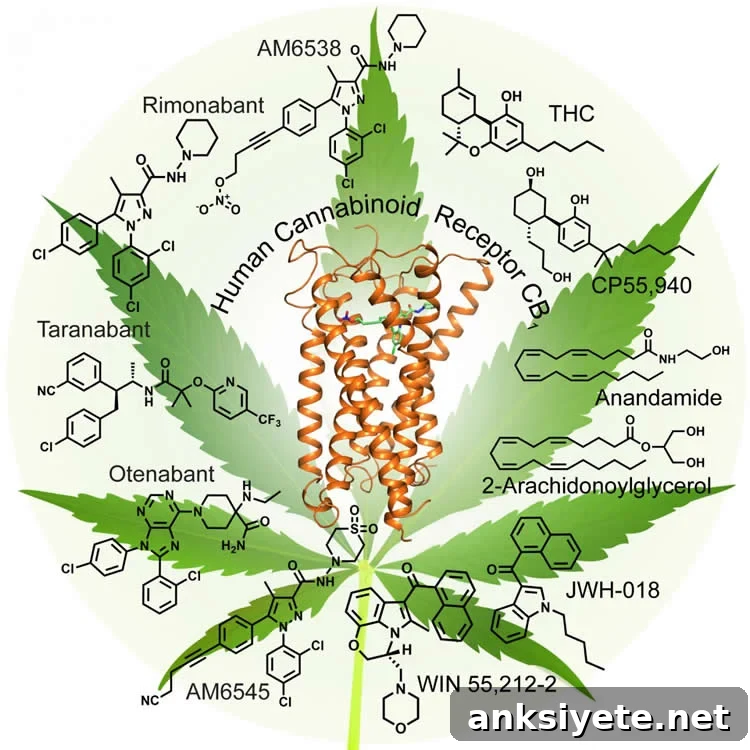
Understanding the CB1 structure helps explain why small chemical modifications to THC or to synthetic cannabinoids can produce very different biological outcomes. Some synthetic compounds designed to mimic THC have caused severe adverse reactions and are now frequently implicated in emergency-room visits. By comparing how natural and synthetic molecules fit into the CB1 binding pocket, scientists can trace which structural features cause desired therapeutic effects and which may lead to harmful side effects.
CB1 is the main target of Δ9-tetrahydrocannabinol (THC). It is activated by naturally occurring endocannabinoids and plays roles in pain perception, mood, appetite, and other physiological processes. Because of these connections, CB1 has been investigated as a target for managing pain, inflammation, obesity, and substance use disorders. However, earlier attempts to exploit CB1 pharmacologically produced unpredictable psychiatric side effects in some patients, including anxiety and depression, which led to withdrawal of certain drugs. The new structure helps explain how antagonist and agonist molecules differently influence receptor behavior and downstream signaling.
“Cannabinoids offer both therapeutic promise and potential danger,” says co-leader Zhi-jie Liu of the iHuman Institute. “Resolving the receptor’s structure is a crucial step in turning basic science into safer, more effective medicines.”
Funding: This research was supported by the iHuman Institute at ShanghaiTech University; the National Laboratory of Biomacromolecules at the Institute of Biophysics, Chinese Academy of Sciences; the Center for Drug Discovery at Northeastern University; the Departments of Biological Sciences and Chemistry at the University of Southern California; the Departments of Molecular Therapeutics and Neuroscience at The Scripps Research Institute; the University of California, San Diego; the Shanghai Institute of Materia Medica; the GPCR Consortium; and the National Institute on Drug Abuse, National Institutes of Health.
Image credit: Yekaterina Kadyshevskaya, Stevens Laboratory, USC.
Original research: The study, “Crystal Structure of the Human Cannabinoid Receptor CB1,” reports a 2.8 Å crystal structure of human CB1 bound to a stabilizing antagonist called AM6538. The structural data, combined with functional assays and molecular modeling, reveal the antagonist binding site and predict how THC and synthetic cannabinoids occupy and activate the receptor. The structure provides a detailed map of the binding pocket that can guide rational drug design targeting CB1.
Crystal Structure of the Human Cannabinoid Receptor CB1 — Highlights
- AM6538 is described as a stabilizing, tight-binding antagonist of CB1.
- The crystal structure of human CB1 in complex with AM6538 has been determined at high resolution.
- Molecular docking and modeling predict how THC and synthetic cannabinoids bind to CB1.
- Detailed resolution of the binding pocket opens a path for rational, structure-based CB1 drug design.
Summary
Cannabinoid receptor 1 (CB1) is the primary receptor for Δ9-tetrahydrocannabinol (THC). CB1 mediates many of the psychoactive and physiological effects of cannabis and is involved in processes that include pain signaling, appetite, and mood regulation. The presented 2.8 Å crystal structure of human CB1 bound to the antagonist AM6538 reveals key receptor features and critical interactions that stabilize antagonist binding. Integrating the structural results with functional studies and molecular modeling provides insight into how endogenous ligands, THC, and synthetic cannabinoids engage the receptor. These insights improve our molecular understanding of CB1 function and provide new opportunities for designing therapeutics that target CB1 with improved safety and efficacy.
Citation (original paper): Tian Hua et al., “Crystal Structure of the Human Cannabinoid Receptor CB1,” Cell, published online October 20, 2016. DOI: 10.1016/j.cell.2016.10.004