
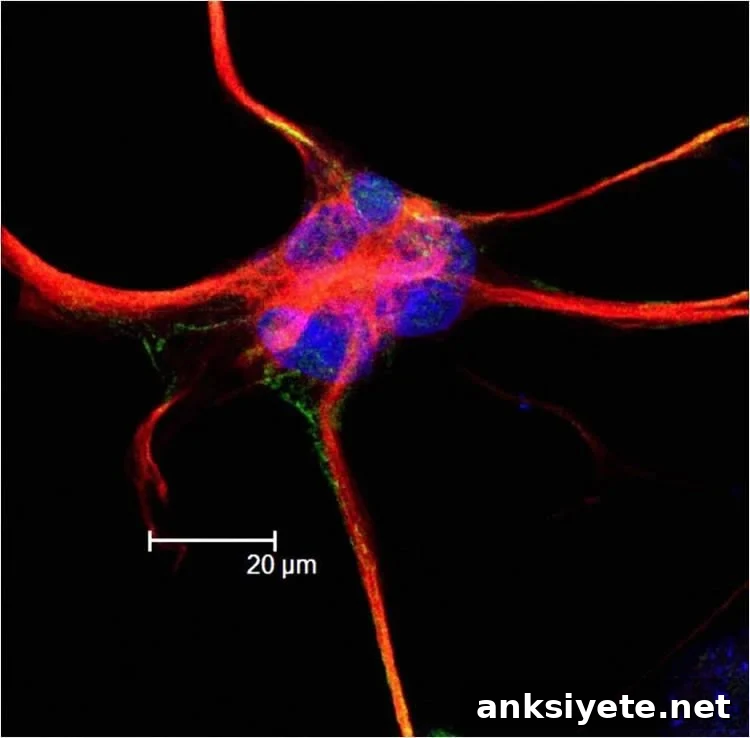
Brain cells called astrocytes play a central role; a phase 3 trial of a urate-boosting treatment will begin in 2016.
Researchers studying whether raising blood levels of the antioxidant urate can slow Parkinson’s disease progression report that urate’s protective effects go beyond acting as a simple antioxidant. In a paper published online in Neurobiology of Disease, investigators from Massachusetts General Hospital (MGH) show that urate prompts astrocytes—specialized star-shaped brain cells—to trigger a major antioxidant pathway. That pathway, controlled by the protein Nrf2 and involving the antioxidant glutathione, is implicated in multiple neurodegenerative disorders. A National Institute of Neurological Disorders and Stroke (NINDS)-funded phase 3 trial of a urate-elevating therapy will begin enrolling patients next year, led by the senior author of the current study.
“Although urate’s antioxidant properties are well known, other direct antioxidants such as vitamin E have not proven effective in altering Parkinson’s disease course in clinical trials,” says Michael Schwarzschild, MD, PhD, of the MassGeneral Institute for Neurodegenerative Disease. Schwarzschild is the senior author of the new paper and principal investigator of the ongoing urate clinical program. “Our new findings point to a more complex, cell-mediated mechanism of neuroprotection—one that relies on astrocytes and activation of the Nrf2–glutathione pathway—offering a plausible explanation for why urate may be different from simple antioxidant supplements.”
Earlier epidemiological work found that people with naturally higher urate levels have a lower risk of developing Parkinson’s disease, and subsequent clinical and preclinical studies by Schwarzschild and colleagues suggested that higher urate is associated with slower disease progression. Prior laboratory results also hinted that astrocytes were necessary for urate’s protective actions. The present study was designed to clarify how astrocytes contribute to urate-mediated neuroprotection.
In a series of controlled cell-culture experiments, the team treated astrocytes with urate and then tested whether fluid conditioned by those cells protected dopamine-producing neurons—the same type of cells that degenerate in Parkinson’s—from oxidative injury. The conditioned medium from urate-treated astrocytes protected dopaminergic cells. Chemical analysis of that medium revealed elevated levels of glutathione, a major cellular antioxidant regulated by the Nrf2 transcription factor. When glutathione was depleted from the conditioned medium, the protective effect was substantially reduced, supporting the view that astrocyte-released glutathione is an important mediator of urate’s benefit in these models.
The authors confirmed that urate increased astrocytic Nrf2 pathway activation, linking urate exposure to enhanced glutathione production and release. Schwarzschild emphasizes that the next experimental step is to determine whether Nrf2 activation in astrocytes is essential for urate’s neuroprotective effects in animal models of Parkinson’s disease—data that would strengthen the rationale for the ongoing clinical trial.
The phase 3 trial will evaluate inosine, a nutritional supplement that the body converts to urate. This study follows a phase 2 trial led by Schwarzschild and colleagues at Harvard School of Public Health and the University of Rochester Medical Center. The 2013 phase 2 study—supported by the Michael J. Fox Foundation for Parkinson’s Research—showed that the selected inosine doses safely raised urate levels in the majority of recently diagnosed Parkinson’s patients without serious adverse events over two years.
The Study of Urate Elevation in Parkinson’s Disease (SURE-PD3) is a double-blind, placebo-controlled phase 3 trial planned to enroll about 270 people with early-stage Parkinson’s who do not yet require symptomatic drug therapy. Over two years, the study will test whether moderate urate elevation achieved with inosine slows clinical progression. The trial will run at roughly 60 Parkinson Study Group sites across the United States, with MGH serving as clinical coordinating center and the University of Rochester Medical Center as data coordinating center. The NINDS is supporting the trial with funding of up to $26 million. Additional resources from the Michael J. Fox Foundation will fund clinical pharmacology work to examine potential interactions between inosine and common foods or medications, with the goal of maximizing participant safety.
“Advancing to phase 3 shows that inosine is among a small set of therapeutic candidates for Parkinson’s with enough prior evidence of potential efficacy and acceptable safety to justify a large, definitive trial,” Schwarzschild notes. He also stresses the importance of careful volunteer recruitment and rigorous trial conduct, since only a well-executed phase 3 study can establish whether inosine truly slows disease progression. Schwarzschild cautions patients and caregivers against using inosine outside of clinical trials because excessive urate levels can cause adverse effects such as kidney stones and gout.
Information for people interested in participating in the phase 3 trial—individuals with early-stage Parkinson’s who are not yet on symptomatic medication—will be posted early next year on publicly available clinical trial registries and trial-matching services.
Rachit Bakshi, PhD, MassGeneral Institute for Neurodegenerative Disease (MGH-MIND), is the lead and corresponding author of the Neurobiology of Disease paper. Additional co-authors include Hong Zhang, Robert Logan, Yuehang Xu, Xiqun Chen, MD (MGH-MIND), and Ila Joshi, PhD (MGH Dermatology).
Funding: This research was supported by a Department of Defense grant (W81XWH-11-1-0150) and NIH grants K24-NS060991 and R21-NS084710.
Source: Terri Ogan – Mass General
Image Source: Image credited to Nathan S. Ivey (illustrative).
Original Research: The study appears in Neurobiology of Disease.