
Specific Striosome Neurons Enable Mice to Learn to Avoid Negative Experiences
Summary: Scientists identified a genetically defined group of neurons in the striosome that enable mice to learn to avoid punishment and other aversive outcomes.
Source: Cold Spring Harbor Laboratory
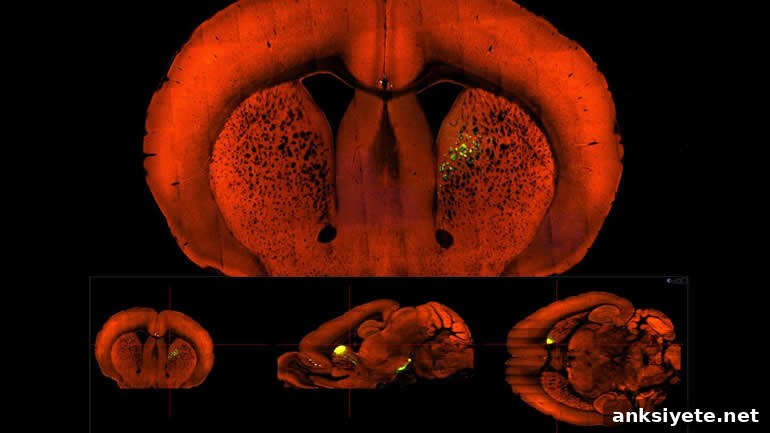
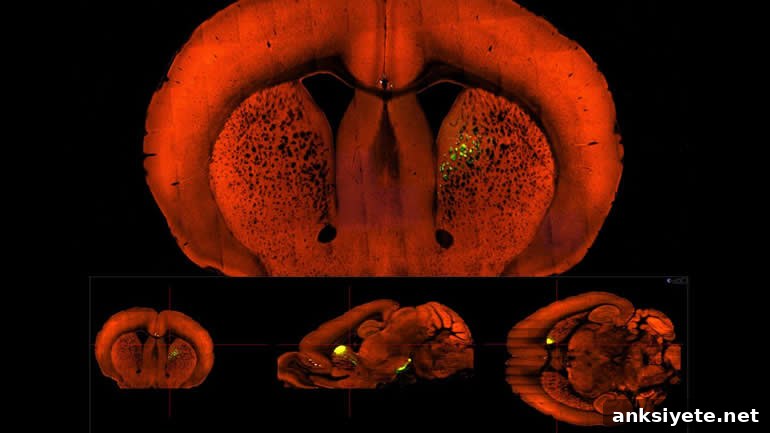
Cold Spring Harbor Laboratory (CSHL) researchers have discovered a set of neurons in the mouse brain that are essential for learning to avoid negative experiences. These cells reside in the striosome, a compartment of the dorsal striatum that helps regulate motivational drives that influence behavior.
Until now, the striosome was mostly associated with positive reinforcement and reward-seeking. The new findings show that the same region contains distinct neurons dedicated to negative-reinforcement learning, revealing a more complex and compartmentalized role for the striosome in processing motivation. Understanding this circuitry is important because disruptions in motivation processing are associated with psychiatric conditions such as depression and addiction, according to Bo Li, the CSHL professor who led the study.
“These neurons are necessary for normal motivational balance — both the drive to pursue rewards and the drive to avoid harm,” Li explains. “That suggests striosomal circuits could be involved in disorders where either reward sensitivity or punishment sensitivity goes awry.” The team published their results in the journal Cell.
The striosome is located within the dorsal striatum, but its boundaries are defined by molecular markers rather than clear anatomical separations, which has made functional studies difficult. Li’s group identified the gene Tshz1 as a reliable marker for a subset of striosomal neurons. By using Tshz1 as a genetic tag, they were able to trace, monitor, and manipulate these neurons selectively in mice, allowing a detailed examination of their role in behavior.
The experiments, conducted in collaboration with colleagues at Stanford University and the Howard Hughes Medical Institute’s Janelia Research Campus, demonstrated that Tshz1-expressing neurons in the striosome are required for mice to learn associations that predict unpleasant outcomes, such as certain places or sounds paired with aversive stimuli. In contrast, other striosomal neurons — identified by different molecular markers — mediate reward learning. This functional segregation indicates that the striosome contains at least two specialized cell types supporting opposing motivational processes.
Li emphasizes the adaptive importance of this division of labor. If an animal were insensitive to punishment, it could repeatedly expose itself to danger; if it were insensitive to reward, it might fail to seek resources essential for survival. The discovery that distinct striosomal neurons drive either avoidance or reward-seeking clarifies how the brain balances these competing motivational demands.
Beyond identifying the cells, the researchers characterized their functional properties. Tshz1+ neurons belong to the direct pathway of the striatum and are activated by punishment-related events. When stimulated, these neurons promote aversion and suppress movement, and their activity encodes anticipation of punishment and motivation to avoid it. Conversely, blocking these neurons selectively impaired punishment-based learning while leaving reward learning and general movement intact. Other striosomal neurons marked by prodynorphin (Pdyn) were implicated in positive reinforcement, underscoring the compartmentalized organization.
These results broaden our understanding of striatal function by revealing a genetically defined circuit within the direct pathway that specifically mediates negative reinforcement. Mapping how these neurons interact with other motivation-processing regions will help pinpoint the circuits that malfunction in psychiatric conditions, potentially pointing the way to more targeted therapies.
About this neuroscience research article
Source:
Cold Spring Harbor Laboratory
Contacts:
Sara Roncero-Menendez – Cold Spring Harbor Laboratory
Image Source:
The image is credited to Allen Brain Atlas, Mouse Brain Connectivity Atlas, Dorsal Striatum.
Original Research: Closed access.
Article: “A Genetically Defined Compartmentalized Striatal Direct Pathway for Negative Reinforcement” by Bo Li et al., published in Cell.
Abstract
A Genetically Defined Compartmentalized Striatal Direct Pathway for Negative Reinforcement
Highlights
- Tshz1 marks a population of striatal direct pathway medium spiny neurons (dMSNs).
- Tshz1-expressing (Tshz1+) dMSNs are localized within the striosome compartment.
- Tshz1+ striosomal dMSNs represent punishment-related signals and drive negative reinforcement.
- Pdyn labels a different population of striosomal dMSNs that mediate positive reinforcement.
Summary
The striosome of the dorsal striatum has long been linked to reinforcement learning and motivation, but the specific contributions of striosomal neurons were unclear. This study identifies a genetically defined subset of striosomal neurons that express Teashirt family zinc finger 1 (Tshz1) and belong to the direct pathway. These Tshz1+ neurons are necessary for aversive learning: they are preferentially excited by punishment rather than reward, they encode anticipation of aversive events and motivation to avoid them, and their activation produces aversion and movement suppression. Inhibiting these neurons selectively disrupts punishment-based learning without affecting reward learning or general movement. These findings reveal a compartmentalized direct pathway specialized for negative reinforcement, expanding classic models of striatal function.