
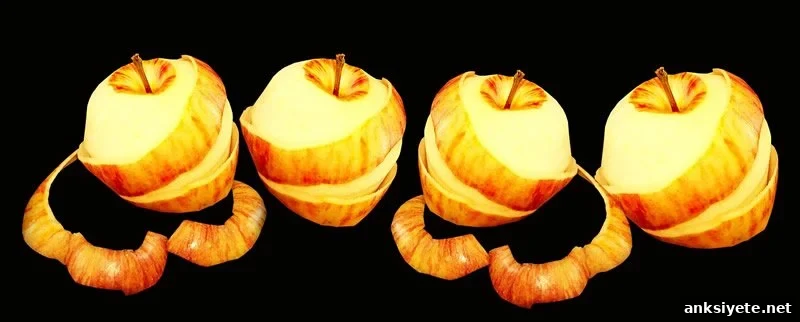
Summary: Ursolic acid, a natural compound found in the peels of fruits like apples and prunes and in several herbs, reduced further nerve damage and promoted remyelination in mouse models of multiple sclerosis (MS). The study shows ursolic acid suppresses Th17 immune cells, important drivers of the autoimmune response in MS, while also encouraging cells that rebuild myelin.
Source: Thomas Jefferson University
Multiple sclerosis (MS) is a disabling neurological condition marked by progressive muscle weakness and paralysis. Existing therapies can slow disease progression when started early, but they do little to repair damage already present in neurons. New preclinical research indicates that ursolic acid, a triterpenoid abundant in fruit peels and certain herbs, can both limit further neuronal injury and stimulate regeneration of the myelin sheath that insulates nerve fibers.
“Although these results are preliminary and based on animal models, it is encouraging to find a compound that appears to both halt injury and promote repair in MS-like disease,” says Guang-Xian Zhang, PhD, co-senior author and Professor of Neuroscience at the Sidney Kimmel Medical College at Thomas Jefferson University. The study was published in the Proceedings of the National Academy of Sciences (PNAS) on April 6.
Co-senior author A.M. Rostami, MD, PhD, chair of the Department of Neurology at the Vickie and Jack Farber Institute for Neuroscience – Jefferson Health, emphasizes caution: “We must still conduct thorough safety testing of ursolic acid. While this compound is a promising lead, moving to human trials requires careful preclinical evaluation.”
The investigators used a purified, laboratory-grade form of ursolic acid in mice that already had established MS-like disease. “Many prior studies focus on the acute phase of disease, when symptoms are first developing or peaking,” explains Dr. Zhang. “We specifically tested efficacy in chronic disease, after long-standing central nervous system damage has already occurred.”
The team used a well-characterized mouse model that develops a slow, progressive form of experimental autoimmune encephalomyelitis (EAE), which mimics human MS. In this model, animals typically enter an acute phase with partial paralysis around day 12, when current medications are most effective. Instead of treating during that early window, the researchers began oral ursolic acid treatment at day 60—well into the chronic stage, when demyelination and axonal damage are established.
Mice received daily treatment for 60 days. Improvements were evident by about day 20 of therapy: animals that were previously paralyzed regained the ability to walk, albeit with residual weakness. “This is not a cure, but if a comparable effect occurred in people it could significantly improve quality of life,” says Dr. Zhang. “Most importantly, we observed reversal of neurological deficits at a late disease stage, which is uncommon with current agents.”
To understand how ursolic acid produced these benefits, the researchers examined immune and glial cell responses. They found that ursolic acid suppressed Th17 cells, a subset of T helper cells implicated in MS pathogenesis. At the same time, the compound promoted maturation of oligodendrocyte precursor cells into myelin-producing oligodendrocytes—cells that are depleted in MS and often fail to mature during chronic disease.
“The maturation of oligodendrocyte precursors is likely the key to the observed functional recovery,” Dr. Zhang notes. “By helping dormant precursor cells differentiate into new oligodendrocytes, ursolic acid appears to enable remyelination and neural repair.”
Additional experiments supported a direct remyelinating effect: ursolic acid enhanced repair in a cuprizone-induced demyelination model and promoted oligodendrocyte maturation in brain slice cultures and in vitro systems. Mechanistic work suggests ursolic acid induces the promyelinating neurotrophic factor CNTF in astrocytes through PPARγ/CREB signaling, and it also upregulates myelin-related genes during oligodendrocyte maturation via PPARγ activation. These dual actions—antiinflammatory immunomodulation plus direct promotion of remyelination—help explain the compound’s benefit in chronic disease models.
The authors stress that safety testing is a crucial next step. Although ursolic acid is available as a dietary supplement, concentrated or high-dose preparations could carry toxicity risks. “Several preclinical studies remain necessary before first-in-human trials can begin,” says Dr. Rostami. “Nonetheless, these findings support further investigation of ursolic acid as a potential oral therapy that combines immunomodulation with neural repair, particularly for chronic-progressive MS.”
Funding: This study was supported by the National Institutes of Health, USA (Grants NS099594 and AI135601). Drs. Yuan Zhang and Xing Li received partial support from Chinese foundations (Grants 81771345, 31970771 and KF2019001).
About this neuroscience research article
Source:
Thomas Jefferson University
Media Contacts:
Edyta Zielinska – Thomas Jefferson University
Image Source:
The image is in the public domain.
Original Research: Closed access
“A dual effect of ursolic acid to the treatment of multiple sclerosis through both immunomodulation and direct remyelination”. Yuan Zhang, Xing Li, Bogoljub Ciric, Mark T. Curtis, Wan-Jun Chen, Abdolmohamad Rostami, and Guang-Xian Zhang. PNAS. doi: 10.1073/pnas.2000208117.
Abstract
A dual effect of ursolic acid to the treatment of multiple sclerosis through both immunomodulation and direct remyelination
Most current MS therapies primarily modulate the immune system and offer limited neuroregenerative benefit, making them less effective during the chronic phase of disease. In this study, multiple in vivo and in vitro approaches demonstrate that ursolic acid (UA), a naturally occurring antiinflammatory triterpenoid, not only reduces inflammation but also directly promotes oligodendrocyte maturation and CNS myelin repair. Oral UA treatment decreased disease severity, central nervous system inflammation, and demyelination in EAE. Notably, remyelination and neural repair occurred even when treatment began on day 60 post-immunization, a stage characterized by extensive demyelination and axonal injury. UA also enhanced remyelination in a cuprizone demyelination model and in organotypic brain slice cultures and promoted oligodendrocyte maturation in vitro, supporting a direct myelinating effect. Mechanistically, UA induced the promyelinating factor CNTF in astrocytes via PPARγ/CREB signaling and upregulated myelin-associated gene expression during oligodendrocyte maturation through PPARγ activation. These results indicate that UA has potential as an oral agent that combines antiinflammatory activity with neural repair, particularly for chronic-progressive MS.
Feel free to share this multiple sclerosis news.