
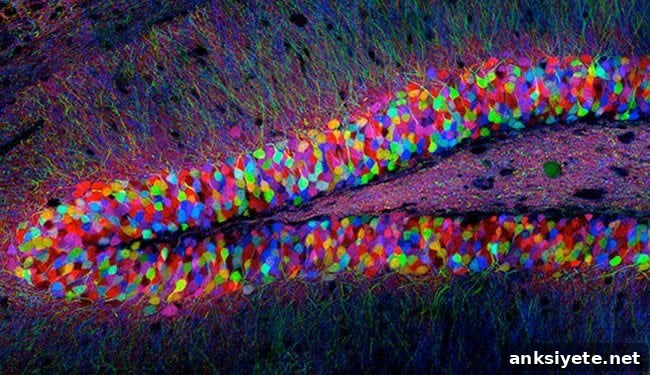
Simply activating a tiny number of neurons can conjure an entire memory.
Memories of joy or fear — the memory of a first kiss, or the jolt of a bump in the night — leave physical traces in the brain that can later be re-experienced with time, place and sensory detail. Neuroscientists refer to these physical traces as memory engrams: networks of neurons whose coordinated activity encodes a specific past experience.
But do engrams exist as concrete clusters of cells, or are they just abstract descriptions of memory processes? A new study from MIT provides direct evidence that memories can be stored in precise neurons within the hippocampus and that targeted reactivation of a small fraction of those neurons is sufficient to trigger recall. The research used optogenetics to selectively label and then stimulate neurons involved in a single memory, demonstrating that minimal, highly specific physical activation can reproduce a full episodic memory experience in an animal model.
In the study’s lead analysis, Susumu Tonegawa, Picower Professor of Biology and Neuroscience at MIT, notes that this approach is a modern, rigorous test of an idea first observed by early 20th-century neurosurgeon Wilder Penfield, who found that stimulating small regions of the human hippocampus could evoke vivid recollections. While clinicians had long suspected that focal brain stimulation can bring back memories, the MIT work provides controlled experimental proof that directly activating the hippocampal cells active during learning is sufficient to produce memory recall.
Shedding light on the matter
Optogenetics—the technique of genetically engineering neurons to express light-sensitive proteins and then using light to control their activity—allowed the researchers to test the engram hypothesis with cellular precision. The team first identified neurons in the dentate gyrus region of the hippocampus that became active when mice explored a novel environment. They then linked the genetic markers of those active cells to the gene for channelrhodopsin-2 (ChR2), a light-activated protein used in optogenetic stimulation.
With ChR2 selectively expressed in the neurons engaged during the learning episode, the researchers implanted tiny optical fibers above the dentate gyrus to deliver brief pulses of light. Mice were placed in an environment and, after a short period of exploration, received a mild foot shock. The neurons activated during that fear-conditioning experience became tagged with ChR2, labeling the physical network associated with that specific fear memory.
Later, when the same mice were placed in a completely different environment and only the ChR2-tagged cells were activated by light, the animals displayed defensive freezing behavior. This freezing response indicated that the mice were recalling the fearful experience despite the absence of the original context or sensory cues—an artificial recall induced solely by reactivating the engram cells.
False memory
Because the behavioral response was produced by artificially reactivating the neurons tied to the fear episode, the experiment demonstrates that memory recall can be triggered by directly stimulating a defined population of hippocampal neurons. In other words, reactivating the engram produced an internally generated perception of the past event. As co-authors on the study explain, these results support the conclusion that even complex, episodic memories are rooted in the physical machinery of the brain and can be driven by highly specific cellular activation.
The study also highlights how targeted manipulation of engram cells can create a kind of “false” or artificially induced recall, in which an animal behaves as if it is experiencing a prior event that has not actually occurred in the current surroundings. That finding clarifies how a small subset of neurons can carry enough information to reconstruct an experience and influence behavior.
Researchers and outside experts have noted the importance of combining modern technologies to address fundamental neurobiology questions. Demonstrating that reactivating the same cells active during learning can reproduce learned behavior is a milestone for understanding memory storage and recall in the hippocampus and for studying the neural basis of cognition.
Beyond basic science, this approach has potential applications in the study of memory-related disorders. Mapping the precise neural components of memory engrams and learning how their activity leads to recall could inform new strategies for investigating neurodegenerative diseases and neuropsychiatric conditions where memory function is impaired.
Notes about this optogenetics research article
Key contributors to this work include Karl Deisseroth of Stanford University (a pioneer in optogenetics) and Petti T. Pang, Corey B. Puryear and Arvind Govindarajan of the RIKEN-MIT Center for Neural Circuit Genetics at the Picower Institute for Learning and Memory at MIT. Funding for the research came from the National Institutes of Health and the RIKEN Brain Science Institute.
Contact: Cathryn Delude – Picower Institute for Learning and Memory
Source: MIT press release
Original Research: Abstract for “Optogenetic stimulation of a hippocampal engram activates fear memory recall” by Xu Liu, Steve Ramirez, Petti T. Pang, Corey B. Puryear, Arvind Govindarajan, Karl Deisseroth & Susumu Tonegawa in Nature