
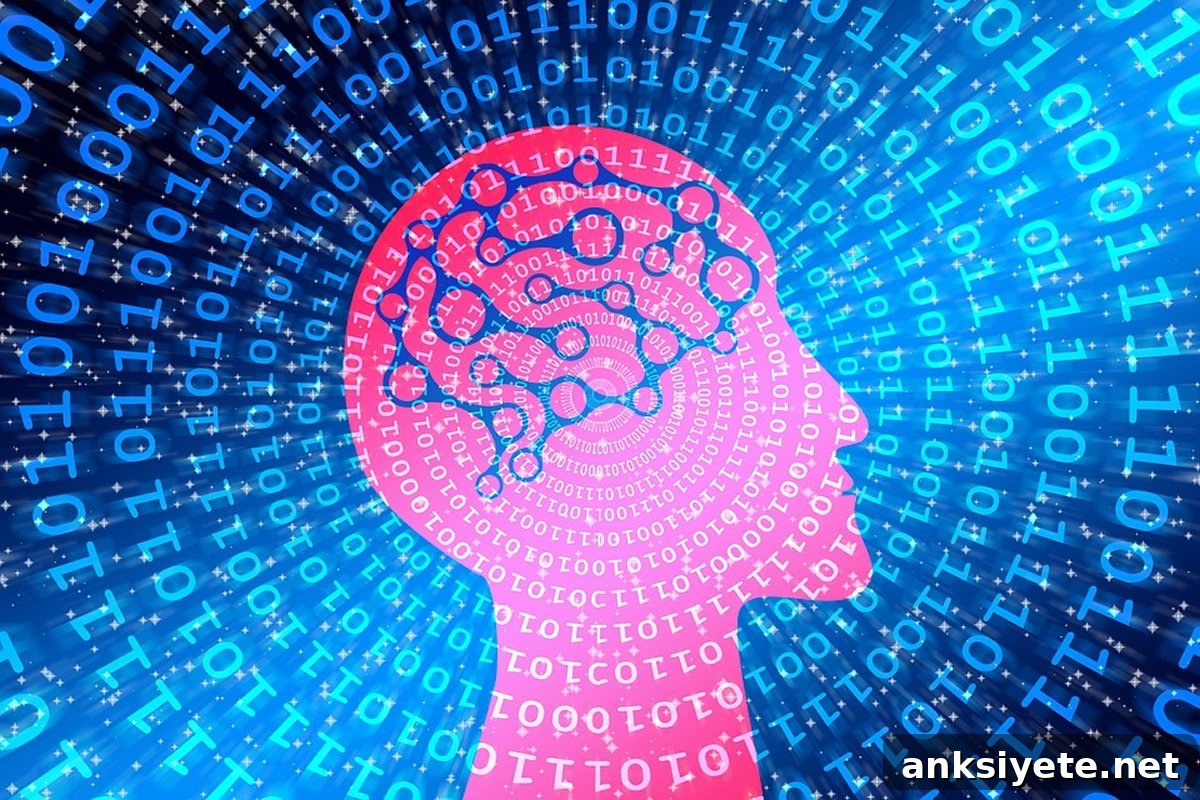
Summary: Artificial intelligence can now more reliably detect signs of depression by analyzing the sound and acoustic features of a person’s voice.
Source: University of Alberta
AI algorithms can now more accurately detect depressed mood using the sound of your voice, according to new research by University of Alberta computing scientists.
Researchers in the Department of Computing Science at the University of Alberta report improved performance in recognizing depressed mood from voice recordings. The study, led by Ph.D. student Mashrura Tasnim and Professor Eleni Stroulia, builds on previous findings that vocal timbre and other acoustic features can carry information about a speaker’s emotional state. By systematically evaluating and combining multiple machine learning approaches on established benchmark datasets, the team developed a methodology that boosts the accuracy of depression detection from speech.
The researchers describe a realistic user scenario in which a smartphone app passively or actively collects short voice samples as people speak in natural settings. That app, running locally on a user’s device, could extract acoustic indicators—such as pitch variation, energy, and spectral features—and apply a trained machine-learning model to track changes in mood over time. “Much like a step counter monitors your physical activity,” the team explains, “a voice-based indicator could help users and care providers observe trends in mood and detect early signs of depression.”
Current public health statistics cited in the study emphasize the potential reach and relevance of such tools: about 11 percent of Canadian men and 16 percent of Canadian women may experience major depression at some point in their lives. In addition, the report highlights that millions of Canadian youth are at heightened risk for developing depression during adolescence, underscoring the value of tools that can support monitoring and timely interventions.
Tasnim and Stroulia emphasize that their work focuses on improving the core technical capability—recognizing depression-related vocal patterns reliably in benchmark datasets—which is an important step before responsible deployment. The team’s approach combines multiple machine-learning algorithms and carefully selected acoustic features to reduce false positives and increase robustness across different speakers and recording conditions.
Potential applications for this technology include supporting mental health care teams by providing objective, longitudinal data to complement clinical assessments, or offering individuals a private way to reflect on mood patterns between appointments. The researchers also note that moving from laboratory results to real-world use requires attention to privacy, informed consent, ethics, and validation across diverse populations. Any practical application should prioritize user control, security of voice data, and transparent reporting of what the system can and cannot detect.
Source:
University of Alberta
Media Contact:
Katie Willis – University of Alberta
Image Source:
The image is in the public domain.
Original Research: The study was presented at the Canadian Conference on Artificial Intelligence.
Abstract below by Mashrura Tasnim and Eleni Stroulia.
Abstract
Detecting Depression from Voice
In this paper, we present our exploration of different machine-learning algorithms for detecting depression by analyzing the acoustic features of a person’s voice. We have conducted our study on benchmark datasets, in order to identify the best framework for the task, in anticipation of deploying it in a future application. Our experiments compare multiple classifiers and feature sets, and focus on creating a robust pipeline that can generalize across speakers and recording environments. Improving detection accuracy on standard datasets is an essential preliminary step toward responsible, practical tools that could support mental health monitoring.