
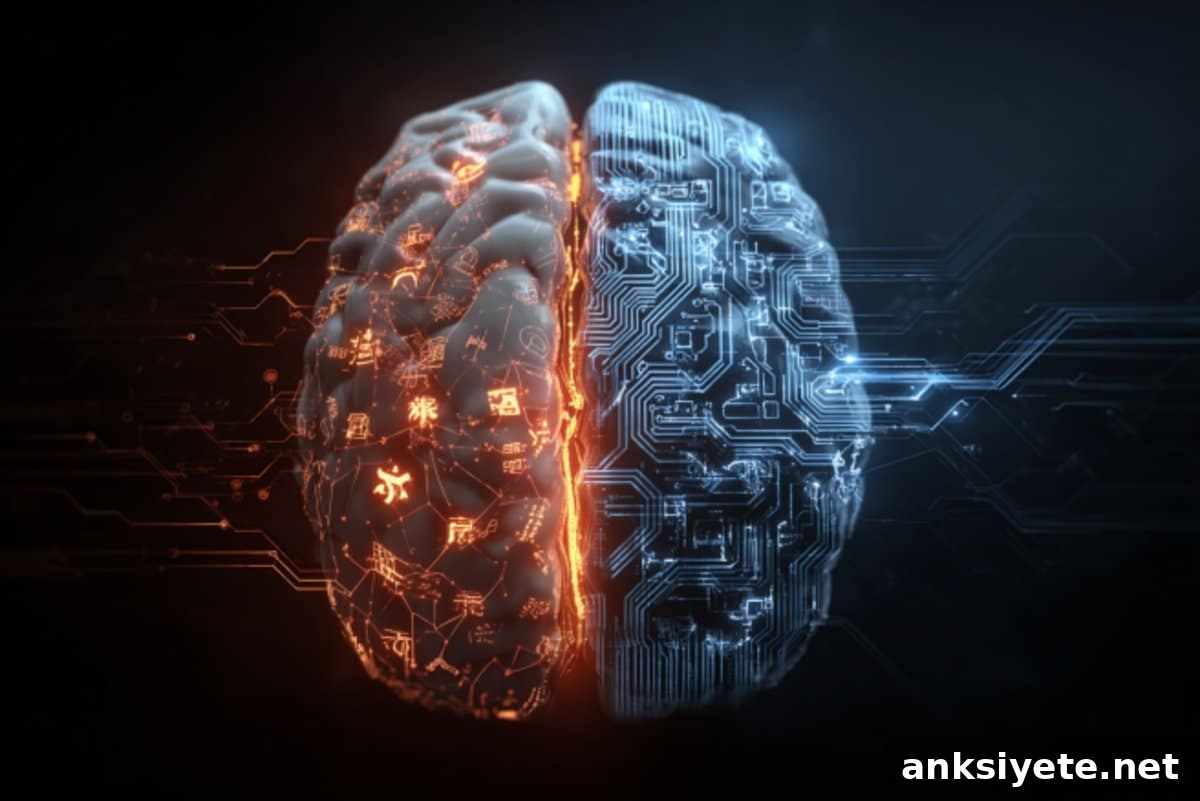
Summary: Humans are remarkably good at adapting to new and unfamiliar situations, while machines still struggle in many everyday contexts. A new interdisciplinary study identifies a core reason: humans and AI systems generalize in fundamentally different ways. Understanding those differences—and where they overlap—can guide the design of AI that adapts more reliably and cooperates more naturally with people.
The study contrasts human generalization, which relies heavily on abstraction, concepts, and flexible reasoning, with the variety of technical approaches used in artificial intelligence, such as statistical learning, rule-based systems, and hybrid neuro-symbolic methods. The authors argue that bridging cognitive science and AI perspectives on generalization is essential to build human-centered systems that perform robustly outside narrow training conditions.
Key Facts
- Different meanings: The term “generalization” denotes different processes in cognitive science and AI research.
- Human vs. machine: Human generalization often uses abstraction and conceptual frameworks; AI systems typically rely on data-driven or rule-driven mechanisms with domain-specific limitations.
- Shared framework: The researchers propose a unified framework that maps notions, mechanisms, and evaluation methods to better align human and machine reasoning.
Source: Bielefeld University
How do people adapt so well to completely new situations, and why do machines so often fall short?
This question is the focus of a collaborative article published in Nature Machine Intelligence by experts in cognitive science and artificial intelligence. The team includes Professor Dr. Barbara Hammer and Professor Dr. Benjamin Paaßen from Bielefeld University, among other international researchers. Their paper examines how differences in generalization impede reliable human–AI collaboration and suggests a path forward through interdisciplinary integration.
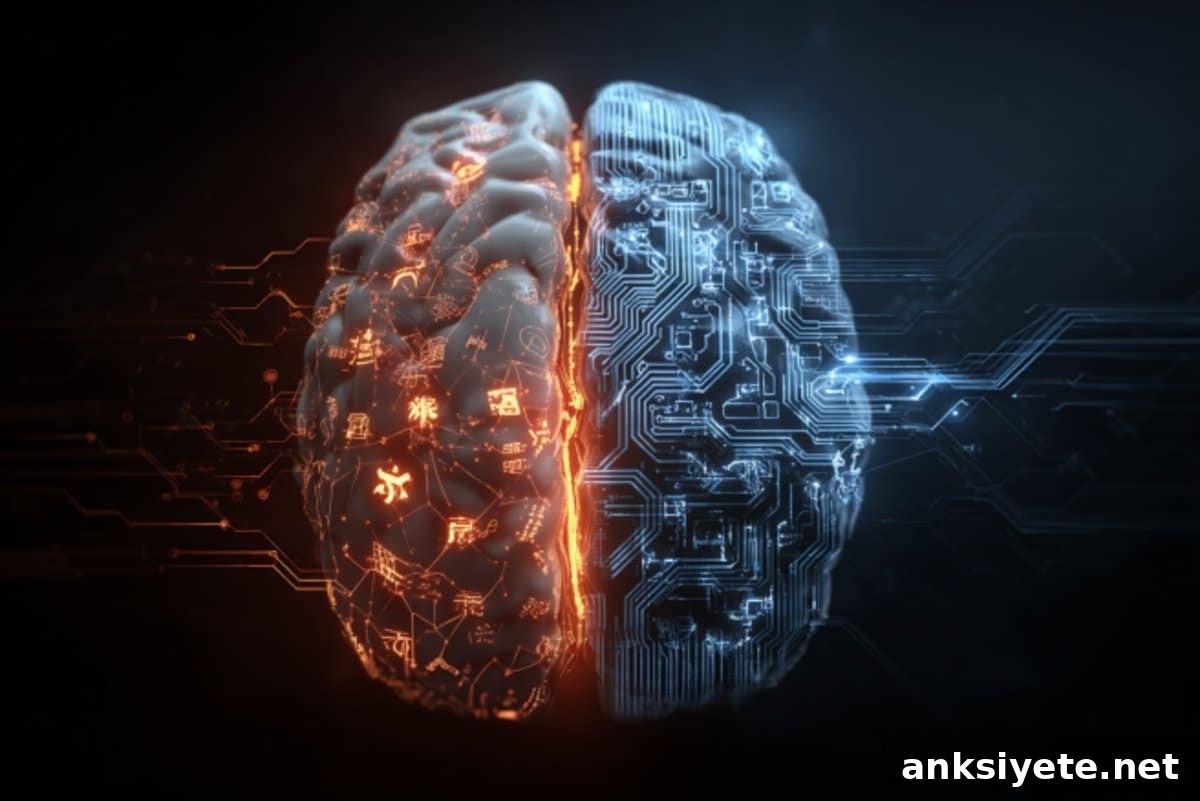
“If we want to integrate AI systems into everyday life—in medicine, transport, or decision-support roles—we must understand how these systems handle the unknown,” says Barbara Hammer, head of the Machine Learning Group at Bielefeld University. “Our study shows that machines generalize differently than humans, and that difference matters for successful human–AI collaboration.”
What do the differences look like?
In psychology and cognitive science, generalization typically refers to the human capacity to form abstractions and concepts that apply across varied situations. People can extract structure from limited examples and apply that structure flexibly to new contexts. In AI, however, “generalization” is used more broadly: it can mean improving performance on unseen samples from the same distribution, coping with out-of-domain inputs in machine learning, applying formal rules in symbolic systems, or combining learning and logic in neuro-symbolic approaches.
“The biggest challenge is that ‘generalization’ denotes very different processes in AI and in human cognition,” explains Benjamin Paaßen, junior professor for Knowledge Representation and Machine Learning at Bielefeld. “We therefore built a shared framework structured along three dimensions: What notion of generalization is being used? Which mechanisms achieve it? And how should it be evaluated?”
Why this matters for AI design and alignment
The publication is the product of an interdisciplinary collaboration of more than twenty experts from leading institutions, including the universities of Bielefeld, Bamberg, Amsterdam, and Oxford. The effort began with a workshop at the Leibniz Center for Informatics (Schloss Dagstuhl) and grew into a comprehensive comparison of conceptual foundations, methods, and evaluation strategies across fields.
The authors highlight that improving AI’s real-world reliability requires combining cognitive insights about abstraction, concept learning, and human reasoning with AI techniques for robustness, out-of-domain handling, and symbolic inference. Only by mapping these approaches can designers create systems that are both technically robust and aligned with human values and decision-making processes.
This work is part of the SAIL project—Sustainable Life-Cycle of Intelligent Socio-Technical Systems—which focuses on designing AI that remains transparent, sustainable, and human-centered across its full life cycle.
Funding: The project is funded by the Ministry of Culture and Science of the State of North Rhine-Westphalia.
About this artificial intelligence research news
Author: Jörg Heeren
Source: Bielefeld University
Contact: Jörg Heeren – Bielefeld University
Image: The image is credited to Neuroscience News
Original Research: Closed access. “Aligning generalization between humans and machines” by Barbara Hammer et al., published in Nature Machine Intelligence.
Abstract
Aligning generalization between humans and machines
Recent developments in artificial intelligence, including generative models, have produced tools that assist scientific discovery and support decision-making, while also raising ethical and social concerns. Ensuring responsible use of AI in human–AI teams requires stronger alignment so systems act in accordance with human preferences and societal values.
A frequently overlooked element in alignment is the differing nature of generalization across humans and machines. In cognitive science, human generalization commonly relies on abstract concept formation and flexible reasoning. In contrast, AI generalization covers a spectrum of mechanisms—from machine learning strategies for out-of-domain data to rule-based symbolic reasoning and hybrid neurosymbolic approaches.
This article synthesizes perspectives from both fields to identify common ground and key differences across three dimensions: the notion of generalization, methods that achieve it, and how to evaluate it. By mapping these conceptualizations, the authors pinpoint cross-disciplinary challenges that must be addressed to support effective alignment in human–AI teaming scenarios and to build AI systems that better reflect human cognitive strengths.