
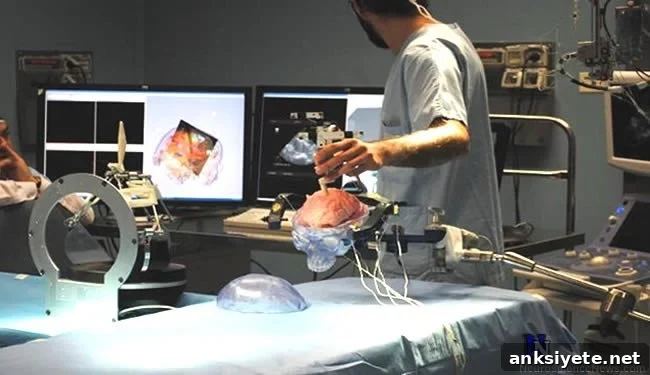
Robotic Precision in Neurosurgery: EU-Funded ROBOCAST Advances
Neurosurgeons may soon receive assistance in the operating room from a robotic system capable of movements up to ten times steadier than the human hand, according to an announcement by the European Commission. The EU-supported ROBOCAST project represents a notable advance in robot-assisted brain surgery, with potential to improve outcomes in delicate procedures and expand treatment options for a range of neurological conditions.
The ROBOCAST robotic hand, developed by a multinational team of researchers from the United Kingdom, Germany, Italy and Israel, is designed to work under the guidance of a surgeon. It offers 13 distinct types of movement during minimally invasive procedures—significantly more than the roughly four degrees of freedom typically available to a human hand operating through small instruments. This expanded range of controlled motion enables finer adjustments and more complex instrument orientation inside tight cranial spaces.
A key feature of the system is haptic feedback: physical cues delivered to the surgeon that convey information about tissue characteristics and the amount of force being applied. Haptic feedback helps the operator judge how much pressure is being used and can reduce the risk of accidental damage to sensitive brain structures. According to the European Commission, the combination of precise robotic control and tactile feedback aims to preserve critical neural tissue while enabling highly accurate interventions.
To date, testing of the ROBOCAST device has been conducted on anatomical models and surgical dummies. These trials have focused on keyhole neurosurgery techniques in which a probe or instrument is introduced through a very small opening in the skull to manipulate tissue, sample fluids or perform microsurgical tasks. Keyhole approaches reduce trauma to surrounding tissue and promote faster patient recovery when compared with larger craniotomies, but they also demand exceptional steadiness and control—capabilities the robot is specifically engineered to provide.
The European Commission highlighted one of the principal advantages offered by robotic assistance: a substantial reduction in surgeon tremor. By filtering involuntary hand movements, robotic systems can reduce tremor by as much as tenfold, improving safety when operating near vital brain regions. This steadiness can be especially valuable in procedures that require submillimeter accuracy.
Potential clinical applications for ROBOCAST and similar robotic platforms include treatment of brain tumors, surgical management of epilepsy foci, precision delivery or placement of devices for Parkinson’s disease, and interventions related to movement disorders such as Tourette syndrome. While the technology remains under experimental evaluation, these applications point to how enhanced precision could broaden the scope and safety of minimally invasive neurosurgery.
As part of European Robotics Week, the EU noted that it is also financing a related project that involves three cooperating robots intended to assist surgeons during challenging procedures. The European Commission has invested roughly 400 million euros across about 100 robotics projects to date. Brussels reported that global demand for robot-related products was estimated at around 15.5 billion euros in 2010, including about 3.0 billion euros in Europe, underscoring the strategic and economic interest in advancing medical robotics.
Researchers emphasize that while these early results are promising, further development and clinical trials are required before robotic neurosurgical systems like ROBOCAST become standard practice. Continued validation on realistic surgical models, rigorous safety testing, and careful integration with surgical workflows will be necessary to move from laboratory demonstrations to routine use in hospitals.
Notes about this neurosurgery research article
Source: PhysOrg press release
Further Reading: Robocast