
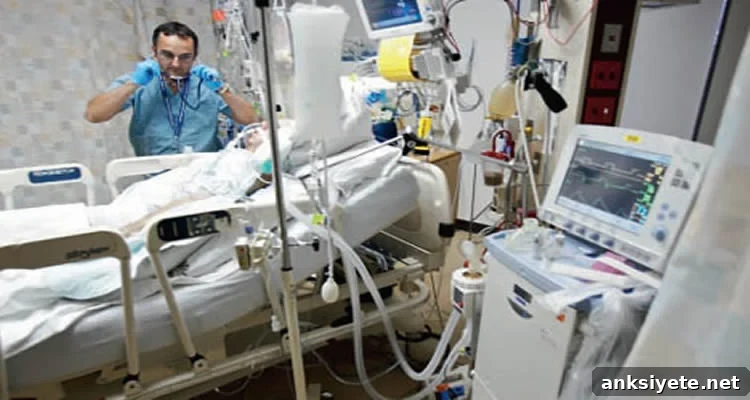
Case Western Reserve researcher presents findings that could free patients from ventilators, even years after injury.
Researchers at Case Western Reserve University have developed a two-step treatment that restores function to the muscles that control breathing—even after those muscles have been paralyzed for more than a year. The work offers renewed hope that people with severe spinal cord injuries might one day breathe without mechanical ventilation. This advance addresses diaphragm paralysis, spinal cord injury, and potential pathways for respiratory rehabilitation.
Principal investigator Philippa M. Warren, PhD, presented these findings on Nov. 17 at Neuroscience 2014, the annual meeting of the Society for Neuroscience. The study represents an important advance toward reversing long-term paralysis of diaphragm muscles that are driven by nerve fibers from the brain stem. When those brain axons are damaged in the spinal cord, signals cannot reach the motor nerves that activate muscles essential for breathing. The treatment reported here attacks the damage in two ways: by reopening blocked neural pathways at the injury site and by strengthening remaining respiratory motor circuits.
“We show that respiratory paralysis can be reversed at long intervals after spinal cord injury,” said Warren, a neurosciences researcher at MetroHealth Medical Center, affiliated with Case Western Reserve University School of Medicine. “This has the potential to reduce suffering for currently injured patients, improving both quality and potentially length of life.”
The investigators concentrated on nerve fibers that descend from the respiratory control center in the brain stem to the C3–C5 vertebral levels of the spinal cord in the middle of the neck. Those fibers control the diaphragm, the primary muscle of breathing. Injuries above the C3 vertebra can produce widespread paralysis that impairs breathing, movement, cardiac regulation, and sexual function. High cervical injuries are among the most common patterns seen after severe spinal cord trauma.
After spinal cord injury, damaged nerve fibers often die and the connections between brain and muscle are lost. A dense scar forms at the trauma site and can extend several inches above and below the injury. This scar tissue contains molecules, including sugar-rich compounds, that inhibit new neuronal growth and persist over time. As a result, new connections cannot form across the injured area, leaving important functions—like diaphragm control—compromised.
Paralysis of respiratory muscles caused by spinal cord damage reduces blood oxygen levels, increases the body’s drive to breathe, and forces any remaining respiratory muscles to work harder. For many individuals with high-level spinal cord injury, the remaining respiratory capacity is insufficient to sustain life without ventilatory support. If new nerve connections can be formed or existing but inactive pathways re-engaged, however, respiratory function can potentially be restored.
The Case Western Reserve team developed a combined strategy to address these obstacles. In laboratory animals, they delivered a specially designed enzyme—chondroitinase—at the site where respiratory nerve fibers traverse the spinal cord. Chondroitinase breaks down inhibitory sugar molecules in scar tissue, allowing nerve growth and the activation of latent pathways. Following enzyme application, researchers applied a rehabilitation protocol called intermittent hypoxia: brief, controlled exposures to lower-oxygen conditions that stimulate breathing and strengthen respiratory motor circuits.
The combined treatment increased levels of serotonin at synapses and on nerve fiber receptors. Serotonin, known for its role as a neurotransmitter, helped stimulate nerve cells involved in breathing. By increasing serotonin signaling at crucial connection points, the researchers were able to restore diaphragm function to normal levels in many animals. Remarkably, animals with injuries more than a year and a half old regained effective breathing—demonstrating recovery of previously paralyzed respiratory muscle activity.
“It is remarkable to reactivate the diaphragm and breathing in a chronically injured animal that has had a paralyzed half diaphragm most of its life,” said Jerry Silver, PhD, a Case Western Reserve professor of neurosciences who collaborated on the study.
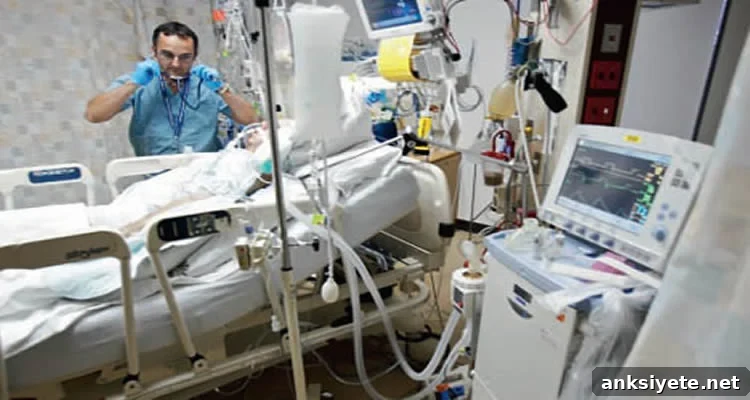
Although the results are encouraging, further research is required to refine and validate the approach before it can be applied in humans. In the animal study, more than two-thirds responded to the combined chondroitinase and intermittent hypoxia treatment. Among responders, about two-thirds regained normal breathing, while a portion exhibited erratic respiratory patterns in the affected muscle.
Investigators found that erratic breathing was associated with excessive serotonin during treatment. Administering a serotonin receptor blocker corrected breathing in those cases. Ongoing work aims to better understand the serotonin dynamics and to optimize timing and dosing of both the enzyme treatment and intermittent hypoxia. The team also notes the need to test the approach in larger animal models whose spinal cord anatomy more closely resembles that of humans.
“Treatment strengthened nerve connections not at the scarred injury site itself but where the diaphragm nerves leave the spinal cord,” Warren explained. “This finding could have major implications for treating people with spinal cord injury. Our work suggests it may be possible to repair paralyzed respiratory muscle activity, even long after severe injury, giving patients the chance to breathe normally again.”
The study was conducted in the laboratory of Warren J. Alilain, PhD, assistant professor in the Department of Neurosciences at MetroHealth Medical Center and Case Western Reserve University School of Medicine. The investigation involved close collaboration with Professor Jerry Silver and Peter M. MacFarlane, PhD, assistant professor of pediatrics at Case Western Reserve School of Medicine.
Funding for the research came from Spinal Research (the International Spinal Research Trust), Wings for Life, and the Craig H. Neilsen Foundation.
Contact: Jeannette Spalding – Case Western Reserve
Source: Case Western Reserve press release
Image Source: Image credited to Rcp.basheer (Creative Commons Attribution-ShareAlike 3.0 Unported)
Original Research: Presented at the Society for Neuroscience Annual Meeting on November 17, 2014 in Washington, D.C.