Summary: Researchers report that people living in colder regions with fewer daylight hours tend to consume more alcohol than those in warmer, sunnier areas. Climate patterns may contribute to higher rates of alcohol misuse and alcoholic cirrhosis.
Source: University of Pittsburgh.
Where you live can influence how much you drink. New research from the University of Pittsburgh Division of Gastroenterology shows that residents of colder, darker regions consume more alcohol and have higher rates of alcohol-related liver disease than those in warmer, sunnier climates.
The study, published in the journal Hepatology, analyzed global and U.S. data and found a consistent inverse relationship between climate factors—average temperature and annual hours of sunlight—and alcohol consumption. Lower temperatures and fewer sunlight hours were associated with higher per-capita alcohol intake, a larger share of the population drinking, increased binge drinking, and a greater burden of alcoholic liver disease, a leading cause of death among people with prolonged excessive alcohol use.
“It’s something that everyone has assumed for decades, but no one has scientifically demonstrated it,” said senior author Ramon Bataller, M.D., Ph.D., chief of hepatology at UPMC and professor of medicine at the University of Pittsburgh. “This is the first study that systematically demonstrates that worldwide and in America, in colder areas and areas with less sun, you have more drinking and more alcoholic cirrhosis.”
Alcohol produces a transient sense of warmth by increasing blood flow to the skin, which may make drinking more appealing in cold climates. In addition, alcohol use is linked to depression and mood disturbances, which can be amplified by reduced sunlight and harsher weather conditions.
To examine these associations, the research team compiled large public data sets from global and national sources, including climate records and health statistics. They measured alcohol use as liters of alcohol consumed per capita, the percentage of the population that drinks, and the prevalence of heavy episodic or binge drinking. Climate measurements included average annual temperature and average annual sunlight hours.
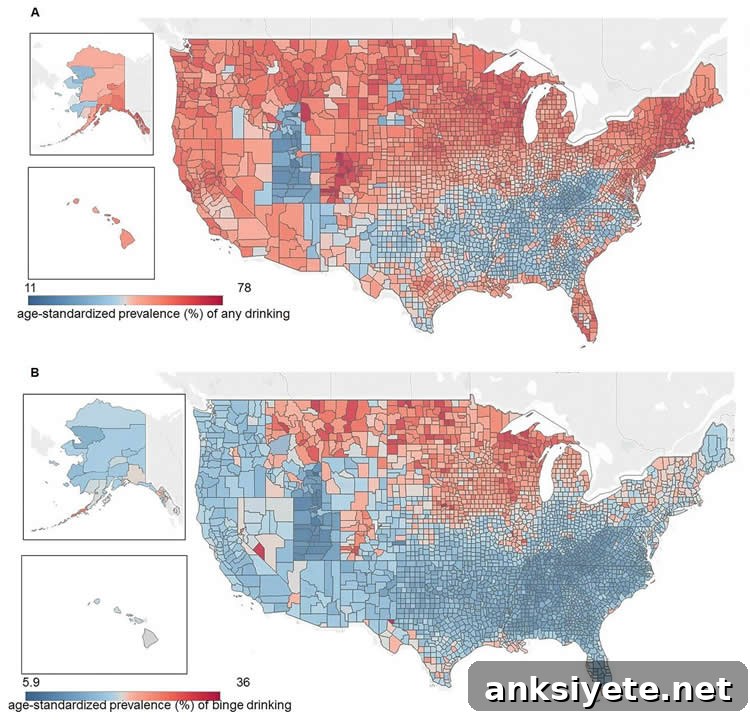
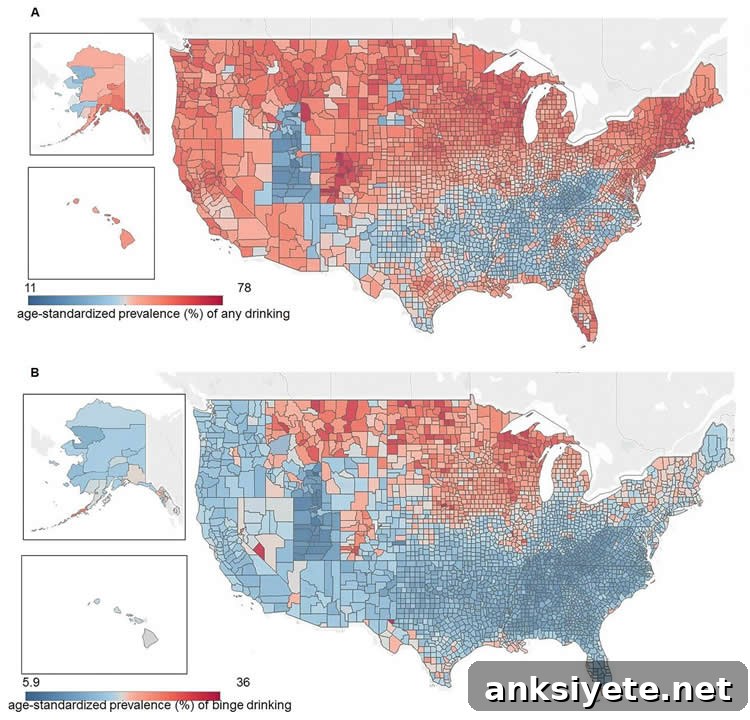
The analysis revealed a clear negative correlation: as average temperature and annual sunlight decreased, measures of alcohol consumption and problem drinking increased. These patterns held true when comparing countries across the globe and when comparing counties within the United States. The study also linked climate variables to a higher alcohol-attributable fraction (AAF) of cirrhosis, indicating that colder, darker regions carry a greater burden of alcohol-related liver disease.
Lead author Meritxell Ventura-Cots, Ph.D., a postdoctoral researcher at the Pittsburgh Liver Research Center, emphasized the role of confounders and the team’s efforts to address them. The investigators adjusted their analyses for cultural and social factors that influence drinking behavior, such as religion and local alcohol policies. For example, many countries in the desert-dwelling Arab world have high rates of abstinence for religious reasons, and certain U.S. states (like Utah) have regulations that limit alcohol access; analyses were repeated excluding those regions to confirm the findings remained robust.
When assessing cirrhosis outcomes, researchers controlled for other health risks that can interact with alcohol’s effects on the liver, including viral hepatitis, obesity, and smoking. Even after accounting for those factors, climate remained an independent correlate of higher alcohol consumption and greater alcohol-attributable cirrhosis.
The global cohort analysis reported statistically meaningful correlations: mean annual temperature and annual sunlight hours were inversely correlated with liters of alcohol consumed per capita (Spearman’s rho approximately −0.5 and −0.57, respectively). The percentage of heavy episodic drinkers and total drinkers in the population also correlated negatively with temperature (rho about −0.45 and −0.49) and with sunlight hours (rho about −0.39 and −0.57), with P < 0.001 for these relationships. Importantly, the alcohol-attributable fraction of cirrhosis correlated inversely with temperature (rho ≈ −0.45) and with sunlight hours (rho ≈ −0.6), again with high statistical significance.
In multivariable models that adjusted for potential confounders, climate parameters remained associated with alcohol consumption and drinking prevalence. In turn, higher per-capita alcohol consumption was associated with greater alcohol-attributable cirrhosis. Within the United States, colder counties exhibited higher age-standardized prevalence of heavy and binge drinking.
These findings help resolve a longstanding assumption about climate and drinking behavior by providing robust, empirical evidence across multiple geographic scales. The authors suggest that public health strategies aiming to reduce alcohol-related harm should take geographic and climatic risk patterns into account and prioritize interventions in areas where environmental conditions appear to elevate the risk of alcohol misuse and liver disease.
Additional contributors to the study include Ariel Watts, B.S.; Neil Shah, M.D.; Peter McCann, M.D.; A. Sidney Barritt IV, M.D. (University of North Carolina at Chapel Hill); Monica Cruz-Lemini, M.D., Ph.D. (Universidad Nacional Autónoma de México at Juriquilla); Jose Altamirano, M.D. (Hospital Quirónsalud, Barcelona); Juan Abraldes, M.D. (University of Alberta); Nambi Ndugga, M.P.H. (Harvard); and Anant Jain, M.D., Samhita Ravi, and Carlos Fernández-Carrillo, M.D., Ph.D. (University of Pittsburgh).
Funding: This research received support from the National Institute on Alcohol Abuse and Alcoholism (awards U01AA021908 and U01AA020821), the Mexican National Council for Science and Technology, and the Spanish Association for the Study of the Liver.
Source: Erin Hare, University of Pittsburgh. Published by NeuroscienceNews.com.
Original research: Meritxell Ventura-Cots et al., “Colder weather and fewer sunlight hours increase alcohol consumption and alcoholic cirrhosis worldwide,” Hepatology. doi: 10.1002/hep.30315. Published October 16, 2018.
Abstract
Colder weather and fewer sunlight hours increase alcohol consumption and alcoholic cirrhosis worldwide
Risk of alcoholic cirrhosis is determined by genetic and environmental factors. Although it has been commonly believed that colder climates predispose to greater alcohol use, few studies have systematically evaluated that influence. This study collected extensive climate, health, and alcohol-consumption data from 193 countries and from U.S. states and counties. Climate parameters included Koppen‐Geiger classification, average annual sunshine hours, and average annual temperature. Alcohol measures included per-capita consumption, patterns of drinking, and the alcohol-attributable fraction of cirrhosis.
Results showed inverse correlations between temperature and sunlight with liters of annual alcohol consumption per capita (Spearman’s rho ≈ −0.5 and −0.57). The proportion of heavy episodic drinkers and the percentage of drinkers in the population were also inversely correlated with temperature and sunlight hours (all P < 0.001). The alcohol-attributable fraction of cirrhosis correlated negatively with both temperature and sunlight (P < 0.001). Multivariable analyses indicated that climate parameters were associated with alcohol consumption and drinking prevalence after adjusting for potential confounders, and that higher alcohol consumption was associated with a greater burden of alcohol-attributable cirrhosis. In the U.S., colder climates were positively associated with the prevalence of heavy and binge drinking.