
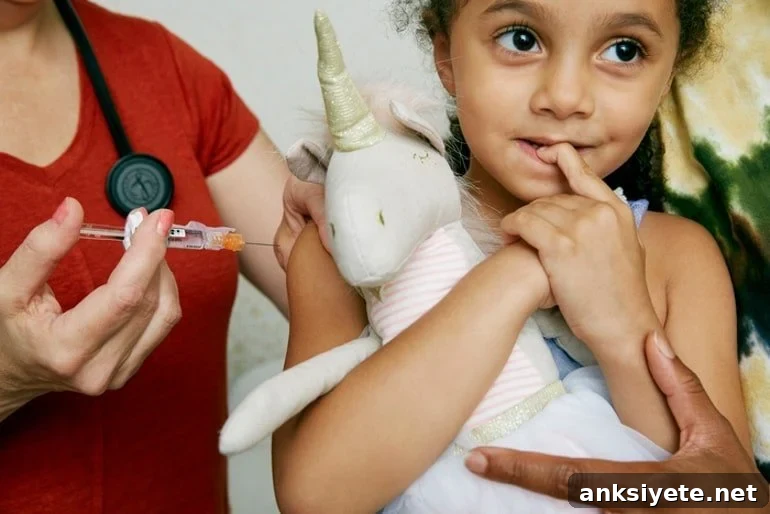
Summary: Nurse-led support delivered during vaccination can reduce children’s fear and distress around needles.
Source: University of South Australia
Many children experience tears, tantrums, and high levels of anxiety when faced with needles. As vaccination programs become more common across schools and communities, practical approaches to reduce needle-related fear and pain are increasingly important.
New research from the University of South Australia suggests that brief, nurse-delivered strategies during vaccination appointments can reduce children’s distress. The feasibility study focused on practical interventions that nurses can use in routine vaccination settings to make the experience less frightening for primary-aged children.
The trial involved children aged 8–12 years and compared standard care with two nurse-led techniques, as well as a combination of both. The techniques are designed to be simple, low-cost, and easy to implement in non-clinical settings such as schools or community vaccination clinics.
The two promising methods tested were:
- Divided Attention — a brief distraction exercise that redirects the child’s attention away from the injection site and reduces the anticipation of pain.
- Positive Memory Reframing — a short conversation that reshapes a child’s memory of past injections by highlighting positive aspects, praising coping strategies, and building confidence for future procedures.
Lead researcher Dr Felicity Braithwaite of UniSA explains that addressing needle fear in childhood is a high priority. “For many children, undergoing a needle procedure can be painful and distressing,” she says. “Negative experiences of vaccination early in life can contribute to medical avoidance and vaccine hesitancy later on. By allocating a little more time to supportive techniques, nurses can help children cope better and improve long-term health outcomes.”
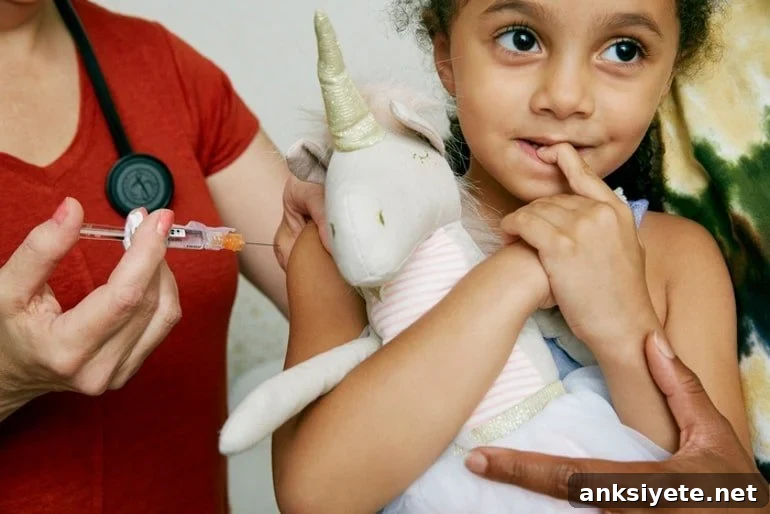
The study enrolled 41 child–parent pairs who were randomly assigned to one of four groups: usual care, divided attention (DA), positive memory reframing (PMR), or a combined DA+PMR approach. Clinical outcomes were measured at baseline, immediately after vaccination, and again two weeks later to capture both immediate and recalled responses.
The Divided Attention intervention consisted of a one- to two-minute game in which the nurse tapped different spots on the child’s arm around the intended injection site. The child was asked to guess which spot was touched each time, redirecting attention away from the needle and using distraction to reduce perceived pain.
Positive Memory Reframing involved talking with the child about a previous injection, emphasizing their bravery and the successful coping strategies they used—such as deep breathing or looking away. The goal is to replace exaggerated negative memories with more balanced recollections, strengthening the child’s sense of control and self-efficacy for future vaccinations.
Both strategies were delivered in settings intended to reflect real-world vaccination programs, aiming to keep interventions brief while maximizing their reach and feasibility.
Study design and findings
Researchers screened 54 child–parent dyads and included 41 participants in the final analysis (approximately 10 per group, with one group containing 11 children). Feasibility evaluation included video analysis of how interventions were delivered, interviews with nurses about their experience, and follow-up interviews with children and parents two weeks after vaccination to assess memory and recall of the interventions.
Not all participants received the full intended intervention in every case, indicating that improving training and protocol fidelity for nurses will be important in future trials. Despite those implementation challenges, preliminary results are encouraging: while immediate pain ratings did not show consistent differences across groups, several measures of fear improved. Children who received the combined DA+PMR intervention reported significantly lower recalled fear two weeks after vaccination, and both PMR alone and DA+PMR were associated with reduced fear of future needles. Parents also rated children’s fear as lower immediately after vaccination in certain groups.
Conclusions and implications
The study demonstrates that brief, nurse-led interventions to divert attention and positively reframe memories are feasible and show potential to reduce needle-related fear in children. Enhancing nurse training and ensuring consistent delivery will be key steps before wider implementation. If refined and scaled, these simple techniques could reduce distress during routine vaccinations and help prevent long-term aversion to medical care and vaccine hesitancy.
Author: Annabel Mansfield
Source: University of South Australia
Contact: Annabel Mansfield – University of South Australia
Image credit: “Young girl about to receive a vaccine from a medical professional” by SELF Magazine is licensed under CC BY 2.0.
Original Research: Open access. “Reframe the pain: Divided attention and positive memory reframing to reduce needle pain and distress in children—A feasibility randomized controlled trial” by Felicity Braithwaite et al., European Journal of Pain. Protocol number ACTRN12618000687291 (trial registry).
Abstract
Reframe the pain: Divided attention and positive memory reframing to reduce needle pain and distress in children—A feasibility randomized controlled trial
Background
Negative experiences of needle procedures in childhood can contribute to medical avoidance and vaccine hesitancy in later life. This study assessed the feasibility of two nurse-delivered interventions—divided attention (DA) and positive memory reframing (PMR)—aimed at reducing the negative impact of vaccinations on children aged 8–12 years.
Methods
Children were randomized to one of four groups: usual care (UC), DA, PMR, or combined DA+PMR. Feasibility assessments included detailed analysis of video-recorded intervention delivery, interviews with nurses, and interviews with children and parents two weeks after vaccination to evaluate memory and recall. Key clinical outcomes were child and parent ratings of needle-related pain intensity and fear, measured at baseline, immediately after vaccination, and at two-week follow-up (recalled).
Results
Fifty-four dyads were screened and 41 were included in the study. Intervention delivery varied in completeness, highlighting a need for improved training. While immediate pain ratings showed no clear differences, children in the combined DA+PMR group reported lower recalled fear, and both PMR and DA+PMR groups showed reduced fear of future injections. Parent ratings also indicated reduced child fear immediately after vaccination in some groups.
Conclusions
Both interventions are feasible and show promise for reducing needle-related fear in children, though better training is needed to ensure consistent delivery. These findings support further research and larger trials to confirm effectiveness and explore implementation in routine vaccination programs.