
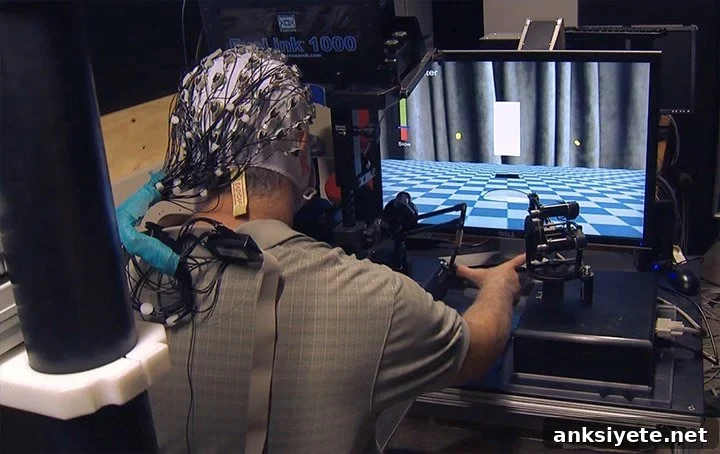
A research team at the University of California, San Diego, led by bioengineer Gert Cauwenberghs, is advancing our understanding of how brain circuits control movement. By combining neuroscience, clinical insight, and engineering, the group aims to develop technologies that help people with Parkinson’s disease and other motor impairments regain independence and navigate daily life more effectively. This interdisciplinary work is funded by the National Science Foundation’s Emerging Frontiers of Research and Innovation (EFRI) program.
“Parkinson’s disease is not limited to a single brain region,” explains Cauwenberghs, a professor at the Jacobs School of Engineering and co-director of the Institute for Neural Computation at UC San Diego. “It affects the whole body and how it moves. Our approach is holistic: we integrate scientific and clinical perspectives with engineering solutions to create technologies that work with the brain’s natural plasticity. Rather than simply compensating for deficits, we design systems that encourage the brain to form new, functional connections across neural circuits.”
The team’s research addresses multiple, interconnected goals: mapping distributed brain dynamics related to movement, improving real-world motor learning and control, and translating these findings into practical assistive technologies. By studying how the brain coordinates movement in naturalistic settings, the researchers are developing a system-level understanding that informs the design of new wireless brain and body activity sensors, adaptive prosthetics, and brain-machine interfaces (BMIs).
Central to this effort are non-invasive sensing technologies and real-time predictive models. The project uses a wireless dry-contact 64-electrode electroencephalogram (EEG) headset to record brain activity while subjects perform movement tasks. These EEG data are analyzed with advanced toolboxes—such as the Source Information Flow Toolbox and BCILAB—to visualize and model the flow of information across brain regions and to generate predictive signals that can drive assistive devices. Motion-capture systems from the NSF Temporal Dynamics of Learning Center are used alongside immersive virtual-reality environments to map coordinated brain-machine-body activity, enabling precise correlation between neural signals and movement outcomes.
Researchers view the technology as adaptive and interactive rather than merely assistive. By incorporating principles of motor learning and neural plasticity, the systems are designed to engage the user’s own neural mechanisms, promoting improvements in motor control over time. This direction includes work on adaptive prosthetic control, telemanipulation, and wearable sensors that can provide continuous monitoring and feedback in daily life. The results are expected to inform not only clinical interventions for people with Parkinson’s disease but also broader applications where humans and machines interact closely.
Collaborative team and supporting resources
The NSF award supporting this research is #1137279, EFRI-M3C: Distributed Brain Dynamics in Human Motor Control. The multidisciplinary team includes clinicians, neuroscientists, and engineers: Howard Poizner, Kenneth Kreutz-Delgado, Tzyy-Ping Jung, Scott Makeig, Terrence Sejnowski, Akinori Ueno, Mike Arnold, Frederic Broccard, Yu Mike Chi, John Iversen, Christoph Maier, Emre Neftci, David Peterson, Abraham Akinin, Srinjoy Das, Ariana Dokhanchy, Nikhil Govil, Sheng-Hsiou Hsu, Tim Mullen, Alejandro Ojeda, Bruno Pedroni, and Cory Stevenson, in addition to Cauwenberghs. Their combined expertise spans neural computation, signal processing, clinical neurology, and engineering design.
Patient and participant engagement plays an essential role in this work. Individuals living with Parkinson’s disease, such as Jim Bell, have volunteered as research participants to help investigators observe real motor behavior and evaluate non-invasive approaches that may improve movement. These collaborations with patients ensure that the research stays grounded in practical needs and outcomes that matter to users.
Key technology and software resources include the Cognionics wireless dry-contact 64-channel EEG headset, the Source Information Flow Toolbox and BCILAB for real-time modeling and visualization of EEG-derived brain activity, and motion-capture facilities for synchronizing neural data with body movements in immersive environments. Together, these tools enable a detailed, multimodal picture of how distributed brain dynamics support movement and how engineering interventions can support rehabilitation and assistive function.
By advancing knowledge of distributed brain dynamics and bringing together engineering, clinical science, and patient-centered design, this UC San Diego research effort aims to create practical, non-invasive solutions that improve mobility and independence for people living with Parkinson’s disease and related motor disorders. The work also contributes broadly to the fields of brain-machine interfaces, wearable neural sensors, and adaptive prosthetic systems.
Contact: Catherine Hockmuth – UCSD
Source: UCSD press release
Image Source: The image is credited to National Science Foundation and is adapted from the UCSD press release