
Summary: Older adults tend to respond more positively to both emotional and neutral information and are better at reframing negative experiences into positive ones.
Source: University of New South Wales
Do people get better at managing and responding to their emotions as they age? A large new study led by UNSW psychologist Dr Susanne Schweizer, in collaboration with researchers from the University of Cambridge, provides strong evidence that many aspects of emotional responding and regulation improve across the adult lifespan.
Published in the Journal of Neuroscience, the study tested 249 participants aged 18 to 88 drawn from the CamCAN (Cambridge Centre for Ageing and Neuroscience) cohort. Participants watched a series of short film clips designed to evoke positive (for example, a laughing baby), neutral (a weather report) or negative (including footage associated with real-world tragedy) emotional responses. During half of the negative clips, participants were instructed to actively reappraise the content—trying to reduce distress by reframing the negative material—while during the other half they simply allowed whatever feelings arose to occur naturally.
After each clip, participants rated the strength of their positive and negative reactions on standardized scales and separately reported how successful they felt at regulating their emotional response. These behavioral measures were then analysed in relation to structural brain data previously collected from the same individuals using MRI scans.
The behavioral results showed clear age-related differences: with increasing age, people reported stronger positive reactions to both positive and neutral stimuli and were better at using positive reappraisal when faced with negative content. In other words, older adults not only experienced more positive emotional reactivity overall but also showed greater facility in turning negative experiences into more positive ones.
Dr Schweizer highlights that this pattern reflects an increase in what the authors call “positive emotionality” with age. Emotionality here refers to how an individual reacts to emotionally charged information in their environment—essentially how feelings are generated and experienced in response to events.
Interestingly, this increase in positive emotionality emerged despite evidence that older participants tended to have a somewhat more negative resting mood or “basal negative affect.” Even though baseline mood measures were slightly less positive in older adults, those same individuals were nevertheless better at extracting positive meaning from neutral or negative situations.
The findings align well with Socioemotional Selectivity Theory, which proposes that as people age they prioritize emotionally meaningful goals and use a broader set of psychological strategies to manage their social environments—reducing conflict, focusing on rewarding interactions, and generally minimizing unnecessary emotional drama. These adaptive strategies can produce a shift in how emotional information is processed and regulated.
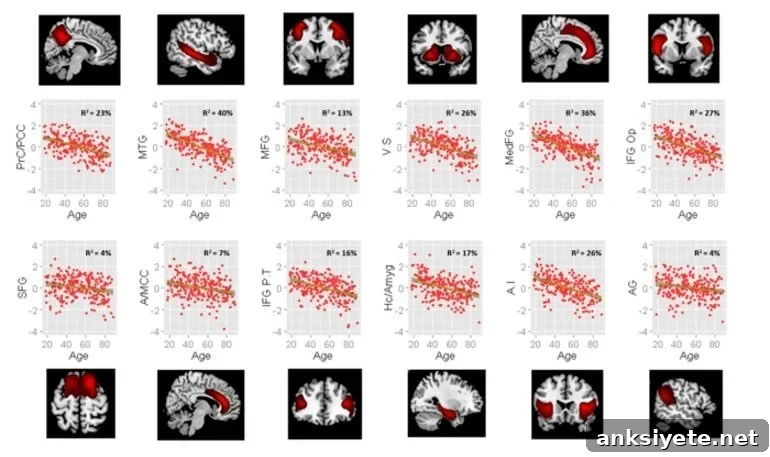
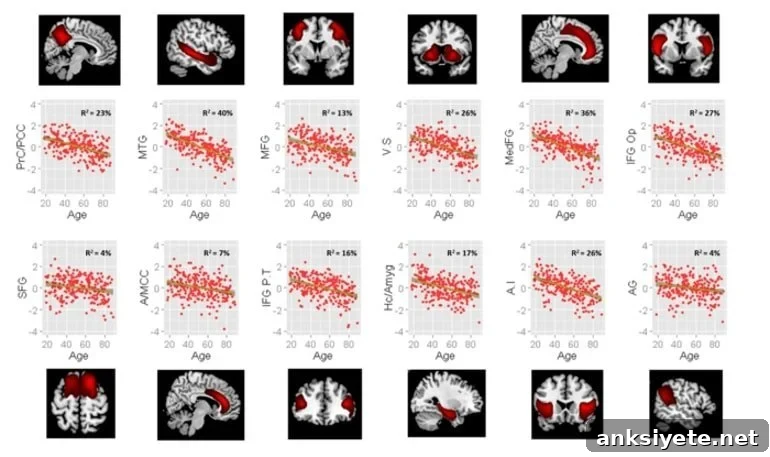
The results run counter to an alternative account sometimes called the Aging Brain Model. That model predicts that older adults appear more positive simply because brain systems that generate negative responses decline with age. However, Schweizer and colleagues found no evidence that reduced amygdala volume—the region often linked to negative affect—explained the age-related increase in positive emotionality. Structural brain measures instead showed widespread age-related reductions in cortical thickness and gray matter volume across many regions, consistent with prior aging research.
Using multivariate structural MRI analyses and structural equation modelling, the team identified four latent factors that best account for relationships between age and emotional responding: Basal Negative Affect (resting mood), Positive Reactivity (responsive positivity), Negative Reactivity (responsive negativity) and Positive Regulation (the ability to upregulate positive emotion in response to negative content). Increasing age made unique contributions to higher Basal Negative Affect, greater Positive Reactivity and stronger Positive Regulation, but it did not increase Negative Reactivity.
Certain brain regions—such as the frontal operculum, medial frontal gyrus, hippocampal complex, middle temporal gyri and angular gyrus—showed distinct associations with these emotional factors. Some of those brain–behaviour relationships remained significant even after accounting for age and demographic variables, suggesting that structural brain differences partially, but not fully, explain individual variation in emotional responding across the lifespan.
Looking ahead, Dr Schweizer and her team are extending this work to ask how emotional reactivity and regulation have changed since the COVID-19 pandemic and whether people of different ages coped differently during that prolonged period of stress. That follow-up work aims to clarify how stable these age-related shifts in emotional processing are under real-world challenges.
About this aging and psychology research news
Author: Jesse Hawley
Source: University of New South Wales
Contact: Jesse Hawley – University of New South Wales
Image: The image is credited to Jason Stretton et al.
Original Research: Closed access.
“Age-related enhancements in positive emotionality across the lifespan: structural equation modelling of brain and behaviour” by Susanne Schweizer et al. Journal of Neuroscience
Abstract
Age-related enhancements in positive emotionality across the lifespan: structural equation modelling of brain and behaviour
Aging is associated with a tendency to pay more attention to and remember positive over negative information, and with improved emotion regulation despite widespread cognitive decline and age-related loss of gray matter. To examine this apparent paradox, the authors analysed behavioural data from an emotion regulation task collected from a population-derived sample (CamCAN) alongside multivariate structural MRI data from the same participants. Structural equation modelling showed that a four-factor model—Basal Negative Affect, Positive Reactivity, Negative Reactivity and Positive Regulation—best accounts for age-related differences in emotional responding. Increasing age uniquely predicted higher Basal Negative Affect, greater Positive Reactivity and stronger Positive Regulation, but not changes in Negative Reactivity. Distinct gray-matter volumes in frontal, hippocampal and temporal regions related to these latent factors, and some brain–behaviour links remained after adjusting for age and demographics. The results support an age-related shift toward greater positivity in emotional responding, consistent with Socioemotional Selectivity Theory.