
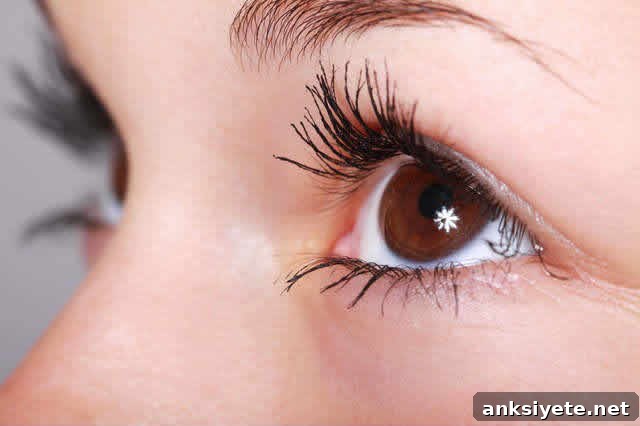
People often unconsciously mirror each other’s facial expressions and postures, and new research shows they also synchronize pupil size — a subtle form of mimicry that can influence trust. Published in Psychological Science, the study found that participants who matched a partner’s dilating pupils were more likely to trust that partner in an investment game, but this effect occurred only when the partner appeared to be from the same ethnic group.
“People generally underestimate the importance of pupils, despite the fact that we look into them every day. The pupil provides a rich source of social information — we can fake a smile, but we cannot voluntarily control pupil dilation or constriction,” says psychological scientist Mariska Kret of Leiden University, the study’s lead author.
“Our findings show that humans naturally synchronize pupil size with others and that this involuntary behavior can shape social decisions.”
Previous work by Kret and colleagues demonstrated that both humans and chimpanzees synchronize pupil size specifically with members of their own species. Building on that work, the researchers proposed that pupil mimicry might play a role in forming trust between individuals. Because dilated pupils are commonly perceived as a signal of safety and positive arousal, participants who mimic another person’s dilating pupils might feel a greater sense of trust toward that person. By contrast, constricted pupils are often interpreted as a sign of threat or negative arousal, so mimicry of constriction was not expected to increase trust.
To test these ideas, Kret teamed up with Agneta Fischer and Carsten De Dreu of the University of Amsterdam and recruited 61 Dutch university students for an investment game. Participants were shown short 4-second video clips of a partner’s eyes and then asked to decide whether to transfer 5 Euros or 0 Euros to that partner. The students were told that any transferred amount would be tripled and the partner would then decide how much of the tripled sum to return. In reality, all partner responses were pre-determined and randomly assigned by the researchers.
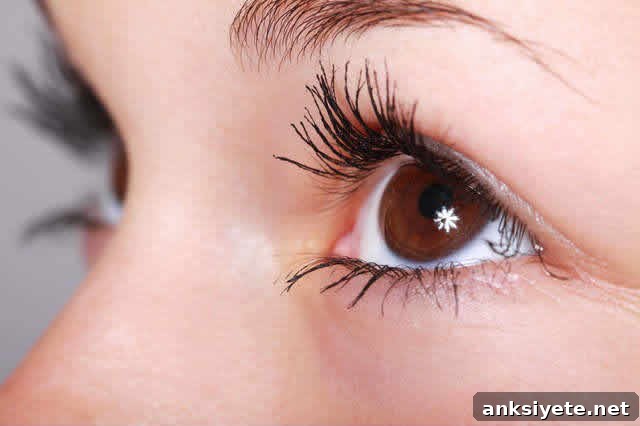
The video clips were not live recordings but manipulated images of eyes programmed to show one of three pupil responses over four seconds: dilation, constriction, or no change. Participants completed multiple trials in which the partner’s eyes also varied in apparent emotional expression and ethnic appearance.
Eye-tracking data confirmed that participants’ pupils tended to change in the same direction as the partner’s pupils, whether dilating or constricting. Behaviorally, participants were more likely to invest money when the partner’s pupils dilated, especially when the eyes also conveyed a positive or happy expression. Most importantly, the link between pupil-dilation mimicry and investment decisions appeared to depend on perceived shared group membership: dilation mimicry predicted trustful investments when the partner’s eyes had a Western European appearance but not when the eyes appeared Asian.
These results suggest that pupil signals are processed in a group-sensitive way. The researchers argue that the social meaning of pupil size is not universally applied to all strangers but is interpreted within the context of group membership. In other words, automatic physiological synchronization — pupil mimicry — may foster trust primarily within perceived in-groups.
“The results of the current study further confirm the important role of the human eye in social approach and avoidance,” the authors write. “Specifically, pupil mimicry appears useful in social interactions where extending trust and detecting untrustworthiness go hand in hand, and it may have been adaptive in the context of group living, promoting in-group cooperation, survival, and prosperity.”
Funding: Preparation of this work was supported by the Netherlands Science Foundation (432-08-002 to C. K. W. De Dreu and VENI 016-155-082 to M. E. Kret).
Source: Anna Mikulak – APS
Image credit: The image is in the public domain
Original research: “Pupil Mimicry Correlates With Trust in In-Group Partners With Dilating Pupils” by M. E. Kret, A. H. Fischer, and C. K. W. De Dreu in Psychological Science. Published online July 31, 2015. doi:10.1177/0956797615588306
Abstract
Pupil Mimicry Correlates With Trust in In-Group Partners With Dilating Pupils
During close interactions with fellow group members, humans attend to each other’s eyes, follow gaze, and quickly read emotional signals. The distinctive human eye highlights the pupil and its autonomic changes, which reflect arousal, cognitive load, and social interest. This study examined whether observers process a partner’s pupil changes and whether those changes influence perceived trustworthiness. Participants played incentivized trust games with virtual partners whose pupils dilated, remained static, or constricted. Results showed that (a) participants trusted partners with dilating pupils and withheld trust from partners with constricting pupils, (b) participants’ pupils mirrored their partners’ pupil changes, and (c) mimicry of dilation predicted trust only for in-group partners, whereas mimicry of constriction did not predict trust. The findings suggest that pupil-contingent trust is bounded by group membership and may have evolved in the context of group life.
“Pupil Mimicry Correlates With Trust in In-Group Partners With Dilating Pupils” by M. E. Kret, A. H. Fischer, and C. K. W. De Dreu in Psychological Science. Published online July 31, 2015. doi:10.1177/0956797615588306