
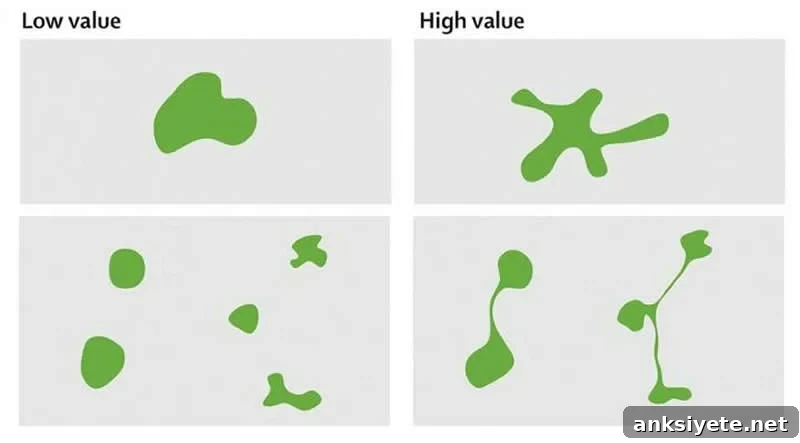
Summary: A new study identifies a meaningful link between the spatial arrangement of urban greenspace and residents’ mortality risk, showing that connected, aggregated, and irregularly shaped parks are associated with lower death rates.
Source: Texas A&M
Researchers Huaqing Wang, a Ph.D. student in Urban and Regional Sciences, and Professor Lou Tassinary of visualization found that the form and connectivity of parks—not just their area—can influence the mortality risk of nearby residents.
“Most research on natural environments and health focuses on how much green space a community has,” the authors write. “Our analysis demonstrates that the shape and spatial arrangement of greenspace are also important factors in that relationship.”
Their paper was published in the Nov. 2019 issue of The Lancet Planetary Health.
Using high-resolution land-cover data for Philadelphia, Wang and Tassinary calculated landscape metrics to quantify greenness, fragmentation, connectedness, aggregation, and park shape. They then tested how these spatial metrics related to all-cause and cause-specific mortality across 369 census tracts.
The authors report that neighborhoods with greenspaces that are more connected, aggregated, coherent, and complex in shape show lower risks of both all-cause and certain cause-specific mortality. They suggest this may be partly due to improved access: complex or articulated park boundaries often create more entry points and routes, increasing the likelihood residents will use and benefit from green areas.
“Linking existing parks with greenways or creating new, connected parks may be cost-effective strategies for improving public health,” Wang and Tassinary note.
Irregular park shapes can arise from design choices or from the parcel layout within a city. The study did not tie lower mortality to any single specific form; instead, the data indicate that greater complexity and connectivity of greenspace correlate with more favorable health outcomes.
These findings are relevant to urban planners, landscape architects, public health officials, and policymakers who aim to design healthier urban environments. The authors argue that planning efforts should look beyond total green area and incorporate the form, function, and spatial configuration of greenspace to better support population health.
Source:
Texas A&M
Media Contacts:
Richard Nira – Texas A&M
Image Source:
The image is credited to Texas A&M.
Original Research: Open access
“Effects of greenspace morphology on mortality at the neighbourhood level: a cross-sectional ecological study”. Huaqing Wang, MSc, Prof Louis G Tassinary, PhD. The Lancet Planetary Health doi: 10.1016/S2542-5196(19)30217-7.
Abstract
Effects of greenspace morphology on mortality at the neighbourhood level: a cross-sectional ecological study
Background
While the association between urban greenspace and lower mortality risk is established, less is known about how the spatial distribution and morphology of greenspace influence population health. This study examines the relationship between greenspace configuration and mortality risk in an urban setting.
Methods
This cross-sectional analysis used 2008 high-resolution landcover data for Philadelphia from the Pennsylvania Spatial Data Access database. The research team computed landscape metrics—measuring greenness, fragmentation, connectedness, aggregation, and shape of greenspace—while considering or excluding green patches smaller than 83.6 m2. Using GIS and spatial pattern analysis tools, they evaluated associations between these metrics and mortality recorded in 2006 for 369 census tracts. Negative binomial regression and principal component analysis were applied, adjusting for geographic, demographic, and socioeconomic covariates.
Findings
The study found that a 1% increase in the percentage of greenspace was associated with an estimated 0.419% reduction in all-cause mortality (95% CI 0.050–0.777), though this overall greenness measure did not significantly affect specific causes of death. All-cause mortality was negatively related to the mean area of greenspace: a 1 m2 increase in mean greenspace area corresponded to a 0.011% decrease in all-cause mortality (95% CI 0.004–0.018) and a 0.019% decline in cardiac mortality (95% CI 0.007–0.032). When considering only green patches larger than 83.6 m2, the reductions were smaller but still measurable. Census tracts characterized by more connected, aggregated, coherent, and articulated greenspaces showed lower risks for both all-cause and cause-specific mortality. The inverse relationship between complex landscape parcels and all-cause mortality was stronger in tracts with higher proportions of older and less-educated adults.
Interpretation
A modest but significant association exists between the spatial distribution of urban greenspace and mortality risk. Focusing only on the total amount of greenspace likely overlooks important variation in health outcomes. Health-oriented urban planning should therefore incorporate greenspace shape, connectivity, and function alongside acreage.
Funding
None.