
Injuries to six specific brain regions cause far greater disruption to thinking and everyday functioning than damage to other areas, researchers at Washington University School of Medicine in St. Louis report.
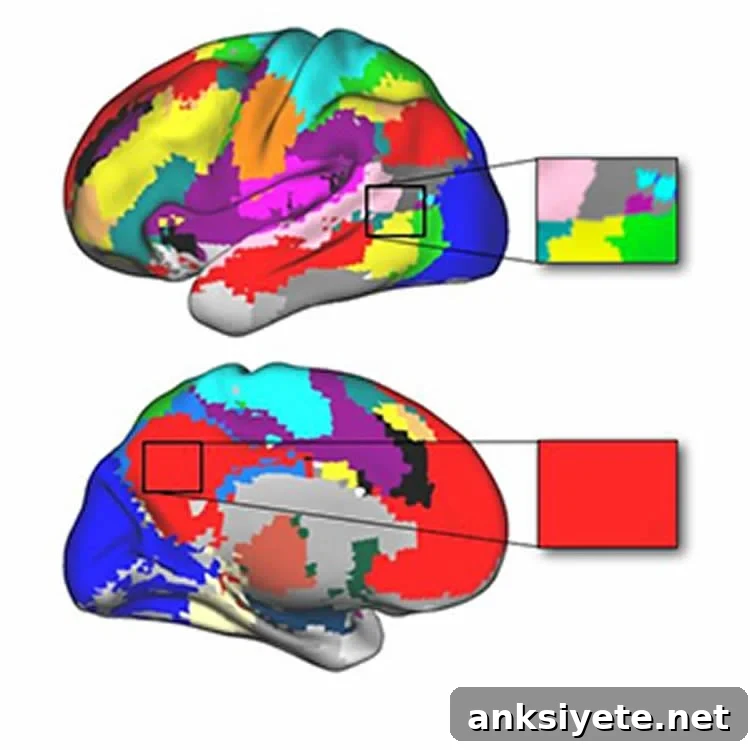
Using detailed brain mapping, the team identified these regions as prominent “hubs” where the borders of multiple functional networks converge. Because these networks enable different brain regions to cooperate during complex cognitive tasks, damage to hub areas can interrupt multiple systems at once.
The results offer a fresh perspective on how focal brain injuries—from stroke, trauma or surgical intervention—can produce widespread cognitive deficits. Improved knowledge of hub locations could eventually help clinicians predict patient outcomes more accurately and guide surgical planning to avoid critical sites.
“This work is not yet ready for routine clinical application, but as we refine maps of these hubs in individual patients, their locations may influence surgical decision-making,” said co-senior author Steven Petersen, PhD, the James S. McDonnell Professor of Cognitive Neuroscience in Neurology. “Surgeries that affect these sites might carry higher risk of impairing attention, memory, language, speech and other cognitive abilities.”
Petersen also noted that some psychiatric disorders, such as schizophrenia, impair a broad range of brain functions. He suggested that dysfunction at these multipurpose hub sites could contribute to such widespread symptoms.
The study appears in the Proceedings of the National Academy of Sciences.
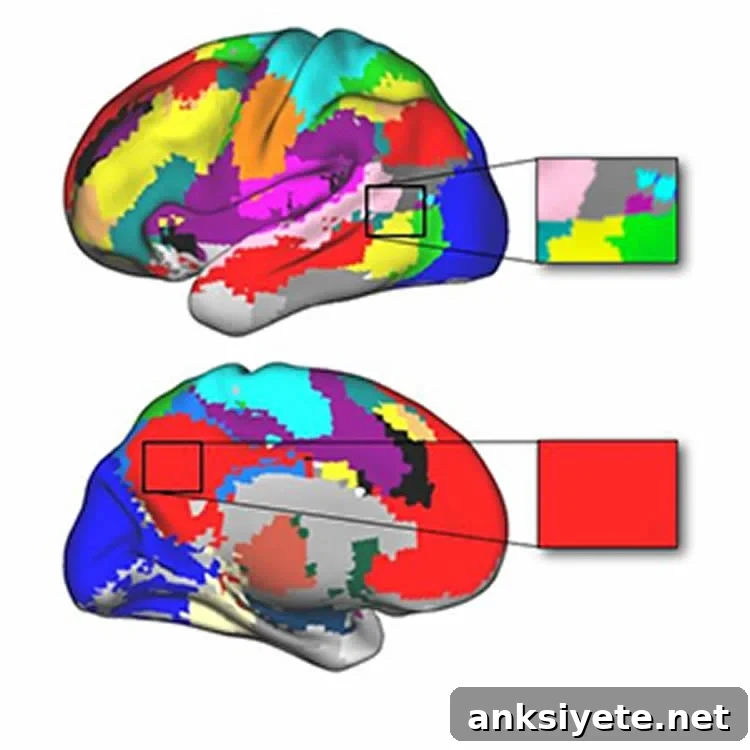
Petersen and colleagues mapped how brain networks interact and where their boundaries meet. Their analysis revealed a small number of hub regions that had not previously been recognized as especially important for overall cognitive functioning.
“We hypothesized that hubs might be places where different networks exchange information,” Petersen said. “If so, damage in those locations could disrupt multiple networks simultaneously and lead to deficits across many mental functions.”
To test this idea, the research team collaborated with investigators at the University of Iowa, including Daniel Tranel, PhD, and David Warren, PhD. Tranel directs the Iowa Neurological Patient Registry, which tracks patients who have experienced strokes and other focal brain injuries.
The registry records each injury’s location and documents detailed neuropsychological outcomes: standardized tests of memory, language and reasoning, as well as assessments of patients’ real-world functioning—ability to work, maintain relationships and manage daily routines—based on questionnaires and reports from family members.
From the registry, the researchers identified 19 patients whose injuries were centered on one of the six identified hubs. They compared these cases with 11 patients who had similarly sized lesions located in two brain regions that lie away from any hub.
“Patients with hub-centered injuries showed substantially greater impairment,” Petersen said. “Eighteen of the 19 patients with hub damage experienced problems in real-world functioning, whereas fewer than half of patients with non-hub injuries reported such difficulties.”
These findings help explain puzzling clinical observations in which relatively small lesions produced unexpectedly severe disability. Because isolated hub injuries are uncommon, the researchers emphasized that mapping studies were essential to pinpoint these critical sites and then test their behavioral impact using the Iowa database.
The team is continuing to use the registry and mapping techniques to search for additional hub regions and to better understand how hub damage relates to specific cognitive deficits.
This work was supported by National Institutes of Health (NIH) Grant P01 NS19632, NIH Grant R21NS061144, the McDonnell Foundation Collaborative Action Awards, Simons Foundation Award 95177, National Institute of Mental Health Grant R01 MH062500, and NIH Grant F30 MH940322.
Warren DE, Power JD, Bruss J, Denburg NL, Waldron EJ, Sun H, Petersen SE, Tranel D. Network measures predict neuropsychological outcome after brain injury. Proceedings of the National Academy of Sciences, Sept. 30, 2014.
Contact: Michael C. Purdy – Washington University in St. Louis
Source: Washington University in St. Louis press release
Image credit: Steven E. Petersen, adapted from Washington University in St. Louis materials
Original research: Abstract for “Network measures predict neuropsychological outcome after brain injury” by David E. Warren, Jonathan D. Power, Joel Bruss, Natalie L. Denburg, Eric J. Waldron, Haoxin Sun, Steven E. Petersen, and Daniel Tranel in PNAS. Published online September 15, 2014; doi:10.1073/pnas.1322173111.