
Summary: Mutations or deletions in different genes associated with schizophrenia and autism produce similar dysfunctions in an anterior thalamic circuit, pointing to a shared neural mechanism for certain cognitive impairments.
Source: MIT
Many neurodevelopmental disorders produce overlapping symptoms such as learning difficulties and attention problems. A new study from MIT identifies a common circuit-level mechanism for a form of cognitive impairment that appears in some people with autism spectrum disorders and schizophrenia, despite the fact that the underlying genetic causes differ across conditions.
In work conducted in mice, researchers show that several genes—when mutated or absent—disrupt the same network within the anterior thalamus. That shared disruption leads to similar deficits in memory encoding and working memory. The findings imply that therapies designed to target this circuit could potentially benefit patients with different diagnoses but similar cognitive symptoms.
“This study reveals a new circuit mechanism for cognitive impairment and points to a future direction for developing new therapeutics by grouping patients according to underlying neurobiology rather than just behavior,” says Guoping Feng, the James W. and Patricia T. Poitras Professor in Brain and Cognitive Sciences at MIT, a member of the Broad Institute of Harvard and MIT, associate director of the McGovern Institute for Brain Research at MIT, and the senior author of the study.
The paper’s lead authors are Dheeraj Roy, a Warren Alpert Distinguished Scholar and McGovern Fellow at the Broad Institute, and Ying Zhang, a postdoctoral researcher at the McGovern Institute. The study is published in Neuron.
Thalamic connections
The thalamus plays a central role in cognitive functions such as learning and memory. Many gene variants linked to disorders like autism and schizophrenia show high expression in thalamic regions, suggesting these nuclei are important sites of vulnerability.
One gene of particular interest is PTCHD1. Loss of PTCHD1, which is X-linked, has been tied to attention deficits, hyperactivity, aggression, intellectual disability, and autism spectrum traits in boys. Earlier research from Feng and colleagues located some of PTCHD1’s effects in the thalamic reticular nucleus (TRN), where gene loss caused attention problems and hyperactivity, but did not explain learning and memory deficits seen in affected individuals.
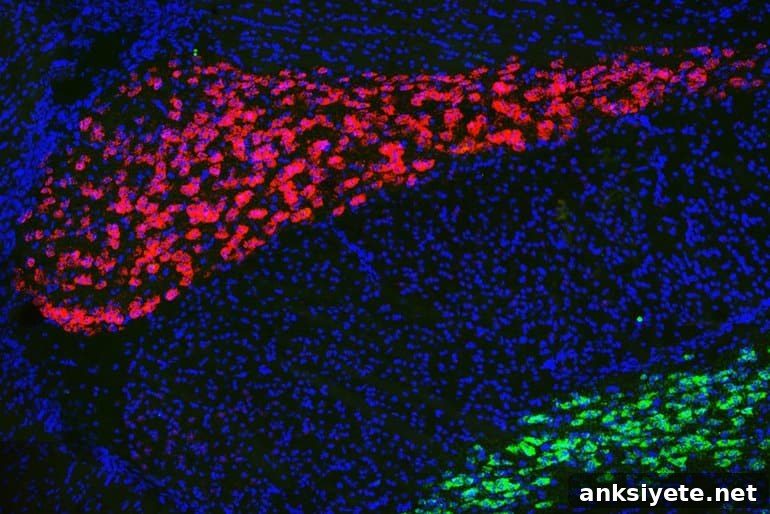
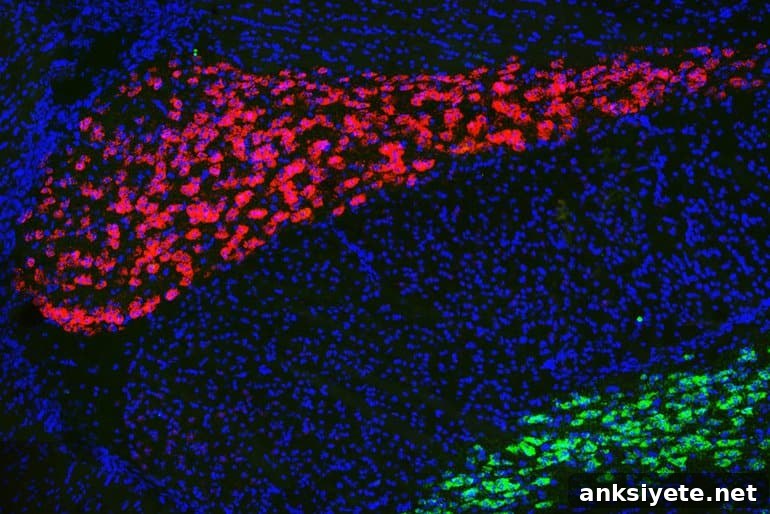
To probe memory-related dysfunction, the team examined another thalamic subdivision that expresses PTCHD1 strongly: the anterodorsal (AD) thalamus. The AD region is small but important for spatial learning and is interconnected with the hippocampus and cortical memory centers.
Using tracing and circuit-mapping techniques, the researchers mapped connections from the AD thalamus to the retrosplenial cortex (RSC) and uncovered critical functions for this pathway. In mice, AD-to-RSC signaling is required for encoding contextual fear memories—such as remembering a chamber where a mild foot shock occurred—and for working memory tasks that depend on internal spatial representations used during decision-making.
A nearby thalamic subdivision, the anteroventral (AV) nucleus, was found to contribute differently: AV-to-RSC communication regulates the specificity of encoded memories, helping to distinguish one memory from similar ones. These findings reveal that adjacent thalamic areas make distinct contributions to memory encoding and discrimination.
“These experiments showed that two neighboring thalamic subdivisions contribute differentially to memory formation, which was not expected,” says Dheeraj Roy.
Circuit malfunction
After defining the roles of AD and AV in memory, the team asked how loss of PTCHD1 affects this circuit. Selective knockdown of PTCHD1 in AD neurons produced pronounced deficits in both contextual fear memory and working memory tasks. Neurons in the AD region became hyperexcitable, and mice exhibited impaired memory encoding.
To test whether this effect generalized to other genetic risks, the authors knocked down four additional genes—one associated with autism and three associated with schizophrenia—in AD neurons. Each of these manipulations produced the same pattern: increased neuronal excitability within AD, disrupted AD-to-RSC signaling, and deficits in memory encoding. Thus, different genetic perturbations converged on a common cellular and circuit-level dysfunction.
These observations align with prevailing models of learning that depend on activity-dependent strengthening of synapses. The researchers propose that when neurons are already hyperactive at baseline, they cannot mount the additional, learning-related increase in firing needed to form stable memories.
The team traced the hyperexcitability back to distinct ion channel effects caused by each gene knockdown. Although the molecular targets differ, the net result is similar: elevated AD neuron firing and impaired circuit function.
Importantly, the researchers were able to rescue memory performance in these mouse models by reducing AD hyperactivity using chemogenetic methods. While chemogenetics is not yet a clinical therapy, the result shows that restoring proper excitability in this thalamic circuit can reverse cognitive deficits produced by diverse genetic insults.
These findings support a strategy of classifying patients by shared circuit-level pathophysiology rather than by a long list of individual molecular faults. “There are many genetic and environmental contributors to psychiatric disease, but ultimately those factors produce changes in neuronal activity in key circuits,” Feng says. “From a therapeutic perspective, targeting circuit or cellular dysfunction may apply to a broader group of patients than targeting individual molecular mutations.”
Funding: The research received support from the Stanley Center at the Broad Institute, the Hock E. Tan and K. Lisa Yang Center for Autism Research at MIT, the James and Patricia Poitras Center for Psychiatric Disorders Research at MIT, and the NIH BRAIN Initiative.
About this genetics and neuroscience research news
Source: MIT
Contact: Anne Trafton – MIT
Image: The image is credited to Dheeraj Roy and Ying Zhang
Original Research: Closed access.
“Anterior thalamic dysfunction underlies cognitive deficits in a subset of neuropsychiatric disease models” by Dheeraj Roy et al., Neuron.
Abstract
Anterior thalamic dysfunction underlies cognitive deficits in a subset of neuropsychiatric disease models
Highlights
- •AD thalamus is necessary for memory encoding
- •AV thalamus regulates memory specificity
- •Knockdown of autism and schizophrenia risk genes in AD leads to cognitive deficits
- •Disease models show converging cellular and circuit mechanisms in AD
Summary
Cognitive impairments and intellectual disability commonly accompany neuropsychiatric disorders, but it has been unclear whether diverse genetic risks converge on shared mechanisms. This study demonstrates that several autism- and schizophrenia-associated genes are highly expressed in the anterodorsal (AD) subdivision of the anterior thalamic nuclei—a region reciprocally connected with hippocampus and cortical memory centers.
Selective CRISPR-Cas9 knockdown of multiple risk genes in AD produced memory deficits in mice. While AD proved necessary for contextual memory encoding, the adjacent anteroventral (AV) nucleus regulated memory specificity. These distinct functions are mediated through projections to the retrosplenial cortex by different mechanisms. Knockdown of PTCHD1, YWHAG, or HERC1 in AD induced neuronal hyperexcitability, and normalizing excitability rescued memory deficits.
The study identifies converging cellular and circuit mechanisms that underlie cognitive deficits in a subset of neuropsychiatric disease models and suggests that targeting shared circuit dysfunctions may provide broader therapeutic opportunities than targeting individual molecular causes.