
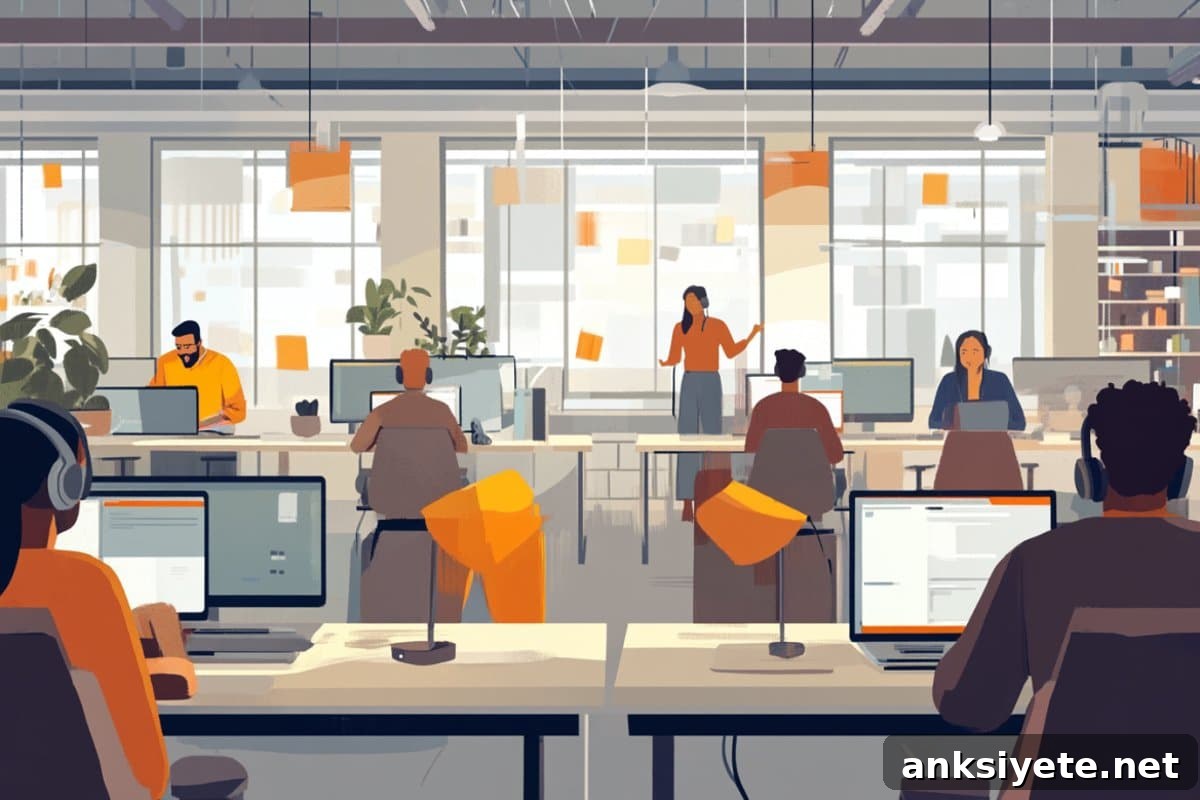
Summary: A recent study finds that background music in workplaces can reduce employee mood, energy, and performance when it does not match individual needs. This “music misfit” effect leads to mental fatigue, decreased focus, and in some cases counterproductive behaviors that harm organizational outcomes.
The negative impact is strongest for people who have difficulty filtering out background stimuli—so-called non-screeners. The research emphasizes that employers should weigh both customer and employee preferences when choosing workplace music and consider allowing personal listening options to improve well-being and productivity.
Key Facts:
- Music misfit effects: Background music that does not match employees’ needs reduces positive mood and cognitive energy.
- High-risk group: Non-screeners—individuals who struggle to ignore background sounds—experience the worst effects.
- Workplace consequences: Misaligned music can cause slower work, negative talk about the workplace, and lower helpfulness among staff.
Source: Ohio State University
Have you ever left a store or restaurant because the music was so unpleasant?
Now imagine being an employee who hears that same music for hours each day. New research shows that when background music doesn’t support what employees need to focus, manage emotions, or stay energized, it can harm how they feel and perform at work.
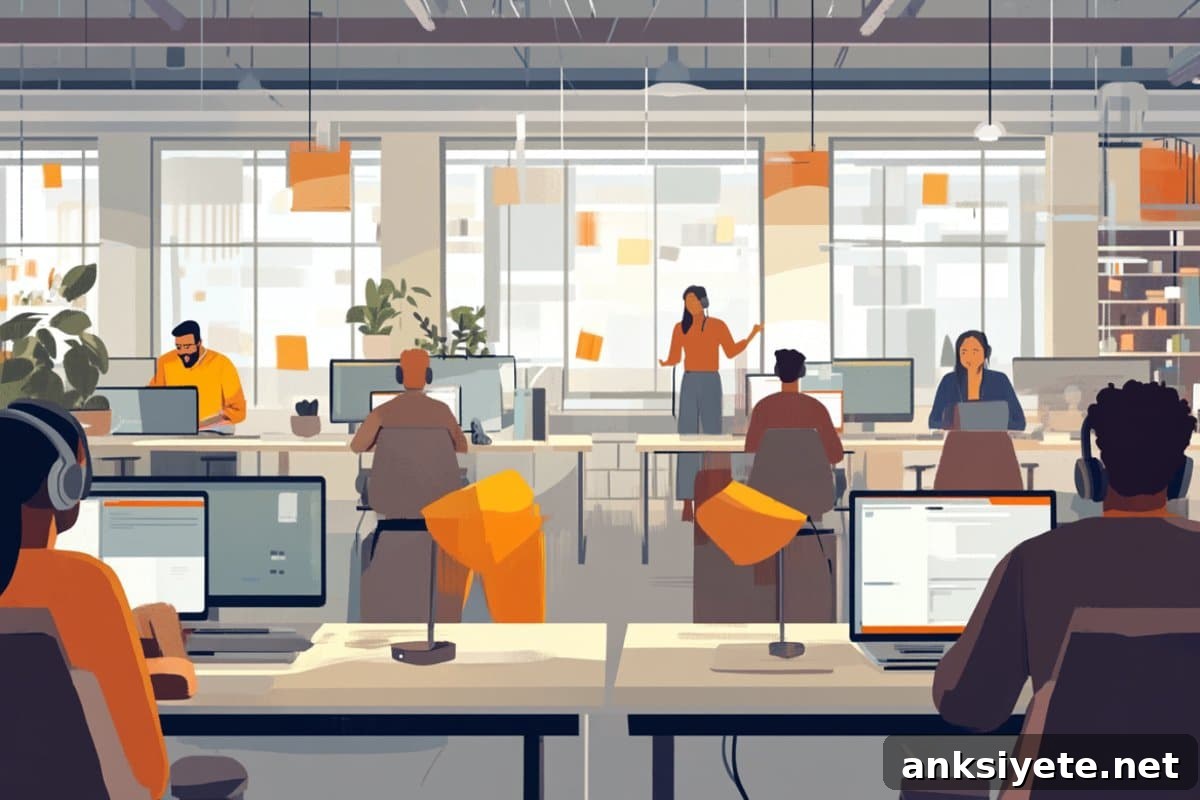
“When music doesn’t align with an employee’s needs for volume, tempo, complexity and emotional tone, it can drain energy, weaken focus and reduce enjoyment at work,” said Kathleen Keeler, co-lead author and assistant professor of management and human resources at The Ohio State University’s Fisher College of Business.
Keeler and her colleagues found that a mismatch between the music played and the music employees need—what they call a music misfit—leads to greater mental fatigue, reduced positive emotion and behaviors that can undermine organizational effectiveness.
The effect is particularly pronounced for employees who are less able to screen out background sounds. These non-screeners find it harder to ignore music while concentrating, which amplifies feelings of depletion and lowers positive mood.
This issue is common across many service and retail environments. The researchers note that roughly 13.5 million people work in occupations where background music is routinely played, yet playlists are often chosen with only customer experience in mind, not employee needs.
“Managers should not assume background music has no impact on staff,” Keeler said.
The study appears in the Journal of Applied Psychology and reports findings from two complementary studies: an online experiment and a field experience sampling study.
In the online experiment, 166 full-time workers first indicated how much they needed specific musical features—volume, tempo, complexity and emotional intensity—before completing a creativity task while listening to one of two playlists. One playlist featured upbeat, moderate-complexity pop; the other was slower, more somber and quieter. After the task, participants rated how well the music matched their stated needs.
Results showed that when the playlist’s characteristics did not align with participants’ needs, those participants reported lower positive affect and greater cognitive depletion—a feeling of mental exhaustion that makes focused work harder.
Non-screeners suffered more from such misfits. Because they struggle to focus on a single sensory input, the distracting music made them feel less positive and more drained than people who can more easily ignore background noise.
The field study followed 68 workers in health care offices, retail shops and dining halls over three weeks. Participants completed brief surveys three times a day about the music they heard, their musical needs, their mood and various work behaviors.
That real-world data confirmed the experimental findings and showed an added consequence: on days when workers felt out of sync with workplace music, they were more likely to engage in behaviors that hurt the company and less likely to take helpful, discretionary actions. Negative behaviors included slower work, negative conversations about the workplace and even taking office supplies, while positive behaviors included helping colleagues with tasks outside one’s immediate duties.
“If employees are drained and distracted by the music they hear all day, their performance will suffer—and that can affect a company’s bottom line,” Keeler said.
Based on these findings, the researchers recommend that employers consider employees’ musical needs when setting playlists. Practical steps include finding a balance between customer and employee preferences, providing quiet areas where staff can escape music during breaks, and offering smart earbuds that let employees hear customers while reducing background music.
Although the study did not test this directly, the results also suggest that allowing employees to listen to their own music—when appropriate—could improve productivity, engagement and well-being.
Co-lead author Harshad Puranik is affiliated with the University of Illinois–Chicago. Other co-authors include Yue Wang of the University of Illinois–Chicago and Jingfeng Yin of The Hong Kong Polytechnic University.
About this psychology, music, and productivity research news
Author: Jeff Grabmeier
Source: Ohio State University
Contact: Jeff Grabmeier – Ohio State University
Image credit: Neuroscience News
Original Research: Closed access. “In sync or out of tune? The effects of workplace music misfit on employees” by Kathleen Keeler et al., Journal of Applied Psychology.
Abstract
In sync or out of tune? The effects of workplace music misfit on employees
Employees—particularly in the service sector—often spend long hours exposed to background music chosen to shape customer experience. This research examines how a mismatch between the music employees need and the music played at work affects their psychological states and behaviors.
Drawing on stimulus–organism–response theory and research on attention regulation, the authors propose that music misfit reduces positive affect and increases cognitive depletion, which in turn lowers organizational citizenship behaviors and raises counterproductive actions. They further hypothesize that these negative effects are stronger for employees with lower stimulus screening ability.
Two studies—an online experiment and a three-week experience sampling field study—largely support these hypotheses and provide a nuanced, practical account of how background music can influence employee mood, energy and performance in everyday work settings.