
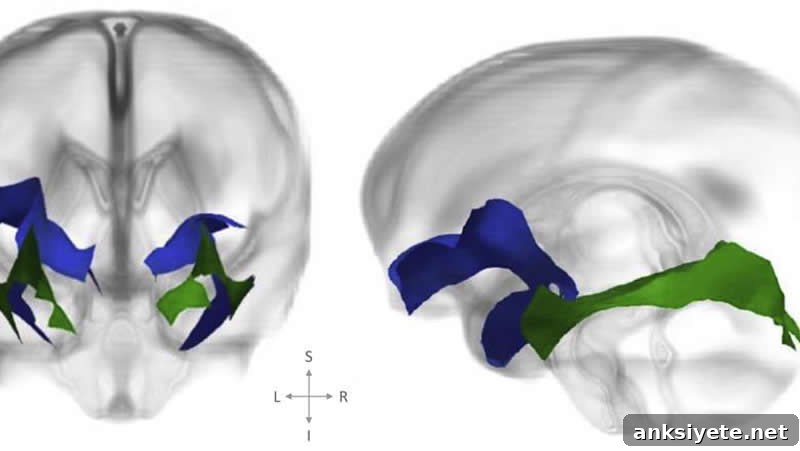
Summary: White matter tracts show measurable alterations in the brains of infants whose mothers experienced higher levels of stress before and during pregnancy.
Source: King’s College London
New research from King’s College London indicates that maternal stress before and during pregnancy can affect early brain development in newborns.
Researchers led by MRC Doctoral Researcher in Perinatal Imaging and Health Alexandra Lautarescu and Professor Serena Counsell, Head of Advanced Neuroimaging, examined the relationship between maternal stress and neonatal brain structure in a cohort of 251 preterm infants. Their findings, published in Biological Psychiatry, point to altered development of a specific white matter tract—the uncinate fasciculus—in infants whose mothers reported greater prenatal stress.
The study measured maternal stressful life events through a questionnaire that captured a broad range of experiences, from everyday pressures such as moving house or taking exams to more severe stressors including bereavement, separation or divorce. Researchers calculated a composite stress severity score that reflected both the number and perceived severity of these events. That score was then used to explore associations with neonatal white matter microstructure using diffusion-weighted magnetic resonance imaging (diffusion tensor imaging, DTI), a technique designed to assess the organization and integrity of white matter tracts.
“We found that in the mums that were more stressed during pregnancy and the period before birth, white matter was altered in the babies,” said lead researcher Alexandra Lautarescu from King’s College London.
Specifically, higher maternal stressful life event scores were associated with increased diffusivity measures—axial, radial, and mean diffusivity—in the left uncinate fasciculus and higher axial diffusivity in the right uncinate fasciculus. These microstructural differences suggest altered development of frontolimbic pathways that are implicated in emotional regulation and have been linked in adults to anxiety disorders. The study controlled for key factors that can influence neonatal brain development, including gestational age at birth, postmenstrual age at scan, maternal age, socioeconomic status, infant sex, and days on parenteral nutrition.
Clinicians and public health practitioners say these findings reinforce the need to identify and support expectant mothers experiencing significant stress. While routine antenatal care often screens for depressive symptoms, general stress and anxiety related to life events may be under-recognized. The study authors and mental health experts emphasize that timely interventions—such as psychological therapies including cognitive behavioural therapy—have been shown in other research to reduce maternal stress and can contribute to improved outcomes for both mother and child.
“Antenatal services need to be aware that it is important to think about maternal stress and to provide support for women who identify that they are struggling,” Lautarescu explained. “Helping these women during pregnancy or in the early postnatal period may not only benefit the mother, but could also help prevent altered brain development in the baby and improve long-term outcomes.”
Previous studies have linked poor maternal mental health during pregnancy to a range of adverse outcomes, including obstetric complications, lower birth weight, and earlier delivery. Maternal stress can also influence early infant behaviour, for example through increased crying or altered interaction patterns, which may in turn affect developmental trajectories.
Although this study demonstrates an association between prenatal stress exposure and neonatal white matter microstructure in preterm infants, further research is needed to determine whether these early differences translate into measurable cognitive, emotional, or behavioral outcomes later in childhood. Longitudinal follow-up studies will be essential to understand the persistent effects, potential resilience factors, and the extent to which interventions can modify these trajectories.
Source:
King’s College London
Media Contact:
Tanya Wood – King’s College London
Image Source:
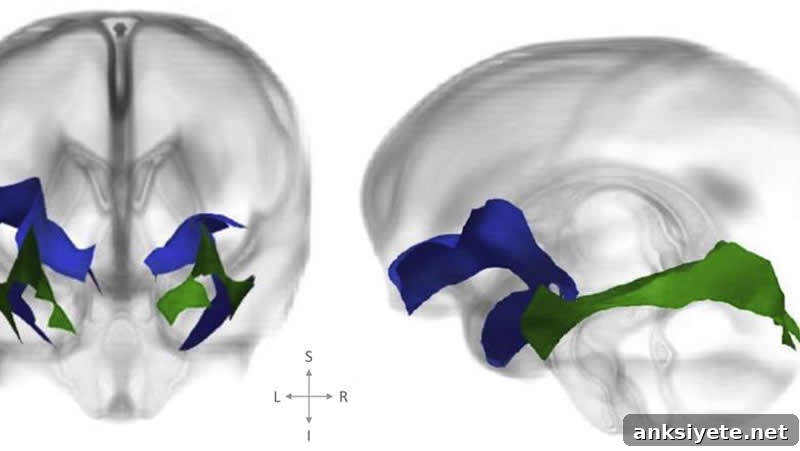
The image is credited to Alexandra Lautarescu et al.
Original Research (Open access):
“Maternal Prenatal Stress Is Associated With Altered Uncinate Fasciculus Microstructure in Premature Neonates”. Alexandra Lautarescu, Diliana Pecheva, Chiara Nosarti, Julie Nihouarn, Hui Zhang, Suresh Victor, Michael Craig, A. David Edwards, and colleagues. Biological Psychiatry. DOI: 10.1016/j.biopsych.2019.08.010.
Abstract (summary)
Background:
Maternal prenatal stress exposure increases the risk of psychiatric and behavioral problems in offspring. One possible biological pathway involves altered white matter development in limbic circuits, particularly the uncinate fasciculus. Preterm birth itself is linked to disrupted white matter maturation and adverse developmental outcomes. The study tested whether higher maternal prenatal stressful life events were associated with altered uncinate fasciculus microstructure in preterm infants.
Methods:
A total of 251 preterm infants (132 male, 119 female; median gestational age 30.29 weeks) underwent MRI including diffusion-weighted imaging around term-equivalent age (median 42.43 weeks). White matter microstructure of the uncinate fasciculus and a control tract (inferior longitudinal fasciculus) was analyzed. Multiple regression models examined relationships among maternal stress measures and neonatal white matter indices, adjusting for relevant covariates.
Results:
After adjusting for covariates, higher maternal stressful life event scores were associated with increased axial, radial, and mean diffusivity in the left uncinate fasciculus and increased axial diffusivity in the right uncinate fasciculus, indicating altered microstructure related to prenatal stress exposure.
Conclusions:
These findings suggest that maternal prenatal stress is linked to altered development of specific frontolimbic white matter pathways in preterm neonates by term-equivalent age, underscoring the importance of supporting maternal mental health during pregnancy.