
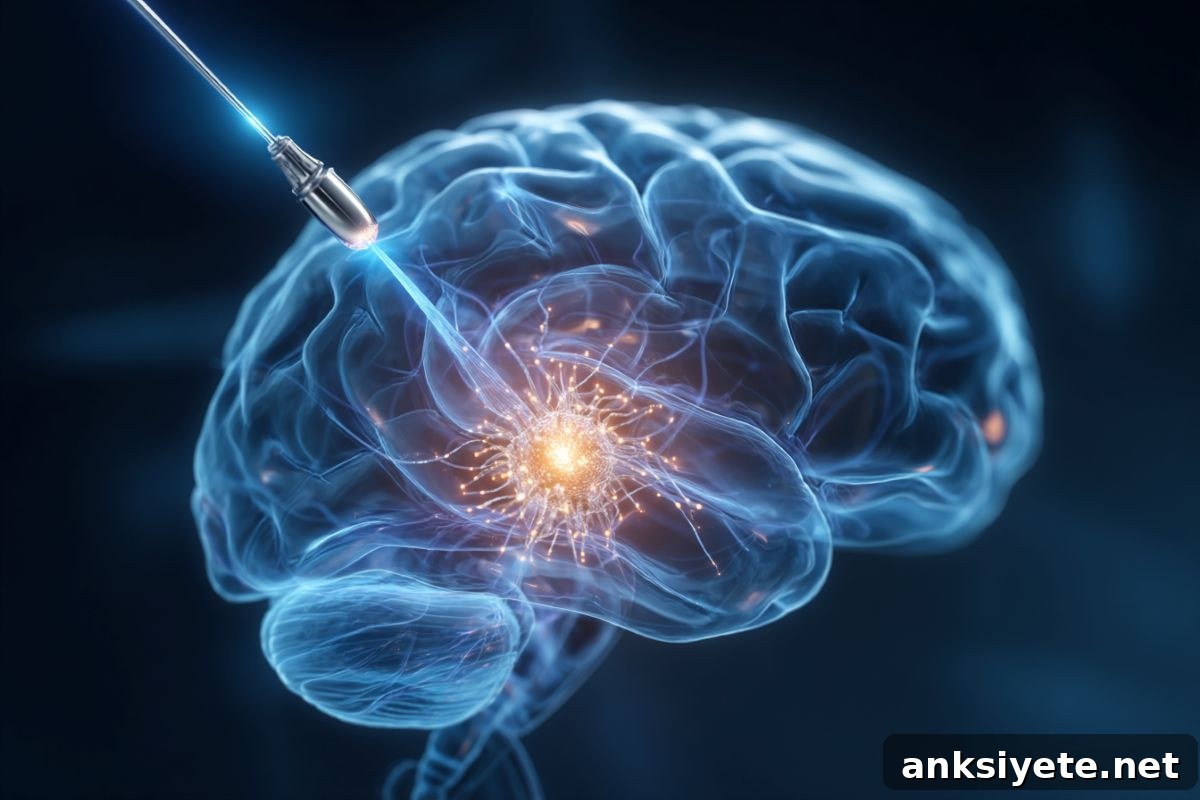
Summary: A new study presents Transcranial Radio Frequency Stimulation (TRFS), a non-invasive neuromodulation method that uses focused radio frequency (RF) energy to increase or decrease neuronal activity in targeted deep-brain regions. Unlike many existing techniques that are limited by skull attenuation or poor depth penetration, TRFS employs high-frequency signals and small custom antennae to reach specific neural circuits without surgery.
Researchers show RF stimulation can suppress overactive neurons implicated in depression and chronic pain or, when combined with targeted genetic sensitization, excite neurons to address disorders such as Parkinson’s disease and epilepsy.
Key Facts
- Technique: TRFS delivers RF energy through small, custom antennae derived from coaxial cable tips, producing small, controlled temperature shifts that modulate ion flow across neuronal membranes.
- Advantages over existing methods: Unlike transcranial magnetic stimulation (TMS), transcranial electrical stimulation (TES), or focused ultrasound, RF energy penetrates biological tissue more effectively and can be directed to deep structures while avoiding surgical implantation.
- Bimodal operation: TRFS works in two modes:
- Pristine mode: RF stimulation applied to intact tissue preferentially suppresses inhibitory interneurons, the cells that act as the brain’s “brakes.” This suppression is relevant to treating depression, anxiety, and chronic pain.
- RF-genetics mode: RF stimulation combined with genetic sensitization (overexpression of TRPV1 ion channels) makes selected cells act as molecular thermometers, enabling heat-dependent excitation of those cells.
- Behavioral evidence: In mice, unilateral TRFS altered turning behavior: pristine mode produced rotation toward the stimulated side, while RF-genetics mode produced the opposite effect.
- Safety: Everyday RF exposures (for example from cell phones) do not measurably affect neuronal activity; this study indicates higher, clinically controlled RF doses can be safely used to modulate brain circuits.
Source: NYU Langone
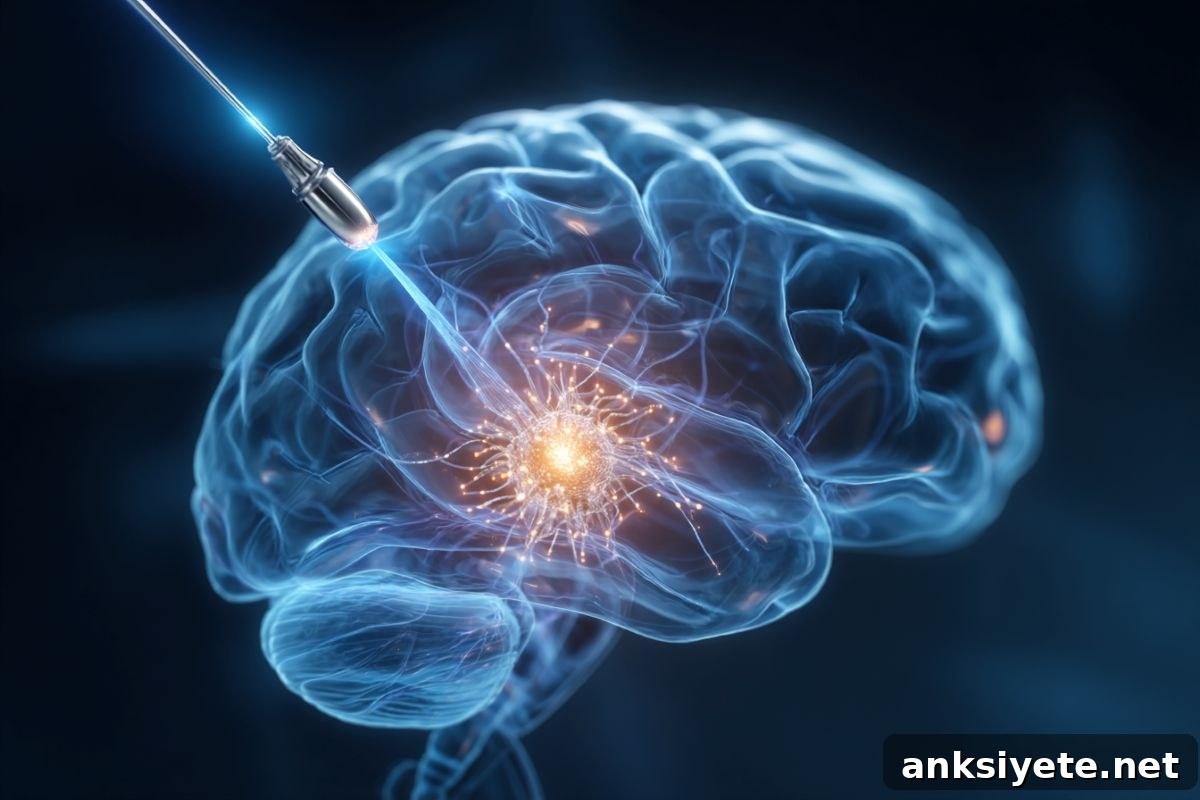
Published recently in the journal Brain Stimulation, the study from NYU Langone Health describes how RF energy—effective at penetrating biological tissue—can be shaped and focused to modulate neural activity in vivo. TRFS is presented as a flexible platform that can either target a small circuit or affect broader regions and that can dial neuronal signaling up or down according to therapeutic need.
“Our study is the first to demonstrate in live mice the potential of this technology to precisely adjust neural activity,” said senior author György Buzsáki, MD, PhD. He emphasized the urgent need for better noninvasive tools given the high global burden of brain disorders.
How TRFS works
Existing noninvasive methods—electric, magnetic, and ultrasound—have inherent trade-offs in focality and penetration depth and can be affected by skull anatomy. The authors designed miniature RF antennae to deliver high-frequency signals to targeted deep-brain locations. RF energy delivered this way produces slight, localized heating that alters ion channel behavior and the excitability of neurons without causing tissue damage.
Using metal-free one-photon fiber photometry with GCaMP calcium indicators, the team measured how local temperature changes affected neuronal activity in awake mice. Optical thermometry tracked the modest temperature shifts induced by the RF stimulation.
Pristine mode: suppression of inhibitory interneurons
In pristine mode—RF stimulation applied to unmodified brain tissue—the researchers found dose-dependent suppression of parvalbumin-expressing inhibitory interneurons. These interneurons shape and constrain excitatory signaling; transiently reducing their activity can counteract symptoms associated with depression, chronic pain, and anxiety. The temperature changes that produced suppression remained within a physiologically safe range.
RF-genetics mode: targeted excitation via TRPV1
In RF-genetics mode, brain regions were made more heat-sensitive by overexpressing TRPV1 ion channels, which act as molecular thermometers. Once local temperature increases exceeded roughly 1.5 °C, RF stimulation produced reliable excitation of the transfected neurons. Prior studies suggest that selective excitation of specific cell types may be beneficial for conditions such as Parkinson’s disease, epilepsy, and certain neurodevelopmental disorders.
Behavioral validation
To demonstrate functional outcomes, the team targeted striatal circuits that control leftward and rightward turning. In freely moving mice exhibiting hyperlocomotion, TRFS produced predictable, side-dependent changes in rotational bias: pristine mode induced ipsilateral turning, while RF-genetics mode induced contralateral turning. These behavioral effects confirm that TRFS can alter circuit-level activity and behavior.
Safety and context
The study notes extensive prior research on RF exposure from consumer devices and shows that everyday RF doses do not alter neuronal function. The clinical RF doses used in TRFS are higher than everyday environmental exposures but remain within safe, controlled limits in the experimental setting. The authors emphasize careful dosimetry and monitoring as essential for translational development.
Study authors and funding
Lead authors include Omid Yaghmazadeh, Leeor Alon, Tanzil M. Arefin, Zakia Ben Youss, Jiangyang Zhang, and György Buzsáki. The work was supported by the National Institutes of Health (grant 1R01NS113782-01A1).
Key questions answered
A: No. The temperature increases induced by TRFS in these experiments are very small and stay within normal physiological fluctuation ranges. The effect is a subtle thermal modulation of ion channels rather than tissue damage.
A: Unlike invasive implants that require surgery, TRFS aims to deliver deep-brain precision from outside the skull. It offers a noninvasive alternative for patients who do not respond to medications and who want to avoid surgical procedures.
A: The researchers highlight applications for major depression, epilepsy, Parkinson’s disease, chronic pain, and anxiety, owing to TRFS’s ability to suppress inhibitory interneurons or selectively excite genetically sensitized cell populations.
Abstract and study overview
Background: Achieving noninvasive, targeted modulation of deep brain tissue is a major challenge for neurotechnology. Existing noninvasive approaches face limitations in focality and penetration. RF energy offers an alternative because it can penetrate tissue effectively.
Methods: The team developed a TRFS system using 945 MHz stub antennas to produce localized heating in mice. They tested two modes: pristine mode (intact tissue) and RF-genetics mode (regions transduced to overexpress TRPV1). Neural activity was recorded via metal-free one-photon fiber photometry, and behavior was assessed in freely moving mice.
Results: Pristine mode produced dose-dependent suppression of parvalbumin interneurons and induced ipsilateral rotational bias in hyperlocomotive mice. RF-genetics mode produced temperature-dependent excitation in TRPV1-overexpressing regions once ΔT exceeded approximately 1.5 °C and produced contralateral rotational bias.
Conclusions: TRFS combines RF’s ability to reach deep tissue with thermal modulation to provide a bimodal, noninvasive platform for suppressing or exciting targeted neural populations. The RF-genetics concept expands possibilities for selective excitation and points to potential translational applications in neurological and psychiatric disorders.
Author: Gregory Williams
Source: NYU Langone
Image: Image credited to Neuroscience News