Summary: Researchers at Johns Hopkins have discovered a group of neurons in the zona incerta that appear to promote sleep by inhibiting wake-promoting brain cells. This finding may point to new treatment targets for insomnia, narcolepsy and other sleep disorders.
Source: Johns Hopkins Medicine
Researchers identify sleep-promoting neurons in the hypothalamus
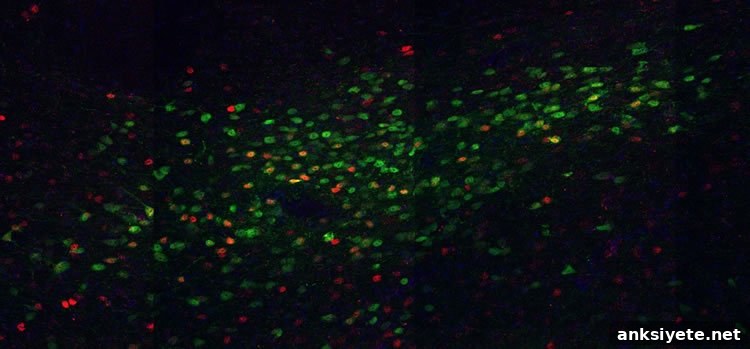
Scientists at Johns Hopkins report the identification of a previously unrecognized population of neurons in the mouse hypothalamus that actively promote sleep. These cells, found in a region called the zona incerta, express the gene Lhx6 and seem to suppress wake-promoting neurons, suggesting a central role in switching the brain from wakefulness to sleep. The discovery, published in Nature, could guide development of new therapies for sleep disorders stemming from disrupted sleep-wake regulation.
The researchers focused on neurons that express Lhx6, a transcription factor known to be essential for the development of inhibitory neurons elsewhere in the brain. Because Lhx6 is conserved across species and important for forming inhibitory circuits, the team investigated whether Lhx6-expressing cells in the zona incerta act to inhibit neurons that promote wakefulness. Seth Blackshaw, Ph.D., professor of neuroscience at the Johns Hopkins University School of Medicine and the study’s lead author, notes that studying these conserved hypothalamic circuits in mice helps illuminate human brain function.
Sleep consists of two main states: non-rapid eye movement (non-REM), which is generally deeper and restorative, and rapid eye movement (REM), where most dreaming occurs. Both are necessary for healthy sleep. To test how Lhx6-expressing cells affect these stages, the team used designer receptors exclusively activated by designer drugs (DREADDs) to selectively activate those neurons in mice. Activation produced sustained increases in both non-REM and REM sleep lasting roughly eight hours, indicating that these neurons can promote both major sleep states.
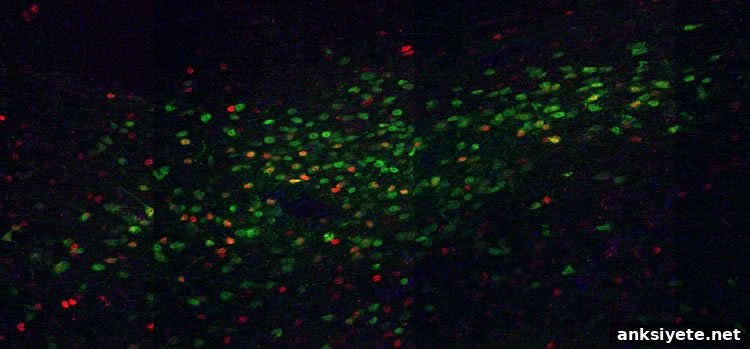
The study found that Lhx6-expressing neurons connect to several wake-promoting systems, including hypocretin-producing neurons in the lateral hypothalamus. Hypocretin (also called orexin) is a key neurotransmitter that sustains wakefulness and whose dysfunction is linked to narcolepsy. By using drugs that block hypocretin signaling, the team showed that the increase in non-REM sleep produced by activating Lhx6 cells depended on suppression of hypocretin pathways, while the REM sleep increase did not. This indicates Lhx6 neurons inhibit hypocretin cells as one mechanism to promote sleep, but they also act through other wake-promoting targets to regulate REM sleep.
To test necessity as well as sufficiency, researchers disrupted the formation of these cells during development and acutely inhibited their activity in adult mice. Both approaches reduced total sleep time: mice with impaired Lhx6-expressing neurons spent significantly less time in both REM and non-REM sleep. The converging results from activation, inhibition and developmental deletion support the conclusion that Lhx6-positive GABAergic neurons in the ventral zona incerta are essential regulators of sleep.
“These Lhx6-expressing neurons are unique in promoting both non-REM and REM sleep,” says Kai Liu, the study’s first author. “That dual effect distinguishes them from other known sleep-regulating cells and points to new therapeutic targets for a broad range of sleep disorders, including insomnia and disorders of excessive daytime sleepiness.”
Blackshaw adds that the zona incerta typically influences multiple behaviors, and future work will explore whether these Lhx6-positive cells also participate in other functions beyond sleep regulation.
The research team included investigators from the Johns Hopkins University School of Medicine, the University of North Carolina School of Medicine, the Francis Crick Institute and the Massachusetts Institute of Technology. Key contributors were Juhyun Kim, Dong Won Kim, Yi Stephanie Zhang, Chang Liu, Wileen Kim, Samer Hattar, Eileen Kim, Solange P. Brown, Hechen Bao, Szu-Aun Lim, Juan Song, Myrto Denaxa, Vassilis Pachinis and Ian R. Wickersham.
Funding: This work received support from a Johns Hopkins Discovery Fund award, a W.M. Keck Distinguished Young Scholar in Medical Research award and a Klingenstein-Simons Foundation Fellowship in the Neurosciences.
The authors report no competing financial interests.
Lhx6-positive GABA-releasing neurons of the zona incerta promote sleep
Wake-promoting neuronal populations in mammals have been well described, but sleep-promoting neurons are relatively few. This study identifies a subset of GABAergic neurons in the ventral zona incerta that express the LIM homeodomain factor Lhx6 and become active under sleep pressure. These cells directly inhibit wake-active hypocretin and GABAergic neurons in the lateral hypothalamus and receive inputs from multiple sleep–wake-regulating pathways. Conditional deletion of Lhx6 in the developing diencephalon reduces both non-REM and REM sleep. In adult mice, selective activation or inhibition of Lhx6-positive neurons bidirectionally alters sleep duration, partly through hypocretin-dependent mechanisms. The findings reveal a GABAergic subpopulation in the ventral zona incerta that promotes sleep.
Original research published online August 23, 2017 in Nature. Image credit: Seth Blackshaw, Ph.D. Report prepared by Johns Hopkins Medicine.