
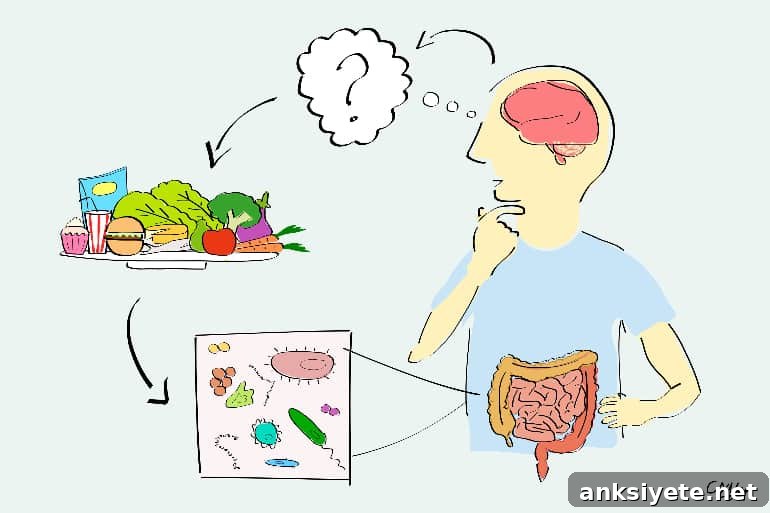
Summary: New research indicates that differences in the gut microbiome observed in children with autism are likely driven by autism-related restricted eating patterns, rather than the microbiome causing autism symptoms.
Source: Cell Press
Recent studies have proposed a link between autism spectrum disorder (ASD) and changes in the gut microbiome, often suggesting that specific microbes might contribute to autism symptoms.
A new, larger study published in Cell offers a different interpretation: the altered microbial diversity found in the guts of many children with autism appears to stem from restricted dietary preferences that commonly accompany ASD, rather than representing a direct cause of autistic traits.
“There’s a lot of interest surrounding the role of the gut microbiome in autism, but not a lot of hard evidence,” says senior author Jacob Gratten of Mater Research and The University of Queensland. “Our study, which is the largest to date, was designed to overcome some of the limitations of prior work.”
Advances in next-generation sequencing have made it easier to profile the gut microbiome, prompting numerous studies linking gut bacteria to mental health conditions including anxiety, depression, schizophrenia, and ASD. These findings have fueled interest in microbiome-targeted treatments. However, earlier studies often relied on smaller samples or used 16S sequencing, which provides limited taxonomic resolution.
In the current study, researchers analyzed stool samples from 247 children aged 2 to 17: 99 diagnosed with ASD, 51 of their undiagnosed siblings, and 97 unrelated undiagnosed children. Participants came from the Australian Autism Biobank and the Queensland Twin Adolescent Brain Project.
The team used metagenomic sequencing, which reads whole microbial genomes rather than short marker genes, delivering more precise species and gene-level information than typical 16S approaches used in many earlier autism-microbiome studies.
“We also carefully accounted for diet in all our analyses, along with age and sex,” adds first author Chloe Yap, an MD–PhD student working with Gratten. “The microbiome is strongly affected by the environment, which is why we designed our study with two comparison groups.”
The results showed only limited direct associations between ASD diagnosis and the gut microbiome. Instead, the strongest and most consistent relationships linked autism-related traits to diet: children with an autism diagnosis tended to have a narrower range of foods and poorer dietary quality. Measures of autistic traits—such as restricted interests, social communication difficulties, and sensory sensitivities—along with genetic risk scores for ASD and for repetitive or impulsive behaviors were associated with less-diverse diets.
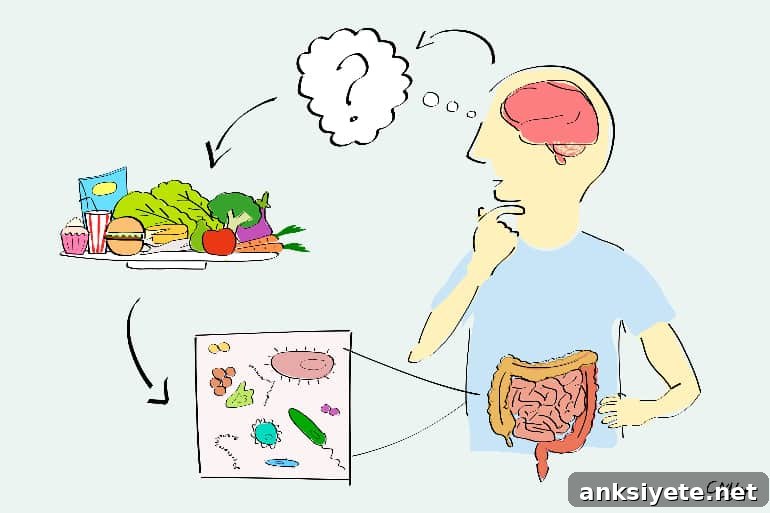
“Taken together, the data support a strikingly simple and intuitive model, whereby autism-related traits promote restricted dietary preferences,” Yap explains. “This in turn leads to lower microbiome diversity and more diarrhea-like stool.”
While the study found a single taxa, Romboutsia timonensis, associated with an autism diagnosis, the overall pattern favors diet as the mediating factor between autism traits and gut microbial composition. The researchers emphasize that their dataset was well powered to detect associations with age, dietary intake, and stool consistency, even if direct diagnostic associations remained minimal.
The authors acknowledge several limitations. The study design cannot exclude the possibility that early-life microbiome differences might influence the later development of ASD, nor can it rule out feedback effects in which diet-induced microbiome changes influence behavior. They also addressed antibiotic use by excluding participants who were taking antibiotics at the time of stool collection, but broader antibiotic history could still matter. Finally, comparable large datasets are not yet available to independently replicate these findings.
Gratten highlights practical implications: “We hope that our findings encourage others in the autism research community to routinely collect metadata in ‘omics’ studies to account for important (but often underappreciated) potential confounders such as diet. Our results also put the spotlight on nutrition for children diagnosed with autism, which is a clinically important (but underrecognized) contributor to overall health and wellbeing.”
The research team plans to expand their work with larger samples to test whether the same patterns hold in other populations and to better understand how diet, genes, and microbiome interact over time.
About this autism research news
Author: Press Office
Source: Cell Press
Contact: Press Office – Cell Press
Image: The image is credited to Chloe Yap
Original Research: Closed access. “Autism-related dietary preferences mediate autism-gut microbiome associations” by Chloe Yap et al. Cell
Abstract
Autism-related dietary preferences mediate autism-gut microbiome associations
Highlights
- Limited autism-microbiome associations found in stool metagenomics of n = 247 children
- Romboutsia timonensis was the only taxon directly associated with autism diagnosis
- Autistic traits such as restricted interests correlate with less-diverse diets
- Less-diverse diets are associated with lower gut microbiome alpha-diversity and looser stool consistency
Summary
Interest in the gut microbiome’s role in autism spectrum disorder has grown rapidly, but earlier studies often lacked statistical power or comprehensive control for confounding factors. In this large metagenomic study, researchers found minimal direct links between ASD diagnosis and gut microbial composition. Instead, the data support a model in which autism-related behavioral traits lead to restricted dietary choices, which then reduce microbial diversity and alter stool consistency. The findings suggest caution in interpreting microbiome differences as causal in ASD and underscore the importance of evaluating diet and nutrition in clinical care and future research.