
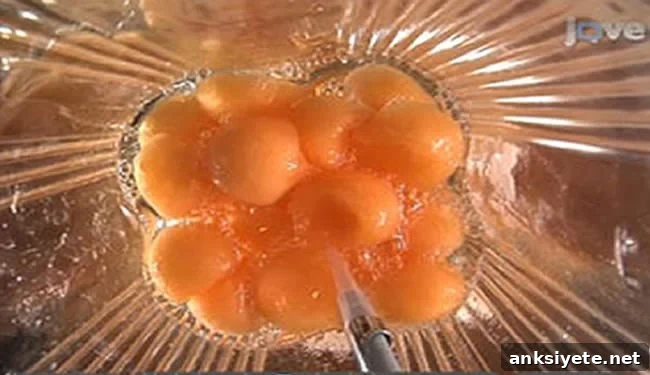
Have you ever picked up a cantaloupe at the store only to find it either overripe or not ripe enough? Researchers at the University of California, Davis have been working on a practical solution to that common problem. Their approach, described in a methods article to be published on March 30 in the Journal of Visualized Experiments (JoVE), shows how a portable electronic nose can rapidly assess melon ripeness by detecting the volatile compounds that develop as fruit matures.
“We are involved in a project geared towards developing rapid methods to evaluate ripeness and flavour of fruits,” said Dr. Florence Negre-Zkharov, one of the paper’s authors. “We evaluated an electronic nose to see if it can differentiate maturity of fruit, specifically melons. The goal is to develop a tool that can be used post-harvest to better evaluate produce, and develop better breeds.”
As fruit ripens it emits a distinct blend of volatile organic compounds. Those volatiles provide reliable cues about maturity and flavor development. Historically, gas chromatography has been the laboratory standard for analyzing these compounds, offering detailed profiles of each sample. However, gas chromatography is time-consuming—often requiring up to an hour to process a single sample—which limits its practicality for routine use outside specialized labs.
The UC Davis team tested a commercially available electronic nose that provides a much faster, lighter-weight alternative. While less detailed than gas chromatography, the electronic nose can capture a volatile fingerprint quickly. In their experiments with melons, the device successfully distinguished between different maturity stages, offering a promising route for rapid, on-site quality assessment.
Dr. Negre-Zkharov emphasized the practical aims of the work: to create quantitative, user-friendly methods that can be adopted by growers, packers, and breeders. Faster assessments of ripeness could help the produce industry reduce waste, improve consistency of flavor at retail, and guide breeding efforts toward varieties that combine desirable taste and shelf life.
The research is part of the Specialty Crops Research Initiative, a program funded by the United States Department of Agriculture that supports research and extension activities addressing critical industry needs. By focusing on tools that work after harvest, the team hopes to bridge the gap between laboratory science and the decisions made every day on farms and in packing houses.
JoVE Science Editor Dr. Zhao Chen noted the practical advantages of the approach: “It’s very impressive that the electronic nose system can do a type of gas chromatography in about a minute. Ultra-fast, indeed. Also, the sample preparation is as easy as making a smoothie at home. Such a user-friendly system could greatly help analysis efficiency in this field.” That emphasis on straightforward sample handling and rapid results underlies the team’s decision to present their method through JoVE, which publishes peer-reviewed content in both text and video formats to make methods easier to adopt.
Choosing a video format was deliberate. “We thought that the best way to get people to adopt the method was showing a video, instead of publishing a text,” Dr. Negre-Zkharov said, explaining that a visual demonstration helps technicians and researchers replicate the protocol more reliably than text alone.
The researchers are now moving the technology out of the laboratory and into real-world conditions. Field testing introduces complicating background odors—soil, foliage, ambient air—that could interfere with volatile profiles. The team has begun trials under these more challenging conditions but has not yet completed analysis of the field data. Evaluating performance in orchards and packing facilities will be a key step toward validating the electronic nose for routine post-harvest use.
The method described in the JoVE article combines rapid sensing with simple sample preparation to provide an accessible approach for fruit maturity evaluation. If broadly adopted, similar techniques could help standardize quality checks, reduce the occurrence of poorly ripened fruit at retail, and support breeding programs focused on flavor and shelf life. The balance between analytical speed and sufficient accuracy makes the electronic nose an attractive complement to more detailed laboratory techniques, especially where throughput and practicality matter most.
Watch the full video article in the JoVE video-article collection to see the complete protocol demonstrated.
Notes about this neuroscience research article
Contact: Katherine Scott, Science Communications – The Journal of Visualized Experiments
Source: The Journal of Visualized Experiments press release
Image Source: NeuroscienceNews.com image adapted from JOVE press release image
Original Research: Open access research paper for “Fruit Volatile Analysis Using an Electronic Nose” by Simona Vallone, Nathan W. Lloyd, Susan E. Ebeler & Florence Zakharov in JoVE