
Summary: A new study finds that increasing the movement of mitochondria along axons improves the capacity of mouse nerve cells to regenerate after injury.
Source: Rockefeller University Press.
Scientists at the National Institute of Neurological Disorders and Stroke report that enhancing mitochondrial transport along neuronal axons improves the ability of mouse neurons to repair themselves after injury. The study, titled “Facilitation of axon regeneration by enhancing mitochondrial transport and rescuing energy deficits,” published in The Journal of Cell Biology, points to potential strategies for promoting regrowth of damaged human neurons.
Neurons require substantial energy to extend axons across long distances in the body. This energy, delivered as adenosine triphosphate (ATP), is produced by mitochondria—the cell’s powerhouses. During development, mitochondria travel along growing axons, supplying ATP where it is needed. In mature neurons, however, mitochondrial movement declines because the protein syntaphilin anchors mitochondria in place. Zu-Hang Sheng and colleagues at the National Institute of Neurological Disorders and Stroke investigated whether this reduction in mitochondrial mobility contributes to the limited regenerative capacity of adult neurons.
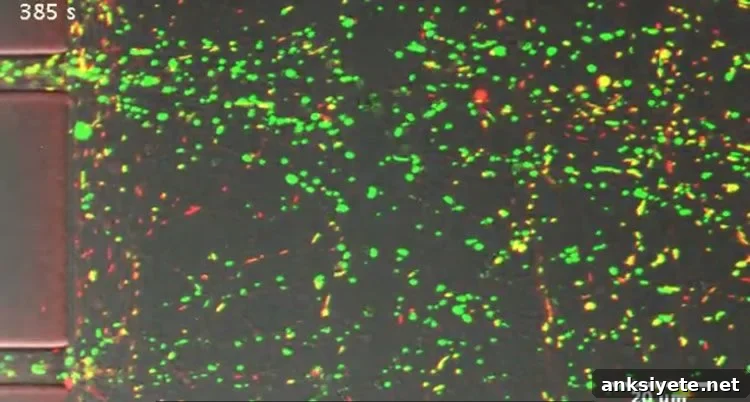
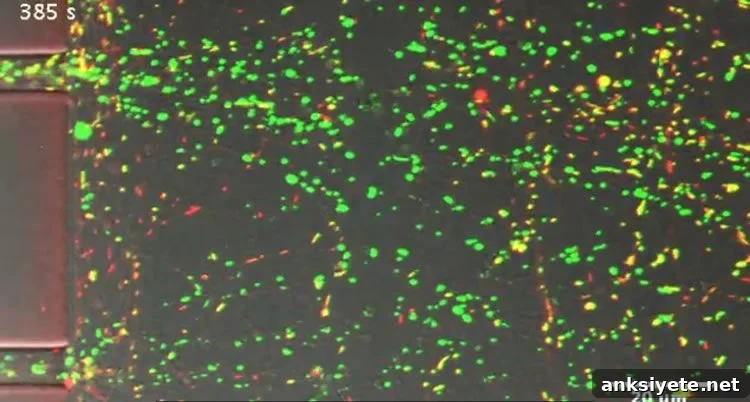
Using both cultured neurons and mouse models, the researchers found that axonal injury causes nearby mitochondria to depolarize and lose ATP-generating capacity. This acute loss of local energy supply hinders the regeneration process. The team discovered that mature neurons express higher levels of syntaphilin (SNPH), which tethers mitochondria and reduces their mobility. This anchoring leads to local energy deficits after injury because damaged mitochondria are not readily replaced by healthy ones.
To test whether restoring mitochondrial movement could improve regeneration, the researchers removed syntaphilin genetically. In syntaphilin-deficient neurons, mitochondrial transport increased and healthy mitochondria were able to move into injured axons, replenishing ATP supply. As a result, mature neurons lacking syntaphilin regained regenerative properties similar to those seen in young neurons. In live animals, deleting syntaphilin accelerated axon regrowth following a sciatic nerve crush, demonstrating that enhanced mitochondrial trafficking can promote recovery after peripheral nerve injury.
Lead investigator Zu-Hang Sheng and first author Bing Zhou emphasize that activating a neuron’s intrinsic growth program requires coordinated restoration of mitochondrial trafficking and local energy balance. Their findings suggest that therapies aimed at improving mitochondrial mobility and correcting energy deficits could augment axon regeneration in both the central and peripheral nervous systems after trauma or disease.
Funding: This research was supported by the National Institutes of Health, including the NIH/National Institute of Neurological Disorders and Stroke.
Source: Ben Short, Rockefeller University Press
Image source: Image credited to Zhou et al., 2016.
Original research: Abstract for “Facilitation of axon regeneration by enhancing mitochondrial transport and rescuing energy deficits” by Bing Zhou, Panpan Yu, Mei-Yao Lin, Tao Sun, Yanmin Chen, and Zu-Hang Sheng in Journal of Cell Biology. Published online June 7, 2016. DOI: 10.1083/jcb.201605101
Abstract
Facilitation of axon regeneration by enhancing mitochondrial transport and rescuing energy deficits
Neuronal regeneration demands substantial metabolic resources, yet mitochondrial transport along axons progressively declines as neurons mature. Mature neurons often fail to regenerate after injury, raising the question of whether mitochondrial mobility is required to meet increased energy needs during regrowth. This study identifies reduced mitochondrial motility and energy depletion in injured axons as intrinsic factors that limit regeneration in mature neurons. Axotomy causes rapid mitochondrial depolarization and ATP loss within injured axons. Age-related increases in the mitochondria-anchoring protein syntaphilin and corresponding decreases in mitochondrial transport produce local energy shortages. Enhancing mitochondrial transport through genetic manipulation replenishes healthy mitochondria in injured axons and restores ATP levels, thereby improving regenerative capacity. An in vivo sciatic nerve crush model shows that mice lacking syntaphilin exhibit accelerated axon regeneration. Understanding how impaired mitochondrial trafficking and energy supply restrict regeneration in mature neurons may guide new approaches to stimulate axon repair.
“Facilitation of axon regeneration by enhancing mitochondrial transport and rescuing energy deficits” by Bing Zhou, Panpan Yu, Mei-Yao Lin, Tao Sun, Yanmin Chen, and Zu-Hang Sheng in Journal of Cell Biology. Published online June 7, 2016. DOI: 10.1083/jcb.201605101