
Summary: Columbia researchers discovered a neural circuit in fruit flies that enables color vision and closely resembles the circuitry underlying human color perception. The discovery clarifies how light signals travel from the eye to the brain and could guide new AI approaches for color recognition.
Source: Zuckerman Institute
Columbia University scientists have mapped a brain circuit that enables fruit flies to perceive color, revealing surprising parallels with human color vision. Their findings illuminate how spectral information is transmitted and processed from the eye to the brain. Beyond advancing basic neuroscience, this work may inspire machine-vision algorithms that better interpret color.
This study appears in the journal Current Biology.
“The brain can distinguish more than a million colors, a capability we are only beginning to understand,” said Rudy Behnia, PhD, principal investigator at Columbia’s Mortimer B. Zuckerman Mind Brain Behavior Institute and senior author of the paper. “In this study we identified a specific group of nerve cells that act as a color synthesizer in the fly brain. The striking similarity between that system and circuits in the human visual system suggests conserved strategies for color processing across species.”
Color vision begins in the eye with specialized photoreceptors—cells tuned to different ranges of wavelengths. Humans typically have three classes of color photoreceptors; fruit flies (Drosophila) have four. Light activates these photoreceptors and triggers electrical signals that travel along axons into the brain, where the signals are compared and transformed into color perception.
“We know the brain compares signals from multiple photoreceptor types to generate color, but the detailed circuitry that performs those comparisons has been unclear,” said Dr. Behnia, who is also an assistant professor of neuroscience at Columbia’s Vagelos College of Physicians and Surgeons. “New molecular and imaging tools let us visualize cellular activity across the fly brain with unprecedented resolution, enabling the circuit mapping presented here.”
The compact and well-characterized fly brain makes Drosophila a powerful model for studying chromatic processing. Comprehensive mapping projects such as the Fly Connectome have already charted cell types and connections, providing a foundation for testing how photoreceptor signals are routed and combined.
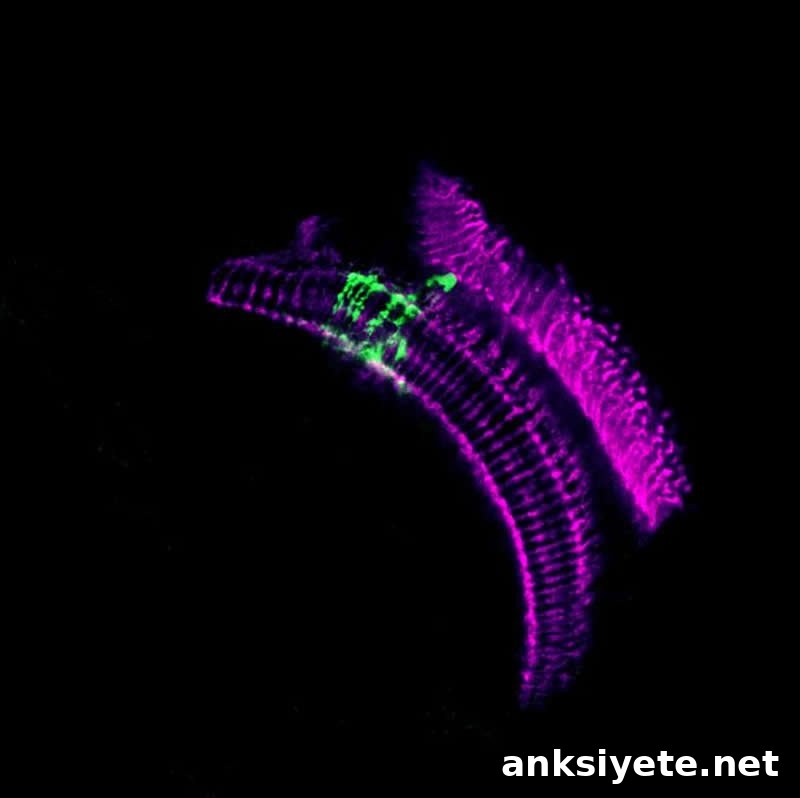
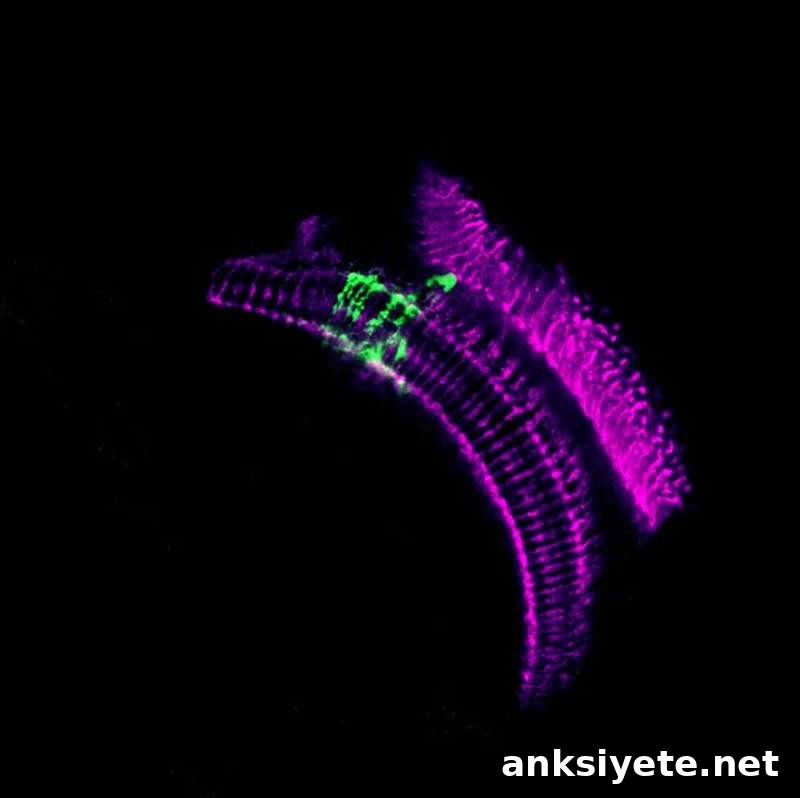
For this study, Sarah Heath, a doctoral candidate in the Behnia lab and co-first author, measured activity from individual photoreceptors while flies viewed LEDs of different colors. Each photoreceptor projects axons into the optic lobe, the visual center of the fly brain, and these axons exchange information. Tracing those connections led the team to a medulla interneuron type called Dm9.
“We believe Dm9 functions as a central synthesizer, where signals from distinct photoreceptors are quantitatively compared,” Dr. Behnia said.
Comparative processing is essential: a single photoreceptor’s response cannot uniquely identify color, which is why missing photoreceptor types cause forms of color blindness. The fly circuit appears to perform quantitative comparisons between inputs to derive chromatic information.
Using the new physiological measurements together with wiring data from the Fly Connectome, Matthias Christenson, co-first author and doctoral candidate in the Behnia lab, built a computational model of the fly color circuit. The model reproduces how signals combine and predicts behavioral responses to different wavelengths, helping to fill gaps in our knowledge of visual processing.
Christenson notes the potential for technological application: “Computer vision systems today struggle to handle the full range of natural hues. Understanding the biological computations behind color perception may lead to algorithms that more reliably distinguish colors under complex conditions.”
The study also uncovered a deeper resemblance between flies and humans. Photoreceptor interactions in Drosophila mirror functional motifs found in mammalian vision, and Dm9 neurons closely resemble horizontal cells in the vertebrate retina in structure and role.
“Dm9 cells are analogous to horizontal cells in vertebrates in how they mediate lateral interactions and shape spectral responses,” said Heath. “This could reflect convergent evolution, where distinct lineages arrive at similar solutions to the challenge of extracting chromatic information.”
The combined evidence supports a dual mechanism in flies: a point-wise comparison of photoreceptor signals together with a lateral, horizontal-cell-like pathway mediated by Dm9. Together these pathways decorrelate redundant inputs and compress chromatic information efficiently while preserving essential color cues at different spatial scales.
“Studying how flies extract color illuminates common principles of sensory computation,” Dr. Behnia said. “Discoveries in Drosophila continue to reveal mechanisms that are relevant to vertebrate vision and to general concepts of neural coding.”
Funding: Support came from the National Institutes of Health (R01EY029311, F31EY029592, 5T32EY013933), the National Science Foundation (GRF DGE-1644869), the McKnight Foundation, the Grossman Charitable Trust, the Pew Charitable Trusts and the Kavli Foundation.
Source:
Zuckerman Institute, Columbia University
Media Contact:
Anne Holden – Zuckerman Institute
Image Source:
Maia Weisenhaus / Behnia lab / Columbia University’s Zuckerman Institute
Original Research (open access):
“Circuit Mechanisms Underlying Chromatic Encoding in Drosophila Photoreceptors.” Sarah L. Heath, Matthias P. Christenson, Elie Oriol, Maia Saavedra-Weisenhaus, Jessica R. Kohn, Rudy Behnia. Current Biology. DOI: 10.1016/j.cub.2019.11.075
Abstract highlights
• Surround inhibition contributes to color opponency in fly photoreceptor axons.
• This inhibition is mediated by the horizontal-cell-like medulla interneuron Dm9.
• The circuit produces an efficient representation of chromatic information.
• A biologically constrained model predicts a complex spatio-chromatic receptive field with a color-opponent center and broadband surround.
Summary:
The study shows that spectral information in Drosophila is processed via both local comparisons and a lateral inhibition pathway resembling vertebrate horizontal-cell circuitry. These combined mechanisms enable efficient decorrelation and dimensionality reduction of photoreceptor signals while retaining maximal chromatic detail, allowing flies to extract color across different spatial resolutions.