
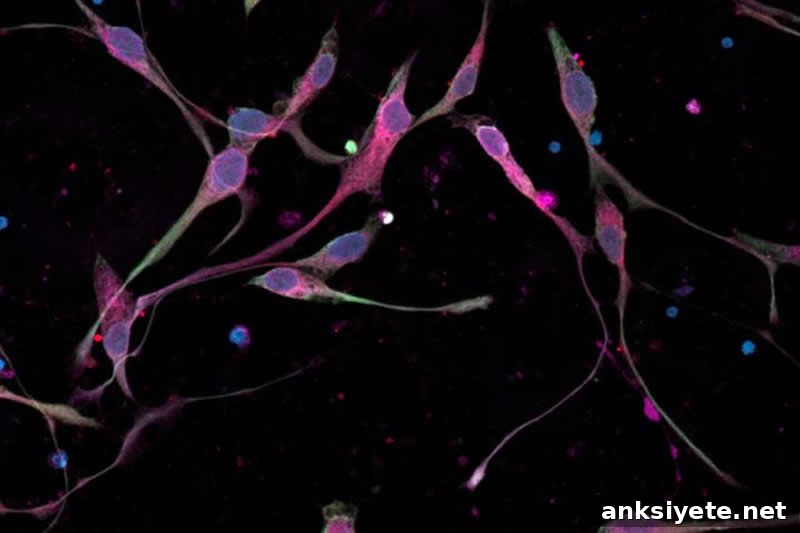
Summary: Scientists have identified two drugs that act together to kill cancer cells and counter the genetic mutation that drives diffuse midline gliomas (DMGs), a group of lethal pediatric brain tumors.
Source: NIH/NCATS
Researchers have developed a promising combined drug strategy against diffuse midline gliomas (DMGs)—including diffuse intrinsic pontine glioma (DIPG), thalamic glioma, and spinal cord glioma—by pairing two agents that both kill tumor cells and counteract the key genetic mutation behind these cancers.
Investigators from the National Institutes of Health, Stanford University, and Dana-Farber Cancer Institute found that using the histone deacetylase inhibitor panobinostat together with the proteasome inhibitor marizomib was more effective than either drug alone at killing DMG cells in laboratory cultures and in animal models. Their work, published November 20 in Science Translational Medicine, also revealed a previously unrecognized metabolic weakness in these tumors that could guide future therapeutic approaches.
Matrix screening delivers insights, increases options
DMGs are aggressive, treatment-resistant tumors and are the leading cause of brain cancer deaths in children in the United States. They primarily affect children between about 4 and 12 years old, with most patients succumbing within a year of diagnosis. Many DMGs are driven by a recurrent mutation in histone proteins (notably H3K27M) that alters chromatin structure and gene regulation. Histone-modifying enzymes such as histone deacetylases (HDACs) influence how tightly DNA is wound around histone proteins by adding or removing chemical tags, indirectly controlling gene activity.
Earlier research led by Stanford neuro-oncologist Michelle Monje, M.D., Ph.D., showed that panobinostat, an HDAC inhibitor, can partially restore normal histone function in DIPG cells. Although panobinostat is under early clinical evaluation, tumor cells can develop resistance, so Monje’s group sought complementary agents and combinations that enhance anti-tumor activity.
“Very few cancers respond to a single drug,” said Monje, a senior author of the study who treats children with DIPG and other diffuse midline gliomas. “We have long known that effective therapy will require combinations. The challenge is prioritizing the right combinations among thousands of possibilities. We are hopeful this pairing will benefit children with these tumors.”
Monje and Katherine Warren, M.D., then at the National Cancer Institute and now at Dana-Farber and Boston Children’s Hospital, collaborated with Craig Thomas, Ph.D., and colleagues at the NIH’s National Center for Advancing Translational Sciences (NCATS). The NCATS team applied robotics-enabled, high-throughput matrix screening to test thousands of approved and investigational drugs and to evaluate many drug-drug pairings for activity against patient-derived DIPG cell models.
These automated, high-throughput approaches make it possible to rapidly assess single agents and combinations, identify effective dose ranges, and begin to uncover mechanisms of action. The researchers prioritized compounds that not only killed DIPG cells in vitro but also are likely to penetrate the blood–brain barrier—a key requirement for clinical efficacy in brain tumors.
From the large screens the team identified several promising leads, focusing ultimately on combinations of HDAC inhibitors (like panobinostat) with proteasome inhibitors (such as marizomib). This combination proved highly toxic to DIPG cells across models that represented the major genetic subtypes of the disease. In mice bearing patient-derived tumor grafts, panobinostat plus marizomib reduced tumor burden and extended survival. Similar efficacy was observed in patient-derived models of spinal cord and thalamic DMGs.
Mechanisms at play
Follow-up experiments shed light on why the combination is so effective. The drugs together disrupted mitochondrial metabolism in tumor cells, sharply decreasing ATP production. By impairing the cells’ energy supply and inducing metabolic stress, the combination drove cancer cell death.
“The panobinostat–marizomib pairing revealed an unexpected metabolic vulnerability in DIPG cells,” said first author Grant Lin, Ph.D., of Stanford University School of Medicine. “This finding opens a new avenue for therapeutic development that targets tumor metabolism in addition to chromatin and proteostasis.”
Additional experiments showed that supplying nicotinamide mononucleotide (NMN) partially rescued cells from drug-induced toxicity, while blocking NAD+ production made the cytotoxicity worse. These results support the idea that metabolic collapse—particularly disruption of NAD+-dependent energy pathways—contributes substantially to the combination’s anti-tumor effects.
Plans are underway to test marizomib alone and the panobinostat–marizomib combination in clinical trials.
“Many drugs act through multiple pathways in tumor cells,” said Katherine Warren, a senior study author. “Panobinostat, for instance, targets HDACs but also affects other cellular processes that may influence its activity. We still need to map the Achilles’ heels of these cancers more thoroughly. This study is an important translational step from preclinical screening to potential patient therapies.”
Monje noted that the drug combination could become part of a broader, multi-modal treatment approach that includes immune-based strategies and therapies that disrupt supportive elements of the tumor microenvironment. She emphasized the value of systematic, high-throughput preclinical testing to prioritize combinations with the strongest scientific rationale before moving into clinical trials.
“Our collaboration with NCATS demonstrates the value of large-scale, systematic preclinical data for guiding clinical decisions and research priorities,” Monje said. “Rather than testing agents one or two at a time based on limited hypotheses, we can use comprehensive data to select combinations most likely to succeed.”
“The goal is to assemble as many effective tools as possible to improve outcomes for patients,” said Grant Lin.
Funding: This work was supported by numerous foundations and institutional funds, including Alex’s Lemonade Stand Foundation, Izzy’s Infantry Foundation, McKenna Claire Foundation, Unravel Pediatric Cancer, Defeat DIPG Foundation, ChadTough Foundation, N8 Foundation, Kortney Rose Foundation, Cure Starts Now Foundation, the DIPG Collaborative, Sam Jeffers Foundation, Lyla Nsouli Foundation, Abbie’s Army Foundation, Waxman Family Research Fund, Virginia and D.K. Ludwig Fund for Cancer Research, National Institute for Neurological Disorders and Stroke (R01NS092597), NIH Director’s Common Fund (DP1NS111132), Maternal and Child Health Research Institute at Stanford, the Anne T. and Robert M. Bass Endowed Faculty Scholarship in Pediatric Cancer and Blood Diseases, The DIPG All-In Initiative, and the NCATS and NCI intramural programs.
Source:
NIH/NCATS
Media Contact:
Steven Benowitz – NIH/NCATS
Image Source:
Image credit: Shawn Gillespie, Monje Laboratory, Stanford Medicine.
Original Research: Closed access
“Therapeutic strategies for diffuse midline glioma from high-throughput combination drug screening”, Michelle Monje et al., Science Translational Medicine, doi: 10.1126/scitranslmed.aaw0064.
Abstract
Therapeutic strategies for diffuse midline glioma from high-throughput combination drug screening
Diffuse midline gliomas (DMGs) are pediatric cancers that arise in midline central nervous system structures such as the thalamus, pons, and spinal cord and are frequently driven by the histone H3K27M mutation. To identify candidate therapies, the authors performed sequential quantitative high-throughput screens of 2,706 approved and investigational drugs across multiple patient-derived DMG cultures, producing 19,936 single-agent dose responses and 9,195 drug–drug combination assessments. Validation across representative DMG genotypes and in vivo patient-derived xenograft models highlighted the combination of the multi-HDAC inhibitor panobinostat and the proteasome inhibitor marizomib as a promising approach. Transcriptional and metabolomic analyses showed major changes in metabolic pathways and the unfolded protein response after treatment. Modulation of NAD+-dependent metabolism influenced drug sensitivity, supporting a mechanism in which metabolic collapse drives combination-induced cytotoxicity. The study provides a comprehensive preclinical map of single-agent and combinatorial drug responses in DMG and identifies dual HDAC and proteasome inhibition as a strategy that uncovers metabolic vulnerabilities in these tumors.