
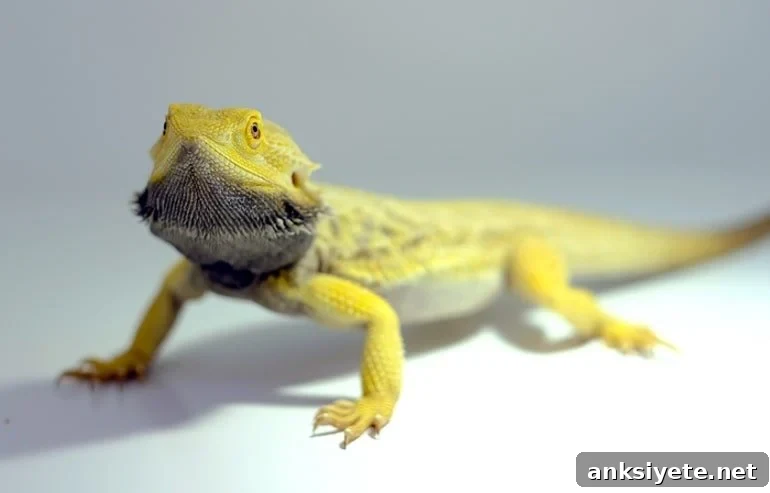
Summary: Researchers built a molecular atlas of the bearded dragon’s brain and compared it with mouse data. The results indicate that mammalian brains are not simply an ancient reptilian structure with added new parts; rather, both reptiles and mammals evolved clade-specific neuron types and circuits from a shared ancestral set.
Source: Max Planck Institute
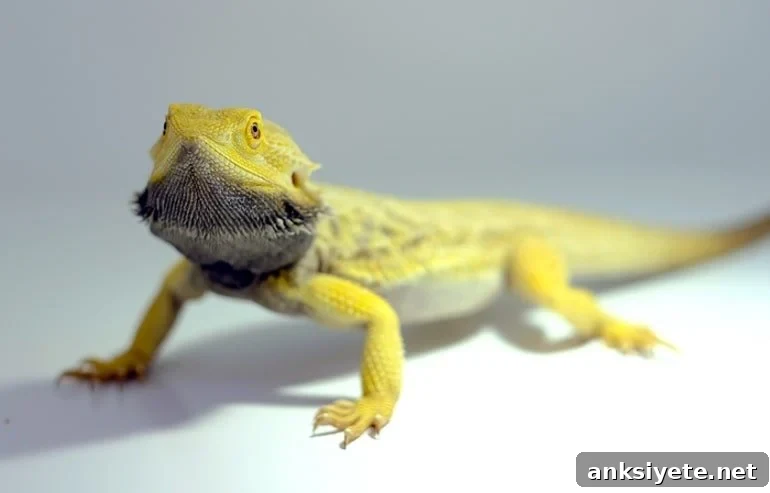
Scientists at the Max Planck Institute for Brain Research examined the brain of the Australian bearded dragon (Pogona vitticeps) to better understand how vertebrate brains evolved after early tetrapods moved onto land about 320 million years ago. Their work compares a detailed molecular map of the dragon brain with existing mouse brain datasets to trace which neuronal features are ancient and which are lineage-specific innovations.
When early four-limbed vertebrates transitioned from water to land, their descendants split into major clades that include reptiles, birds (a reptilian offshoot) and mammals. These groups still share a common developmental “Bauplan” that shapes the basic architecture of the brain. How variations on that shared developmental template produced the distinct neural systems seen in different clades has remained an open question.
To address this, the Max Planck team applied single-cell RNA sequencing to create a transcriptomic cell-type atlas of the bearded dragon brain and then compared those cellular profiles with comparable mouse brain datasets. This single-cell approach reveals gene-expression signatures at cellular resolution, enabling direct comparison of neuron types across species and regions.
Shared neuronal classes and clade-specific specializations
“Neurons are the most diverse cell types in the body, and their evolutionary diversification mirrors changes in developmental programs and circuit organization,” says Prof. Gilles Laurent, Director at the Max Planck Institute for Brain Research and senior author of the study published in Science. He notes that understanding how interconnected brain regions evolved together is central to reconstructing brain evolution.
Graduate student David Hain, co-first author of the study, reports that the team profiled over 280,000 cells from the Pogona brain and identified 233 distinct neuronal types. Computationally integrating these dragon cell types with mouse transcriptomic data revealed broad families of neurons that are shared across amniotes and likely correspond to ancestral neuron classes.
At the same time, the researchers found that most brain regions include a mixture of conserved (ancient) and lineage-specific (novel) neuron types, rather than being purely ancestral or entirely new. This mixed composition demonstrates that both conservation and innovation have shaped modern vertebrate brains.
Using histological mapping, graduate student Tatiana Gallego-Flores traced the spatial distribution of these transcriptomic cell types across the dragon brain. One notable observation concerned the thalamus, where neurons grouped into two transcriptomic and anatomical domains that differ in their long-range connectivity to other brain regions. Because the target regions of these thalamic domains evolved differently in mammals and reptiles, their transcriptomic divergence mirrors evolutionary changes in circuit organization.
The data suggest that a neuron’s transcriptomic identity partly reflects its long-range connections and functional allocation within circuits. In other words, evolution of target regions and their connectivity likely influenced how neuron types diversified within the thalamus and elsewhere.
“Reconstructing deep vertebrate brain evolution requires integrating complex molecular, developmental, anatomical and functional information in a consistent framework,” Laurent explains. “Single-cell transcriptomics now gives us the resolution to link cell types across species, making it possible to test hypotheses about how ancient circuits were modified to produce clade-specific adaptations.”
About this evolutionary neuroscience research news
Author: Irina Epstein
Source: Max Planck Institute
Contact: Irina Epstein – Max Planck Institute
Image: Image credit: Max Planck Institute for Brain Research / G. Laurent
Original Research: Closed access. “Molecular diversity and evolution of neuron types in the amniote brain” by Gilles Laurent et al., Science (DOI and journal citation available through the publisher).
Abstract
Molecular diversity and evolution of neuron types in the amniote brain
Evolutionarily conserved brain regions are well established across vertebrates, but the principles governing the evolution of neuron types remain incompletely understood. To compare neuronal diversity across regions and species, the authors generated a cell-type atlas of the bearded dragon brain and aligned it with mouse datasets. They identified conserved neuronal classes defined by the expression of hundreds of genes—including homeodomain transcription factors and genes linked to connectivity—yet within these classes both conserved and divergent neuron types exist. This mixture prevents a simple partitioning of the brain into purely ancestral versus purely novel areas. In the thalamus, neuronal diversification aligns with cortical evolution, supporting the idea that developmental origins and circuit allocation are key drivers of neuronal identity and evolutionary change.