
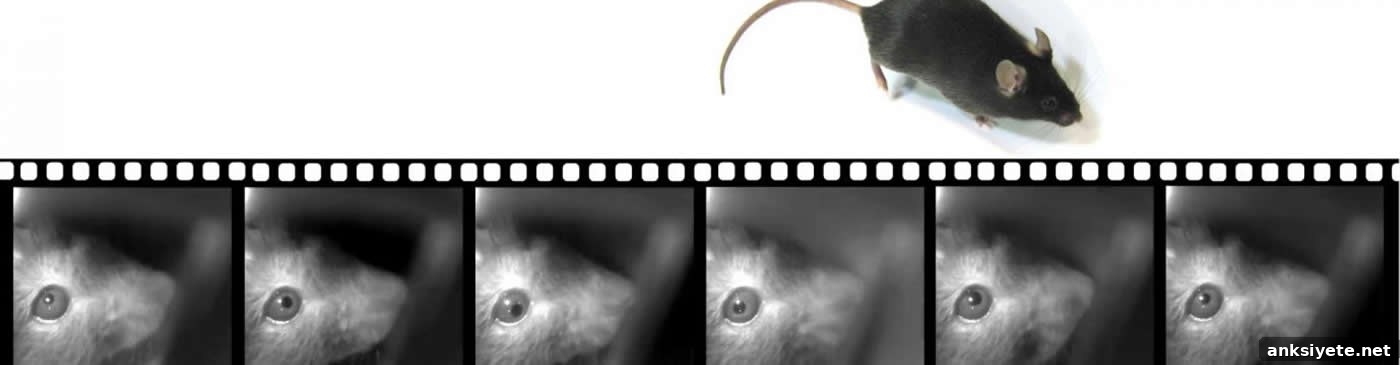
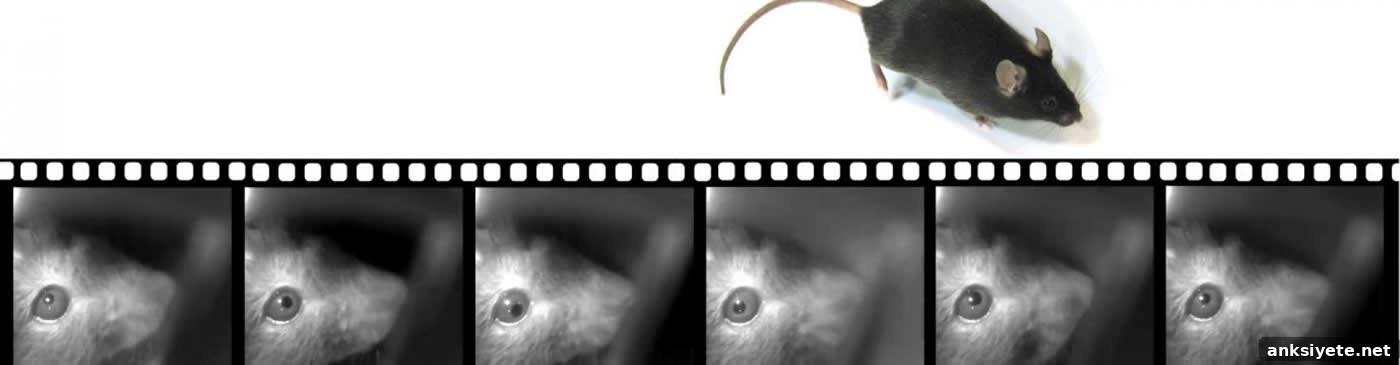
Summary: Researchers using a lightweight, head-mounted eye-tracking system recorded natural eye and head movements in freely moving mice and identified both parallels and clear differences with human eye movement patterns.
Source: Sainsbury Wellcome Center
Overview: In a study published in Current Biology, Arne Meyer, John O’Keefe and Jasper Poort introduced a miniature eye-tracking system made from tiny video cameras and motion sensors to monitor mice without restricting their behaviour. The system captured head and eye movements while animals engaged in natural tasks such as social interaction and visual object tracking. Unlike humans, whose eyes most often move together in the same direction, mice frequently move their eyes in opposite directions. The study also found that, whereas humans regularly move their eyes independently of the head (for example while reading), mouse eye movements were consistently linked to head movement.
The researchers described two distinct types of eye–head coupling in freely moving mice, each serving different visual functions. The first, called “head tilt compensation,” helps maintain a stable view of the world by counteracting slow changes in head tilt. This compensation often produces non-conjugate eye movements, meaning the two eyes move in opposite directions — a pattern rarely seen in humans. The second pattern, termed “saccade and fixate,” is characterized by conjugate eye movements that align with rapid head rotations and create a gaze pattern of brief fixations punctuated by fast shifts. During these head-initiated saccades the eyes move together in the direction of the head rotation; during the subsequent fixation phase the eyes move opposite the head to stabilise the image. This saccade-and-fixate strategy resembles how humans and non-human primates sample visual scenes, but in mice it relies more consistently on coordinated head and eye motions.
Traditional vision studies in humans, monkeys and rodents often restrain head movement to simplify measurement and permit a wide range of experimental techniques. However, it has been unclear to what extent those results reflect natural behaviour, where both head and eyes move freely. By measuring head and eye movements together in unrestrained mice, this study clarifies how mice actively sample visual information in realistic settings. The findings help bridge research on vision and navigation in freely moving rodents, two domains that have often been investigated separately.
Why this matters: mice are a core model in neuroscience because their brain organisation shares many features with humans, and powerful genetic tools allow scientists to dissect neural circuits at cellular resolution. Demonstrating which visual behaviours in mice correspond to human processes supports the use of mice to study how the brain selects and prioritises visual features for navigation and decision-making. Those selection processes are disrupted in multiple neurological and neuropsychiatric disorders — including schizophrenia, Alzheimer’s disease and stroke — and are currently hard to treat. Using mice to model these impairments enables detailed investigation of the underlying neural mechanisms, which could guide the development of new therapies.
Funding: This research was supported by the Wellcome Trust, the Gatsby Charitable Foundation and the Royal Society.
About this research
Source: Sainsbury Wellcome Center
Media contact: Hallie Detrick – Sainsbury Wellcome Center
Image credit: O’Keefe Lab
Original research: “Two Distinct Types of Eye-Head Coupling in Freely Moving Mice” by Arne F. Meyer, John O’Keefe and Jasper Poort. Published in Current Biology. DOI: 10.1016/j.cub.2020.04.042 (Open access PDF available).
Abstract (summary):
Animals actively explore their surroundings to gather sensory information. Previous studies produced conflicting views on how mice use vision: under head restraint, mice show rapid, conjugate eye movements similar to human saccades; when free to move, mouse eye movements appear more complex and often non-conjugate. By tracking head and eye motion together in freely moving mice, the authors show that both observations are valid and arise from two distinct eye–head coupling mechanisms linked to vestibular processing. The first mechanism consists of non-conjugate eye movements that compensate for head tilt to stabilise the visual field relative to the horizontal ground plane. The second mechanism produces conjugate eye movements coupled to yaw rotations of the head, yielding a saccade-and-fixate gaze pattern: eyes and head move together during rapid shifts and then the eyes counter-rotate during fixation to stabilise vision. These patterns persist during social interactions and visual object tracking. Even when heads were restrained, observed eye movements were accompanied by attempted head motions. Overall, the results show that mice sample visual information through coordinated head and eye movements, revealing both similarities and differences with human eye-movement strategies.
This study advances our understanding of mouse visual behaviour and strengthens the translational link between rodent models and human visual and navigational neuroscience.