
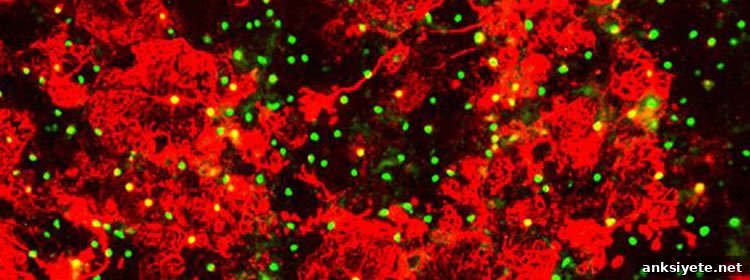
Summary: Scientists at Queen’s University Belfast have identified beneficial immune cells that stimulate myelin repair, offering a potential route to reverse damage in multiple sclerosis.
Source: Queen’s University Belfast.
Researchers at Queen’s University Belfast have found that specific immune cells play a central role in repairing the brain.
Led by Dr Yvonne Dombrowski and Dr Denise Fitzgerald at the Wellcome-Wolfson Institute for Experimental Medicine, this study represents a major advance in understanding how the central nervous system repairs itself. The findings are especially significant for multiple sclerosis (MS), a condition that affects approximately 2.3 million people worldwide and more than 4,500 people in Northern Ireland.
MS is the most common neurological disease affecting young adults and arises from damage to myelin, the insulating sheath that wraps nerve fibres in the brain, spinal cord and optic nerve. When myelin is lost or damaged, neural signals are disrupted, producing symptoms that can include vision problems, pain, fatigue and paralysis. Current therapies can reduce the frequency of relapses but do not reliably restore myelin once it has been lost.
The international research team, which included collaborators from Cambridge, San Francisco, Edinburgh, Maynooth and Nice, discovered that a protein produced by a subset of immune cells signals the brain’s stem cells to mature into oligodendrocytes—the cells responsible for producing myelin. This immune-to-stem-cell interaction triggers remyelination, the process by which damaged myelin is rebuilt.
The study identifies regulatory T cells (Treg) as drivers of oligodendrocyte differentiation and myelin repair. Experiments showed that animals lacking Treg had markedly reduced remyelination and fewer mature oligodendrocytes, while reintroducing Treg restored repair. In laboratory brain slices and cell culture, Treg accelerated both developmental myelination and remyelination even in the absence of overt inflammation. The researchers also identified the protein CCN3 as a Treg-derived factor that promotes oligodendrocyte differentiation and myelination in vitro.
These results reveal a regenerative role for regulatory T cells in the central nervous system that is distinct from their well-known immune-regulating functions. By harnessing or enhancing this reparative activity, future therapies could aim to restore lost myelin rather than only preventing further immune attacks.
Dr Dombrowski, the study’s lead author, emphasised that Queen’s is taking a fresh, multidisciplinary approach to uncover how the immune system supports brain repair. She noted that understanding these mechanisms is essential to designing new treatments that focus on rebuilding damaged tissue, not just reducing disease activity, and that combining repair-focused therapies with existing immunomodulatory treatments should improve outcomes for people with neurological disorders such as MS.
Senior author Dr Denise Fitzgerald, who previously recovered from a condition similar to MS called transverse myelitis, described the collaboration as a pioneering, multidisciplinary effort. Bringing together expertise in immunology, neuroscience and stem cell biology allowed the team to uncover how the brain and spinal cord naturally regenerate myelin and to identify new therapeutic targets for myelin regeneration.
Dr Sorrel Bickley, Head of Biomedical Research at the MS Society, welcomed the findings as an important step toward therapies that promote remyelination. She noted that this Northern Ireland–led international collaboration adds valuable insight into how repair can be encouraged and broadens the prospects for future treatment development for people living with MS.
Funding: The research received support from multiple funders, including the BBSRC, the Wellcome Trust, the Leverhulme Trust and the UK MS Society.
Source: Queen’s University Belfast
Image Source: NeuroscienceNews.com image adapted from the Queen’s University Belfast press release.
Original Research: Abstract for “Regulatory T cells promote myelin regeneration in the central nervous system,” published in Nature Neuroscience (doi:10.1038/nn.4528).
Regulatory T cells promote myelin regeneration in the central nervous system
Remyelination in the central nervous system requires oligodendrocyte progenitor cells to differentiate into myelinating oligodendrocytes. In multiple sclerosis, remyelination can fail despite the presence of progenitor cells, indicating an impairment in oligodendrocyte maturation. While T cells infiltrate the CNS in MS, their roles in remyelination were unclear. This study demonstrates that regulatory T cells (Treg) promote oligodendrocyte differentiation and remyelination. Treg-deficient mice showed substantially impaired remyelination and reduced oligodendrocyte differentiation; these defects were rescued by adoptive transfer of Treg. In organotypic brain slice cultures, Treg accelerated developmental myelination and remyelination even without overt inflammation. In vitro experiments showed that Treg directly promote oligodendrocyte progenitor cell differentiation and myelination. The team identified CCN3 as a Treg-derived mediator of oligodendrocyte differentiation and myelination in vitro. These findings reveal a regenerative role for Treg in the CNS that complements their immunoregulatory functions.
Study citation: “Regulatory T cells promote myelin regeneration in the central nervous system” by Yvonne Dombrowski et al., Nature Neuroscience. Published online March 13, 2017. doi:10.1038/nn.4528