
New molecular indicators reveal T cell activation in the body with unprecedented clarity
Biological processes arise from events at the molecular and cellular level. To understand what happens during infections, disease or normal physiology, researchers must observe individual cells and their activity directly within tissues. Advances in microscopy and fluorescent probes in recent years have brought this goal within reach, enabling live visualization of cellular events in situ.
Researchers at the Max Planck Institute of Neurobiology in Martinsried report two complementary advances: new indicator molecules that visualise activation of T cells, and modified calcium sensors that make it possible to follow T cell activation in living tissue. These tools provide fresh insight into the role of T cells in autoimmune disease, particularly multiple sclerosis (MS), and will be useful for studying immune responses more broadly.
Inflammation is the body’s defence mechanism against potentially harmful stimuli. Its purpose is to eliminate pathogens or damaged tissue. Key stages of an inflammatory response include recruitment of immune cells, their interactions within affected tissue, and the resulting activation patterns of those immune cells. The more precisely scientists can observe these steps in time and space, the better they can design effective treatments. That is particularly important for autoimmune conditions such as multiple sclerosis, in which immune cells enter the central nervous system and, during inflammation, inflict substantial damage to nerve tissue.
Previously, the Martinsried team developed a genetically encoded calcium indicator called TN-XXL that cells produce themselves, which reliably reports activity in individual neurons over long periods. However, the indicator was not expressed in immune cells, so it was not possible to directly observe when and where immune cell contacts led to cell activation inside tissues.
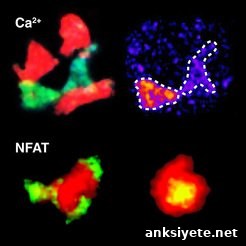
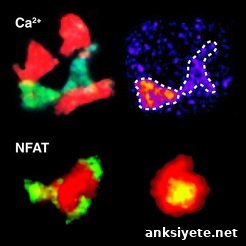
The new studies introduce two major methodological advances. First, the team engineered an indicator that reports T cell activation by exploiting the behaviour of NFAT, a signalling protein. When a T cell recognises its antigen, NFAT translocates from the cytoplasm into the nucleus. By fusing a fluorescent protein (GFP) to NFAT, the researchers created a live readout for activation: movement of the fluorescent signal into the nucleus signals that the cell has been activated, or “armed.” This reporter allows investigators to determine in vivo whether a specific antigen triggers T cell activation, a capability that is particularly valuable for autoimmune disease research and for studies of immune cell development, infection responses and anti-tumour immunity.
Concurrently, the group adapted the TN-XXL calcium sensor so it can report T cell activation dynamics in real time while T cells migrate through tissues. T cell recognition of antigen causes a rapid rise in intracellular calcium; the modified TN-XXL displays that calcium change as a colour or intensity shift, providing researchers with a direct indicator of when and where T cells become activated in living tissue.
Using these tools in experimental models of multiple sclerosis, the researchers were able to demonstrate directly that T cells can be activated inside the brain. Until now this was largely inferred from indirect evidence. The live imaging approach allows scientists to track not only T cell migration into the central nervous system, but also the precise timing and location of their activation during disease progression.
Beyond simply confirming antigen-driven activation, initial observations revealed numerous calcium fluctuations in T cells that did not correspond to antigen recognition. These spontaneous or context-dependent calcium transients may provide information about a T cell’s responsiveness, the potency of encountered antigens, or the influence of the local tissue environment. Such patterns could point to new therapeutic targets or serve as biomarkers to determine whether an intervention alters T cell activation in vivo.
Taken together, the NFAT-based fluorescent reporter and the modified TN-XXL calcium indicator represent complementary approaches for visualising T cell activity: one records a decisive nuclear translocation event associated with antigen recognition, and the other reports fast, transient calcium signals while cells roam through tissues. These methods open new opportunities to study immune cell behaviour directly in affected organs, improving our mechanistic understanding of autoimmune diseases like MS and informing development of more targeted drugs.
Notes about this multiple sclerosis research
Contact: Dr. Stefanie Merker – Max Planck Institute of Neurobiology
Source: Max Planck Institute of Neurobiology press release
Image credit: Max Planck Institute of Neurobiology (adapted from the institute’s press material).
Original research: Abstract for “Real-time in vivo analysis of T cell activation in the central nervous system using a genetically encoded calcium indicator” by Marsilius Mues, Ingo Bartholomäus, Thomas Thestrup, Oliver Griesbeck, Hartmut Wekerle, Naoto Kawakami and Gurumoorthy Krishnamoorthy in Nature Medicine, published online May 12, 2013 (doi:10.1038/nm.3180). Abstract for “2-photon imaging of phagocyte-mediated T cell activation in the CNS” by Marija Pesic, Ingo Bartholomäus, Nikolaos I. Kyratsous, Vigo Heissmeyer, Hartmut Wekerle and Naoto Kawakami in Journal of Clinical Investigation, published online February 1, 2013 (doi:10.1172/JCI67233).