
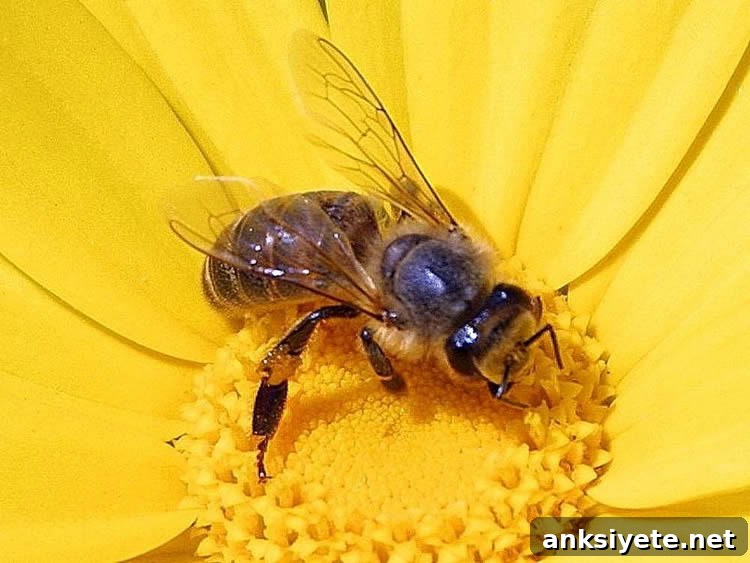
Could human suicide have evolutionary roots in self-sacrificial behaviors like those seen in species such as honeybees and ants?
A researcher at Florida State University, recognized as one of the country’s leading experts on suicide, is exploring that question.
Thomas Joiner, the Robert O. Lawton Distinguished Professor of Psychology, led a group of researchers who reviewed scientific literature and drew parallels between human suicide and the self-sacrificial behaviors observed in colony-forming, or eusocial, species such as certain insects, shrimp and mole rats.
Joiner finds the comparison both intriguing and potentially instructive. “The idea that something as mysterious and frightening as suicide in humans could have analogues in animal behavior is not only fascinating but also promising for understanding the phenomenon,” he said.
In a paper published in the journal Psychological Review, the team argues that humans display core features associated with eusocial species: multigenerational cooperation, shared care of the young and a division of labor that supports group survival. These features, they contend, create a context in which extreme forms of self-sacrifice can make evolutionary sense in other species.
“Humans are, in important ways, a eusocial species, and that provides a useful framework,” Joiner explained. “It suggests a set of behaviors and pressures that sometimes include profound acts of self-sacrifice.”
In evolutionary biology this set of behaviors is often discussed under the concept of inclusive fitness: the idea that genes can spread not only through an individual’s own reproductive success but also by aiding the survival and reproduction of relatives who share those genes. From that perspective, self-sacrificial behavior can be adaptive if it increases the survival of kin and thus benefits shared genetic material.
However, Joiner and his colleagues propose that contemporary human suicide should be understood not as adaptive but as a maladaptive or deranged expression of that same behavioral repertoire. In other words, what may be an adaptive self-sacrificial system in eusocial animals appears to malfunction in some humans, producing suicide rather than survival-enhancing sacrifice.
“It looks highly maladaptive and very much like psychopathology,” Joiner said. “The central question we raise is whether modern human suicide represents a breakdown or derangement of the self-sacrificial behavioral suite found in eusocial species.”
The researchers hope that framing suicide in this evolutionary context will stimulate new lines of investigation. If animal models exist that show analogous self-sacrificial behaviors, studying them could reveal the neurobiological circuits, neurochemical signals and physiological states involved. Those discoveries, in turn, might point to what goes wrong in the human brain when suicidal behavior emerges.
Identifying comparable behaviors in animals and charting their underlying biology could provide a clearer picture of the mechanisms that fail in human suicide. That knowledge might help researchers develop better prevention strategies, early interventions and targeted treatments by focusing on the specific brain systems and behavioral triggers that underlie this derangement.
Source: Amy Farnum-Patronis – Florida State University
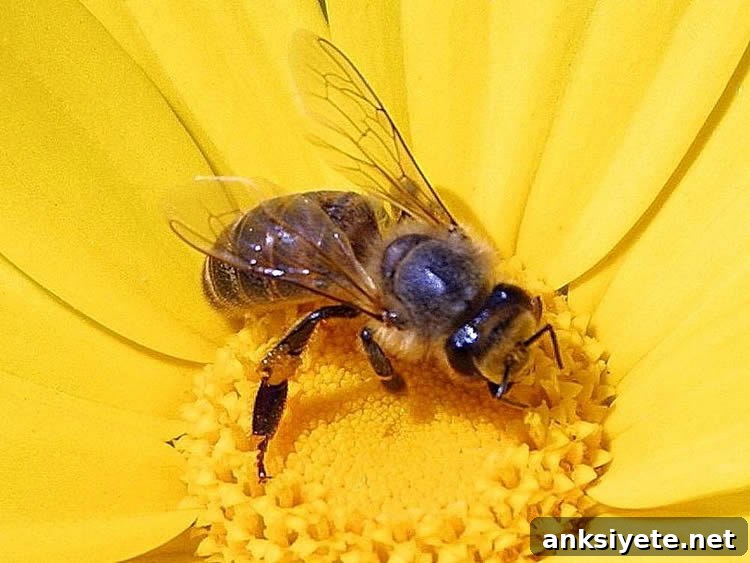
Image Source: The image is credited to Jon Sullivan and is in the public domain
Original Research: Full open access research for “Suicide as a Derangement of the Self-Sacrificial Aspect of Eusociality” by Joiner, Thomas E.; Hom, Melanie A.; Hagan, Christopher R.; and Silva, Caroline in Psychological Review. Published online November 2, 2015. doi:10.1037/rev0000020
Abstract
Suicide as a Derangement of the Self-Sacrificial Aspect of Eusociality
This article builds on the proposal that humans may qualify as a eusocial species—relying on cooperative, multigenerational care, shared labor roles and strong interdependence for survival—and advances the conjecture that suicide in humans represents a derangement of the self-sacrificial aspects of eusociality. The authors describe key features of eusocial systems, focusing on self-sacrificial behaviors observed in other species such as social insects, shrimp and mole rats. They then draw parallels between those nonhuman behaviors and human suicide, especially with respect to states of overarousal, tendencies to withdraw, and perceptions of being a burden to others. The paper argues that death by suicide is best characterized as a form of psychopathology—an aberrant expression of evolved self-sacrificial behavior—and outlines implications and directions for future empirical research.
“Suicide as a Derangement of the Self-Sacrificial Aspect of Eusociality” by Thomas E. Joiner, Melanie A. Hom, Christopher R. Hagan, and Caroline Silva. Psychological Review. Published online November 2, 2015. doi:10.1037/rev0000020