
Quantitative tools reveal how two genes mutated in early-onset Parkinson’s collaborate to flag damaged mitochondria
Researchers investigating two genes that are mutated in early-onset Parkinson’s disease have clarified how the normal forms of these genes cooperate to remove damaged mitochondria from cells. Mitochondria provide the cell’s energy and their integrity is essential for neuronal health. Dysfunctional mitochondria are implicated in many neurodegenerative disorders, including Parkinson’s disease.
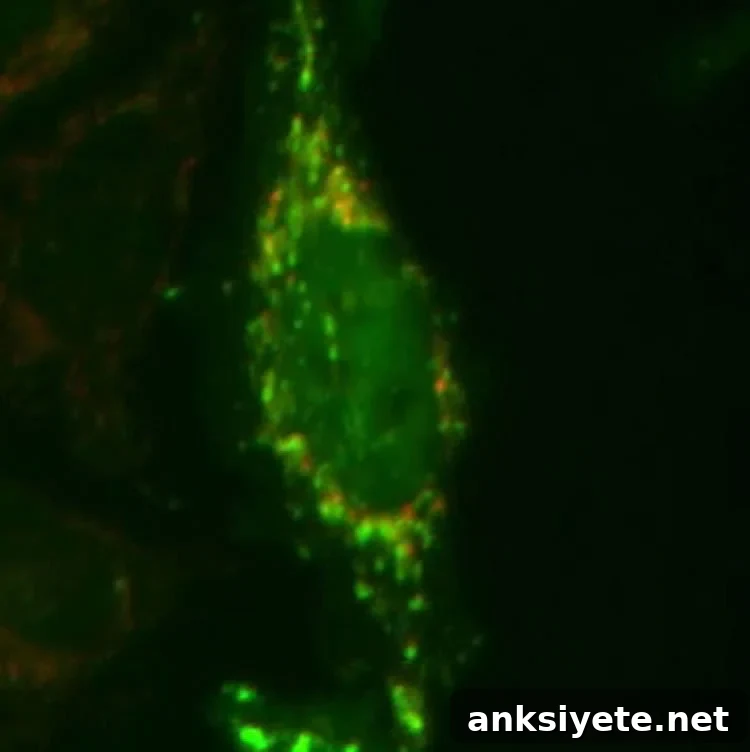
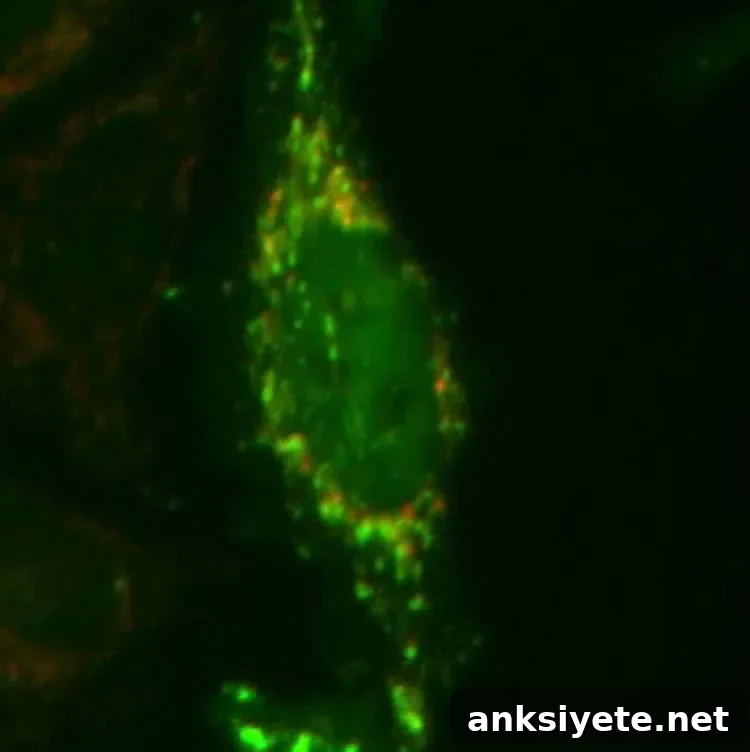
Published in Molecular Cell, a study from Harvard Medical School applied quantitative mass spectrometry together with live-cell imaging to map a multistep mechanism by which the PINK1 and PARKIN proteins mark damaged mitochondria. The researchers show how these proteins assemble chains of the small protein ubiquitin on mitochondrial proteins, providing a molecular blueprint for how defects in this pathway may contribute to Parkinson’s disease.
“Although the PINK1–PARKIN pathway has been examined for years, its precise molecular output in living cells had remained unclear,” said Wade Harper, Bert and Natalie Vallee Professor of Molecular Pathology in the Department of Cell Biology at Harvard Medical School and senior author of the paper. “By combining high-resolution imaging with advanced proteomic quantification, we defined the biochemical sequence of events the pathway generates on damaged mitochondria.”
One prominent hypothesis for Parkinson’s disease links the disorder to the high metabolic demands of certain neurons. When mitochondria in these neurons become impaired and energy production falls, the organelles must be removed. If damaged mitochondria persist, they generate reactive oxygen species and other toxic byproducts that can lead to cell death. Individuals carrying particular early-onset mutations in the PINK1 or PARKIN genes often develop movement symptoms in their 30s, reflecting a loss of dopamine-producing neurons that appear particularly vulnerable to failures in mitochondrial clearance.
Recent work has shown that PINK1 and PARKIN act together to recognize and remove dysfunctional mitochondria. PINK1 is a kinase that becomes activated on the surface of damaged mitochondria and promotes PARKIN accumulation at that location. PARKIN, an E3 ubiquitin ligase, then attaches ubiquitin chains to several mitochondrial surface proteins, tagging them for downstream removal processes.
In the new study, the team describes a multistep feed‑forward mechanism that couples ubiquitylation and phosphorylation in a progressive series of reactions. According to the authors, this is the first description of a feed‑forward circuit of this specific type operating in the PINK1–PARKIN pathway.
Led by postdoctoral fellow Alban Ordureau, the investigators found that PINK1 performs two distinct roles in this cascade. First, PINK1 phosphorylates PARKIN itself, which substantially enhances PARKIN’s ability to attach ubiquitin to mitochondrial targets. Second, PINK1 phosphorylates the ubiquitin chains that PARKIN assembles. These phosphorylated ubiquitin chains bind strongly to the activated form of PARKIN, increasing PARKIN’s retention on the mitochondrial surface. This promotes additional rounds of ubiquitin chain synthesis in a positive feedback loop that progressively amplifies the damage signal. As ubiquitin chains accumulate and become denser, the defective mitochondrion is robustly labeled for degradation.
“Discovering that PARKIN is retained on damaged mitochondria through binding to phosphorylated ubiquitin chains was unexpected,” Harper said. “Although ubiquitin biology has been studied for decades, regulation of ubiquitin by phosphorylation has only recently emerged as a key theme in the field.”
The quantitative methods used in this work build on earlier techniques for measuring ubiquitin chains developed by co-author Steven Gygi, Professor of Cell Biology at Harvard Medical School. Harper notes that these technologies offer powerful opportunities to investigate how disruptions in the ubiquitin system contribute to disease.
The research team also included Brenda Schulman, a Howard Hughes Medical Institute investigator and expert in ubiquitin biochemistry, who contributed to interpreting the mechanistic details of ubiquitin chain assembly and recognition. The authors emphasize the intricacy of the pathway and the multiple surprising findings that arose at each experimental step.
This research was supported by National Institutes of Health grants R37 NS083524, R37GM069530, R01GM077053, P30CA021765 and R01 GM067945, as well as the American Lebanese Syrian Associated Charities.
Contact: Elizabeth Cooney – Harvard Medical School
Source: Harvard press release
Image source: Harper Lab; image adapted from the Harvard press release
Original research: Abstract for “Quantitative Proteomics Reveal a Feedforward Mechanism for Mitochondrial PARKIN Translocation and Ubiquitin Chain Synthesis” by Alban Ordureau et al., published in Molecular Cell, October 2, 2014.