
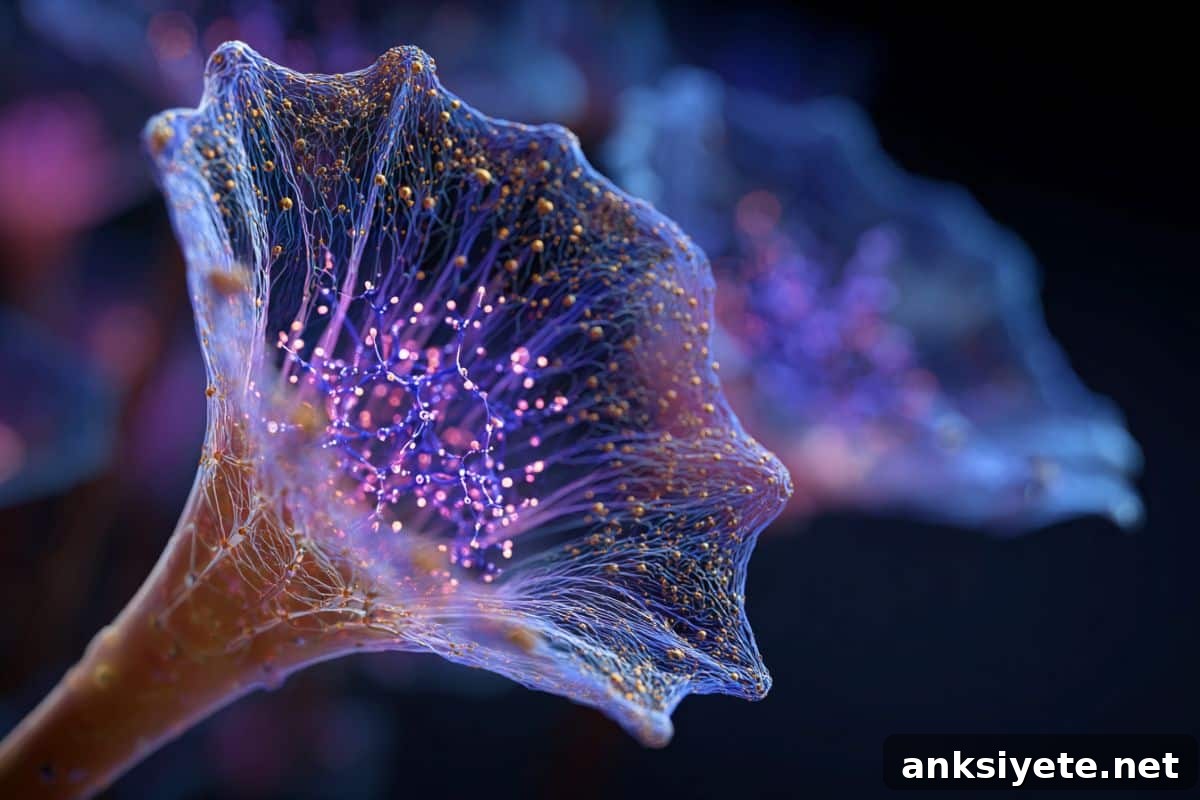
Summary: Can an organism without any nerve cells — no neurons, no brain — still learn? New research shows that the giant single-celled organism Stentor coeruleus can.
Using molecular processes closely resembling those used by human neurons, particularly calcium signaling and the enzyme CaMKII, this trumpet-shaped pond organism learns to ignore repeated, harmless disturbances. These findings imply that basic learning mechanisms existed long before brains evolved and may be a fundamental feature of cellular life.
Key Facts
- Habituation in a single cell: Stentor demonstrates habituation, a simple form of learning in which an organism reduces or stops responding to a repeated, nonthreatening stimulus. When tapped once a minute, the Stentor gradually stops retracting its tail.
- Memory by protein modification: Unlike many animal neurons that often need new protein synthesis to form long-term memories, Stentor appears to store memory by chemically modifying proteins it already has, adding molecular tags that alter their function.
- The CaMKII link: Calcium entering the cell activates the enzyme CaMKII, the same kinase that helps strengthen synapses in animal brains. This suggests that neuronal learning mechanisms may have ancient, single-celled origins.
- Memory passed to progeny: Remarkably, habituation can be inherited by daughter cells after division, indicating a form of non-genomic memory transmission.
- Tuning mechanoreceptors: The learning process likely involves adjusting mechanoreceptors — touch-sensitive proteins on the cell surface — making them less responsive to repeated mechanical jolts.
Source: UCSF
For more than a century, biologists have observed single-celled organisms behaving in ways that resemble learning. Those early observations, however, did not reveal the molecular mechanisms behind such behavior.
Researchers at the University of California, San Francisco have now shown that the pond-dwelling, trumpet-shaped Stentor coeruleus uses molecular machinery similar to that found in neurons to encode a simple form of memory. The study supports the idea that learning is a basic biological capability rather than a complex feature that requires a nervous system.
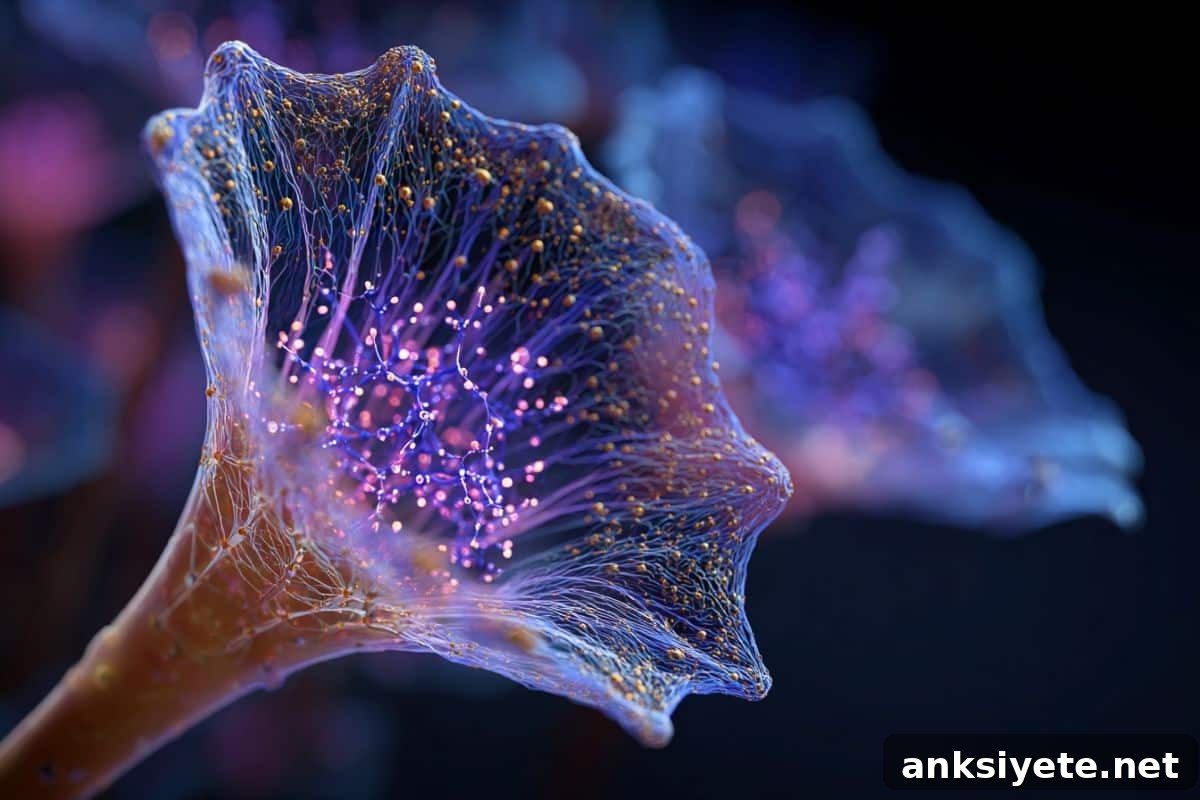
Published in Current Biology, the study applied modern neuroscience methods to observe how Stentor responds to repeated mechanical stimulation. These large single cells visibly contract when disturbed, but after repeated gentle taps they stop contracting — a classic sign of habituation.
“We usually think of learning as emerging from networks of neurons,” said Wallace Marshall, PhD, professor of Biochemistry and Biophysics at UCSF and senior author of the paper. “These single cells perform behaviors typically associated with cognition and brains.”
To investigate, the team built an apparatus that delivered a standardized jolt to individual Stentors once per minute. Over time the organisms became progressively less responsive and ceased retracting their tails in response to the stimulus.
Surprisingly, when researchers inhibited the cells’ ability to synthesize new proteins, the Stentor habituated even faster rather than losing the ability to learn. This indicates that, unlike many animals, the cells do not rely on making new proteins to form this kind of memory. Instead, they modify existing proteins to change their sensitivity.
Further molecular analyses showed changes in gene expression and protein modification during habituation. The data point to a central role for calcium entry into the cell, which activates CaMKII. This kinase then adds chemical tags to target proteins, altering how the cell senses mechanical stimulation. The modified response persisted and was detectable in daughter cells after division.
The most likely targets are mechanoreceptors on the cell surface. In animal neurons, CaMKII and calcium signaling modulate receptor sensitivity to tune responses, and the parallels in Stentor suggest this regulatory system predates multicellular nervous systems.
“Although a single-celled organism and a human brain appear vastly different, both use calcium signaling and protein modification for learning,” Marshall added. “It’s plausible that brain cells co-opted molecular systems that evolved in ancient unicellular organisms.”
Authors: Other UCSF authors include Deepa H. Rajan; Ashley Albright, PhD; Ulises Diaz, PhD; and Yina Hudnall.
Funding: This research was supported by the National Institutes of Health (R35 GM130327), the European Molecular Biology Laboratory, European Commission, EMBO, the National Science Foundation, and Fondation Fourmentin-Guilbert.
Key Questions Answered:
A: Efficiency and complexity. A single cell can register simple yes/no changes in its environment, like habituation, but a brain integrates millions of such signals to perform complex functions such as language, abstract reasoning, and coordinated behavior. Think of Stentor as a single transistor and the human brain as a vastly more powerful computer.
A: Not in the way we normally use the term. It does not have thoughts, but it does exhibit basic biological cognition: it processes sensory input, compares it to past experiences, and alters future behavior accordingly.
A: That unexpected result suggests Stentor relies on modifying existing proteins rather than making new ones. Blocking protein synthesis may shift cellular resources toward rapid protein modification systems, effectively accelerating habituation.
Editorial Notes:
- This article was edited by a Neuroscience News editor.
- The journal paper was reviewed in full.
- Additional context was added by the editorial staff.
About this neuroscience and learning research news
Author: Levi Gadye
Source: UCSF
Contact: Levi Gadye – UCSF
Image: The image is credited to Neuroscience News
Original Research: Open access. “Molecular pathways for learning in the single-cell Stentor coeruleus” by Deepa H. Rajan, Ashley Albright, Hyeyoon Kim, Ulises Diaz, Yina Hudnall, Niklas Steube, Gautam Dey, Tao Liu, and Wallace F. Marshall. Current Biology
DOI: 10.1016/j.cub.2026.03.080
Abstract
Molecular pathways for learning in the single-cell Stentor coeruleus
The single-cell Stentor coeruleus contracts in response to mechanical taps but habituates and learns to ignore repeated stimulation.
This study examined the molecular changes that accompany the formation of this cellular memory to shed light on non-synaptic learning mechanisms.
When protein synthesis was inhibited with cycloheximide and puromycin, habituation occurred more rapidly and memory retention was prolonged, contrary to effects observed in metazoans. Proteomic and transcriptomic analyses identified proteins and genes that changed during habituation and recovery, implicating calcium signaling and protein phosphorylation.
RNA interference targeting a calcium-binding EF-hand protein (SteCoe_6763) accelerated habituation. Increasing extracellular calcium enhanced learning, while inhibitors of kinases and phosphatases impaired it. In particular, KN-93, which inhibits CaMKII and voltage-gated calcium channels, reduced both the speed and extent of habituation, mirroring its known effects in animals.
Habituation memory was also maintained in progeny after cell division. Overall, these findings indicate that response recovery requires new protein synthesis, whereas memory formation depends on phosphorylation of delocalized mechanoreceptors modulated by calcium signaling—consistent with a model in which habituation arises through inactivation of cell-surface receptors.