
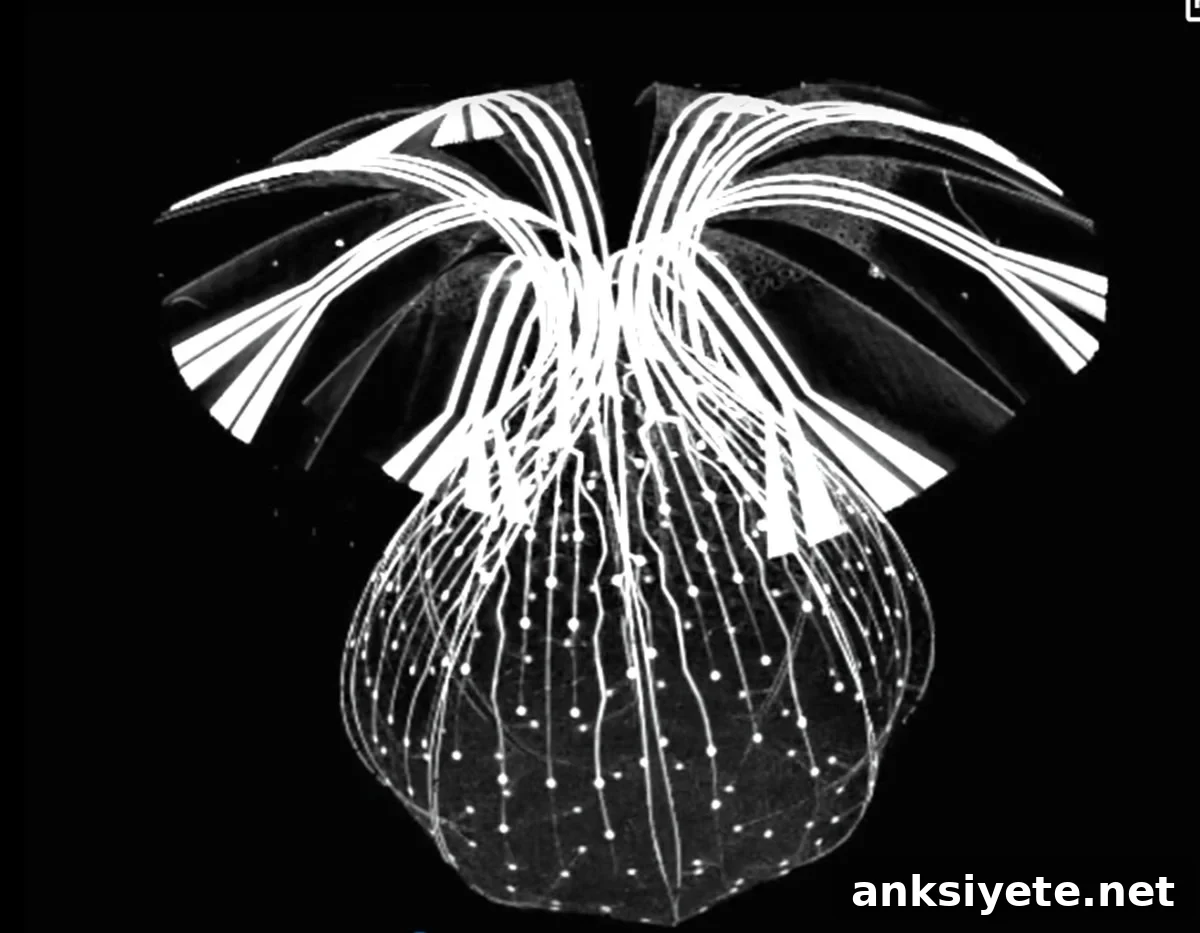
Summary: For the first time, researchers can record the complete electrical activity across an entire lab-grown human neural organoid. These “mini-brains” are powerful models for studying development and disease, but until now existing sensors could only sample a small portion of their activity because they were flat and rigid.
A new study describes a soft, three-dimensional bioelectronic framework that “pops up” and envelops the organoid like a high-tech, breathable mesh. With hundreds of miniaturized electrodes, this device captures synchronized rhythms across almost the entire tissue, enabling researchers to observe network-wide communication, monitor drug responses, and even guide organoid growth into engineered shapes.
Key Facts
- Full-network mapping: The framework conforms to more than 90% of an organoid’s surface, moving beyond isolated probes to record coordinated, whole-tissue neural dynamics.
- Pop-up assembly: Using mechanical buckling similar to a three-dimensional pop-up book, the device transforms from a flat lattice into a spherical cage that gently wraps the tissue.
- Cell-scale electrodes: The array contains 240 individually addressable electrodes, each about 10 microns in diameter—comparable to the size of a single human cell.
- Breathable design: The porous mesh lets oxygen and nutrients pass while allowing waste to escape so the living tissue remains viable.
- Growth engineering: The framework can be shaped into cubes or hexagons, directing organoids to grow into complementary geometries that could be stacked for multi-tissue assemblies.
Source: Northwestern University
A team led by scientists at Northwestern University and Shirley Ryan AbilityLab has developed a bioelectronic system that can eavesdrop on the electrical conversations inside human neural organoids.
Human neural organoids, sometimes called “mini-brains,” are millimeter-scale, self-organizing tissues derived from stem cells that model aspects of brain development and disease. Despite their promise, prior recording tools were designed for flat cell cultures and could only access a handful of sites on spherical organoids. That limited view missed the coordinated rhythms and network-level dynamics that underlie complex neural activity.
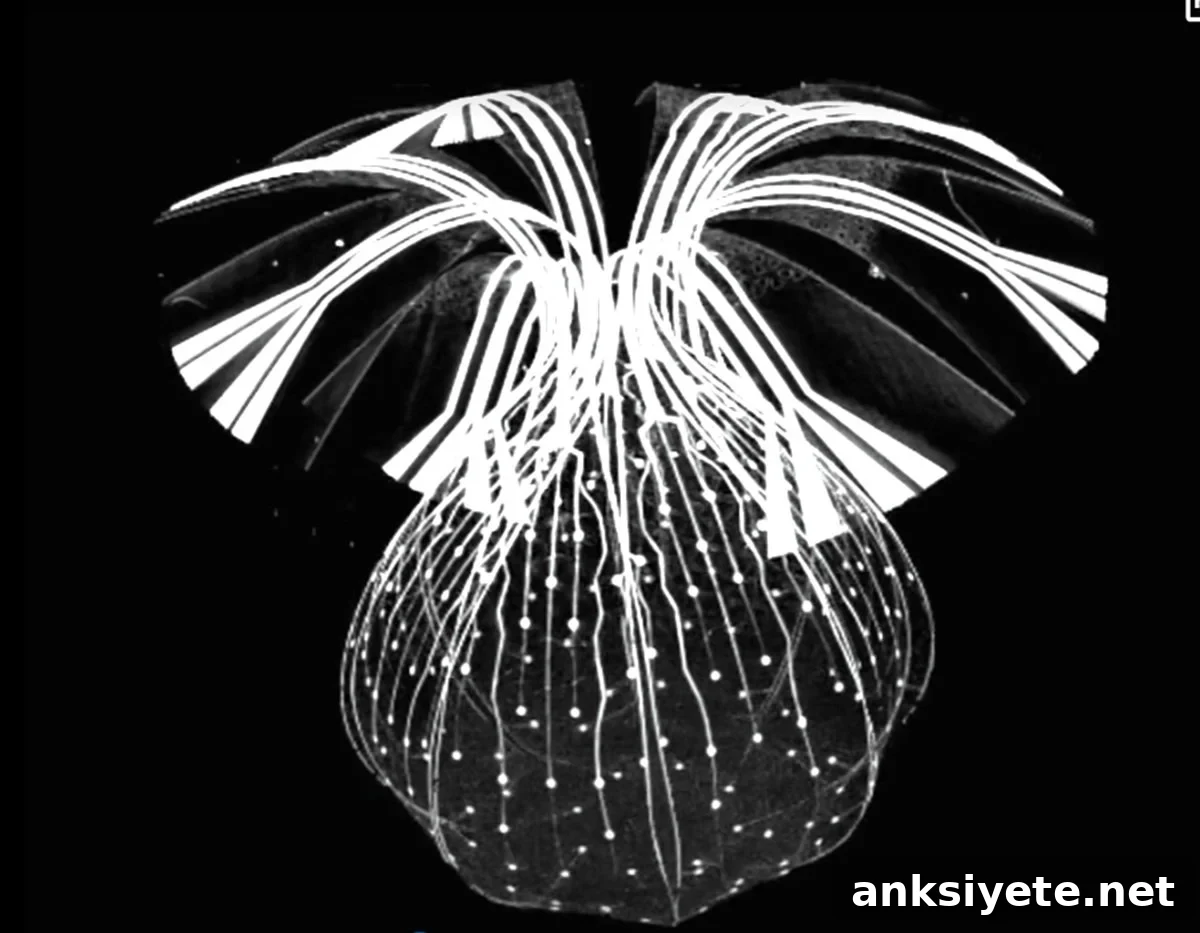
The new soft 3D framework addresses that gap. It begins as a flat, elastic lattice and then self-assembles into a shape-matched cage that conforms to the organoid’s curvature. The porous structure maintains metabolic exchange so the tissue can “breathe” while the high-density electrode array records and stimulates neural activity across most of the organoid’s surface.
By enabling whole-network mapping rather than localized sampling, this approach helps organoid research better capture how human neural circuits develop, interact, and respond to interventions.
The study was published on Feb. 18 in Nature Biomedical Engineering.
“Human stem cell-derived organoids have become central to patient-specific studies of development, disease and therapeutics,” said John A. Rogers, who led device development. “A missing piece has been hardware that can interrogate and manipulate these tiny, three-dimensional tissue models without disrupting their function.”
“This advance is about building the right tools for a new class of biological models,” added Dr. Colin Franz, who led the organoid development. “Organoids are living 3D tissues with active neural circuits, but most instruments were designed for planar cultures. Soft, shape-matched electronics let us record and stimulate hundreds of sites simultaneously, opening study of network-level activity rather than isolated signals.”
Rogers is the Louis Simpson and Kimberly Querrey Professor of Materials Science and Engineering, Biomedical Engineering and Neurological Surgery at Northwestern, and directs institutions focused on bioelectronics and translational engineering. Franz is a physician-scientist at Shirley Ryan AbilityLab and an associate professor at Northwestern Feinberg School of Medicine. Co-leads included Yihui Zhang (Tsinghua University) and John Finan (University of Illinois Chicago).
From fragments to full networks
Over the past decade, researchers have advanced from flat neuron cultures to self-organizing, three-dimensional organoids that form interconnected circuits and display synchronized electrical rhythms similar to early brain development. Yet conventional recording tools capture only fragments of those signals because rigid, planar devices cannot conform to curved organoid surfaces.
The new pop-up bioelectronic scaffold solves that geometric mismatch. Controlled mechanical buckling converts the flat lattice into a 3D mesh that gently wraps the organoid while preserving gas and nutrient exchange. One device version covered about 91% of an organoid’s surface and included 240 microelectrodes small enough to approach single-cell scale.
Arrays with only a few electrodes detected limited local activity. The full 240-channel system recorded synchronized oscillatory waves traversing the entire organoid and allowed the team to reconstruct a three-dimensional map of electrical activity because each electrode’s position was known precisely.
Shaping and studying living neural systems
Using the mesh, researchers observed activity initiating in one region and propagating across the network, with millisecond-scale delays that reveal coordinated communication. The platform also responded sensitively to drug exposure: 4-aminopyridine increased neural signaling, while botulinum toxin disrupted coordinated activity, demonstrating the device’s ability to detect meaningful pharmacological effects in human neural tissue models.
The system can also stimulate tissue with targeted electrical pulses and be combined with imaging and optogenetics to both observe and influence neural function. Additionally, by redesigning the microlattice geometry, the team directed organoids to adopt non-spherical shapes—such as cubes or hexagons—suggesting a path toward modular, stackable tissue assemblies for more complex multi-organ or multi-region models.
What’s next
Organoids grown from human stem cells, including patient-derived cells, offer a platform for modeling disease, screening drugs, and evaluating regenerative strategies in living neural networks. Tools that map activity across nearly the entire organoid will help researchers determine whether experimental treatments truly restore functional circuits, a key milestone for developing therapies for brain disorders.
“As organoids become a priority for NIH initiatives and industry drug development, technologies like this will be essential for turning tissue models into practical platforms for understanding disease and testing therapies,” Franz said.
Funding: The study, “Shape-conformal porous frameworks for full coverage of neural organoids and high-resolution electrophysiology,” was supported by the Querrey Simpson Institute for Bioelectronics, the National Institutes of Health (R01NS113935), the National Science Foundation, the Belle Carnell Regenerative Neurorehabilitation Fund, the New Cornerstone Science Foundation and the Haythornthwaite Foundation Research Initiation Grant.
Key Questions Answered:
A: No. They are not conscious. They do, however, produce synchronized electrical activity similar to patterns seen in early human brain development. This new mesh lets researchers record the full complexity of those signals for the first time.
A: Spherical organoids are difficult to connect. Growing organoids into cubic or other engineered shapes could allow them to be physically stacked or assembled into larger, more complex tissue models that mimic interactions between regions or organs.
A: Because organoids can be derived from a specific patient’s stem cells, researchers can use the electronic mesh to test how that patient’s neural tissue responds to drugs or regenerative strategies in the lab before applying treatments clinically.
About this neurotech research news
Author: Amanda Morris
Source: Northwestern University
Contact: Amanda Morris – Northwestern University
Image: The image is credited to John A. Rogers/Northwestern University
Original Research: Open access.
“Shape-conformal porous frameworks for full coverage of neural organoids and high-resolution electrophysiology” by Naijia Liu, Shahrzad Shiravi, Tianqi Jin, Jiaqi Liu, Zhengguang Zhu, Jiying Li, Ingrid Cheung, Haohui Zhang, Yue Wang, Qingyuan Li, Zijie Xu, Liangsong Zeng, Maria Jose Quezada, Andres Villalobos, Yasaman Samei, Shreyaa Khanna, Shuozhen Bao, Mingzheng Wu, Sida Liang, Xu Cheng, Zengyao Lv, Woo-Youl Maeng, Yamin Zhang, Haiwen Luan, Stephen A. Boppart, Yonggang Huang, Yihui Zhang, Colin K. Franz, John D. Finan & John A. Rogers. DOI: 10.1038/s41551-026-01620-y
Abstract
Shape-conformal porous frameworks for full coverage of neural organoids and high-resolution electrophysiology
Human neural organoids are important platforms for basic and translational research because they form complex, three-dimensional neuronal circuits. Existing neural interface technologies have limited access to neuron populations and insufficient microelectrode densities for comprehensive electrical characterization and control.
This report presents a shape-matched, soft, three-dimensional mesoscale framework that achieves nearly full surface coverage of neural organoids and supports high channel-count interfaces for precise electrophysiology and controlled electrical stimulation. The neural interface is designed using inverse modeling and self-assembles around organoids. Three-dimensional reconstruction of neural activity enables high-resolution spatial electrophysiology to reveal network-level features. The porous framework also supports simultaneous fluorescence imaging, localized optogenetic modulation, longitudinal monitoring, pharmacological testing and disease modeling for cortical and spinal organoids.