
Even a mild brain injury can have long-term consequences, including an increased risk of cognitive decline and dementia later in life. The mechanisms linking traumatic brain injury (TBI) to later cognitive impairment are not fully understood, but mounting evidence points to chronic inflammation in the brain as a likely contributor. Researchers at the University of Kentucky Sanders-Brown Center on Aging (SBCoA) report new findings about a molecular “switch” that can activate or suppress inflammatory responses in the brain after trauma. Their study appears in the Journal of Neuroscience.
A research team led by Linda Van Eldik, director of SBCoA, used a mouse model of diffuse traumatic brain injury to investigate the role of the p38α MAPK signaling protein in microglia, the brain’s resident immune cells. The work focused on how p38α MAPK influences microglial activation and the downstream inflammatory response after head trauma.
Van Eldik explained the rationale: “The p38α MAPK protein is an important switch that drives abnormal inflammatory responses in peripheral tissue inflammatory disorders, including chronic debilitating diseases like rheumatoid arthritis. However, less is known about the potential importance of p38α MAPK in controlling inflammatory responses in the brain.” She added that their findings support p38α MAPK as a promising clinical target for disorders of the central nervous system (CNS) that involve uncontrolled inflammation, such as traumatic brain injury and possibly Alzheimer’s disease. The team is actively pursuing development of drugs that could target p38α MAPK specifically in the brain.
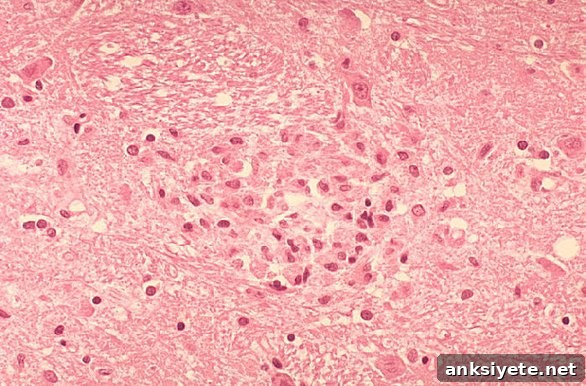
Lead author Adam D. Bachstetter described the striking difference under the microscope. “I was surprised when I looked at brain tissue from mice that had diffuse brain injury. Microglia normally resemble small spiders, but after a brain injury they become like angry spiders from a horror movie. In brain-injured mice that lack p38α MAPK there were no angry-looking microglia, only the normal small spider-like cells. When I started the study I never expected the results to be so clear and striking. I believe that p38α MAPK is a promising clinical target for the treatment of CNS disorders with dysregulated inflammatory responses, but we are still a long way from development of CNS-active p38 inhibitor drugs.”
The study shows that p38α MAPK plays an important role in regulating how microglia respond to diffuse traumatic brain injury. By genetically reducing or eliminating p38α MAPK activity in microglia, the researchers observed a reduced inflammatory profile following injury, suggesting that this kinase acts as a molecular switch that can turn on damaging inflammatory processes. Targeting this pathway could therefore be a strategy to limit long-lasting inflammation after TBI and possibly reduce the risk of subsequent cognitive decline.
These findings are particularly relevant because persistent neuroinflammation is suspected to contribute to progressive neuronal damage and neurodegenerative disease. While direct causal links between a single traumatic event and later dementia remain under investigation, interventions that limit chronic brain inflammation after injury could have therapeutic value. The SBCoA team’s results identify p38α MAPK as a candidate target for drug development aimed at the brain’s immune response after trauma.
Notes about this traumatic brain injury research
The paper, titled “The p38α MAPK Regulates Microglial Responsiveness to Diffuse Traumatic Brain Injury,” is authored by Adam D. Bachstetter, Rachel K. Rowe, Machi Kaneko, Danielle Goulding, Jonathan Lifshitz, and Linda J. Van Eldik. The work represents a collaboration between investigators at the University of Kentucky Sanders-Brown Center on Aging and collaborators at the Translational Neurotrauma Research Program, Barrow Neurological Institute, Phoenix Children’s Hospital.
Contact: Allison Elliott – University of Kentucky
Source: University of Kentucky press release
Image source: The microglia brain slice image is identified as public domain.
Original research: Abstract and details are published in Journal of Neuroscience. The study was published online April 3, 2013 (DOI: 10.1523/JNEUROSCI.5399-12.2013).
This research highlights the importance of understanding molecular regulators of neuroinflammation such as p38α MAPK. Continued exploration of signaling pathways that control microglial activation may lead to interventions that reduce sustained inflammation after brain injury, with the potential to improve long-term cognitive outcomes for people who experience TBI.