
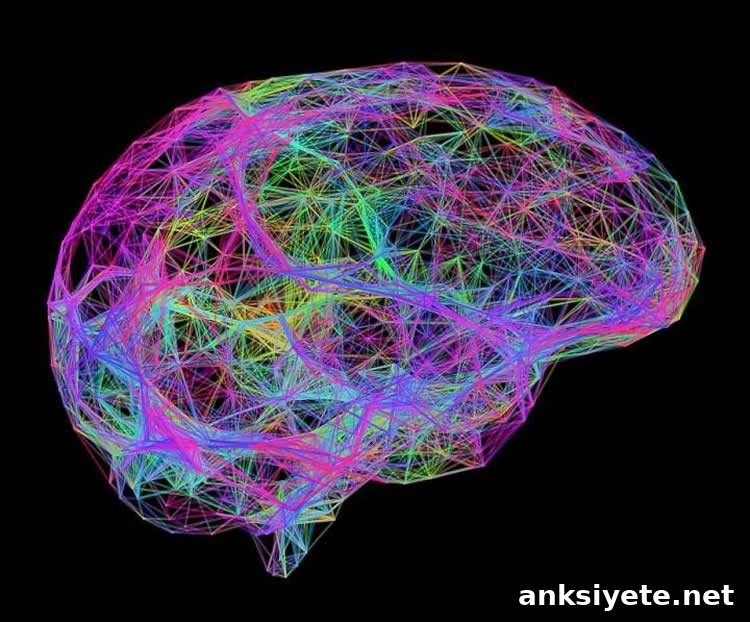
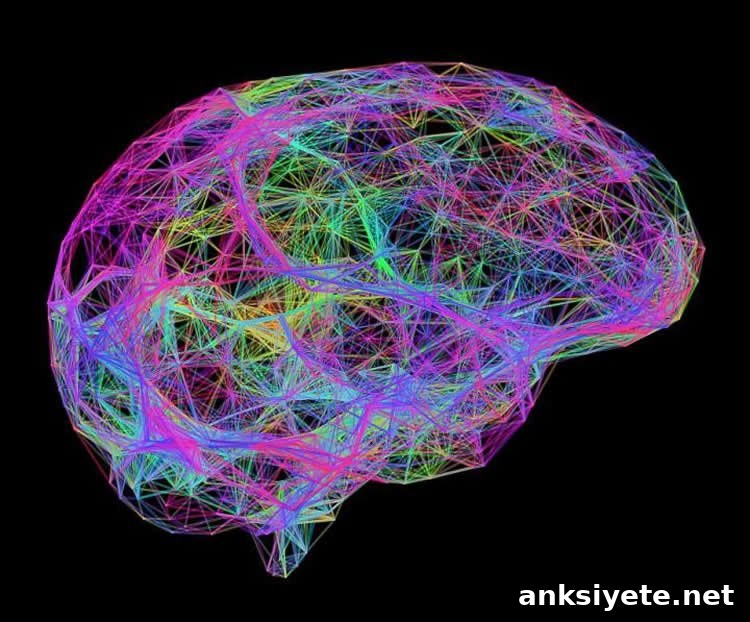
Summary: New research indicates that the growth rates of key brain circuits during infancy can help predict a child’s intelligence, emotional behavior and cognitive performance by age four.
Source: Cedars-Sinai Medical Center
Researchers have found that how emotional brain circuits develop in the first two years of life can be linked to a child’s IQ and emotional functioning at age four. These findings build on earlier work and point toward earlier identification of cognitive and behavioral challenges, enabling timely interventions.
In the United States, an estimated 15 percent of children between ages two and eight are diagnosed with at least one mental, behavioral or developmental disorder. These conditions include learning disabilities, language delays, attention-deficit disorders, autism spectrum conditions and other developmental concerns.
Published in Biological Psychiatry: Cognitive Neuroscience and Neuroimaging, this study further illuminates the role of early brain development—particularly the maturation of connections involving the amygdala, a central node in the brain’s emotional regulation network—in shaping later cognitive and emotional outcomes. The work was carried out by researchers at Cedars-Sinai in Los Angeles in collaboration with the University of North Carolina at Chapel Hill.
The new analysis builds on an earlier large-scale effort in which investigators performed MRI scans on more than 1,000 healthy infants to map when and how connections between the amygdala and other brain regions emerge. That prior work showed newborn brains lack the mature connectivity patterns seen in adults but undergo rapid synchronization of these circuits during the first year of life, followed by continued strengthening and refinement during the second year.
For the present study, researchers re-evaluated a subset of those participants—223 children—for follow-up at four years of age to determine whether individual differences in infant brain connectivity predicted later behavior. The team combined imaging-derived measures of amygdala functional connectivity with cognitive testing designed for four-year-olds and standardized parent-report instruments, such as assessments of anxiety, inhibitory self-control and executive function skills.
“Our findings confirm that patterns of emotional circuit development early in life have measurable effects as children grow,” said Wei Gao, PhD, associate professor of Biomedical Sciences and director of Neuroimaging Research at the Cedars-Sinai Biomedical Imaging Research Institute. “Using infant brain functional connectivity to predict later emotional and cognitive outcomes could become a powerful biomarker to identify children at risk and guide early intervention strategies.”
Gao served as co-senior author of the study alongside John Gilmore, MD, of the University of North Carolina at Chapel Hill. Andrew Salzwedel, PhD, a project scientist in Gao’s lab, was first author on the paper.
Charles Simmons, MD, professor and chair of the Department of Pediatrics at Cedars-Sinai, emphasized the clinical importance of the findings: “New predictive biomarkers of neurodevelopment are urgently needed because many children face elevated risk of adverse neurological outcomes due to genetic, environmental, and lifestyle factors. Studies like this one offer hope that we may soon be able to diagnose developmental issues more precisely, intervene earlier, and better support healthy infant and toddler development.”
The research team plans to expand their imaging-based prediction models to cover a broader range of developmental outcomes across early childhood and beyond. They also intend to test the approach in higher-risk groups, such as infants born prematurely or those exposed to prenatal drugs, to determine whether early connectivity measures can identify children who would benefit most from targeted early interventions.
Funding: Cedars-Sinai Precision Health provided funding for this study.
Source: Jane Engle, Cedars-Sinai Medical Center
Publisher: Organized by NeuroscienceNews.com
Image source: Getty Images
Original research: Salzwedel AP, Stephens RL, Goldman BD, Lin W, Gilmore JH, Gao W. Development of Amygdala Functional Connectivity During Infancy and Its Relationship With 4-Year Behavioral Outcomes. Biological Psychiatry: Cognitive Neuroscience and Neuroimaging. Published August 30, 2018. doi: 10.1016/j.bpsc.2018.08.010
Citation examples: Cedars-Sinai Medical Center. “Infants’ Brain Circuitry Linked to Future Health.” NeuroscienceNews, October 10, 2018.
Abstract
Development of Amygdala Functional Connectivity During Infancy and Its Relationship With 4-Year Behavioral Outcomes
Background
The amygdala is a central hub in the brain’s emotional processing network. While amygdala connectivity has been well studied in adults, less is known about how these emotion-related circuits develop during infancy. A clearer picture of normal growth trajectories in early life is essential for understanding both typical and atypical emotional development.
Methods
Using resting-state functional MRI in a cohort of infants (N = 233 subjects with 334 datasets), the researchers mapped the spatial and temporal dynamics of amygdala functional connectivity across the first two years of life. They then used multivariate modeling to relate those developmental patterns to measures of emotional functioning (parent-reported anxiety and inhibitory self-control) and cognitive outcomes (IQ) at age four.
Results
The study revealed nonlinear development of amygdala connectivity during infancy: rapid synchronization across the first year followed by more moderate growth and refinement in the second year. Notably, connectivity changes during the second year were significantly associated with multiple emotional and cognitive outcomes assessed at age four.
Conclusions
Characterizing how amygdala functional connectivity develops in the first two years—along with its links to behavioral outcomes at age four—provides valuable reference points for the early emergence of emotion processing. These findings may help guide future efforts to identify typical and atypical developmental trajectories and inform timely clinical interventions.