
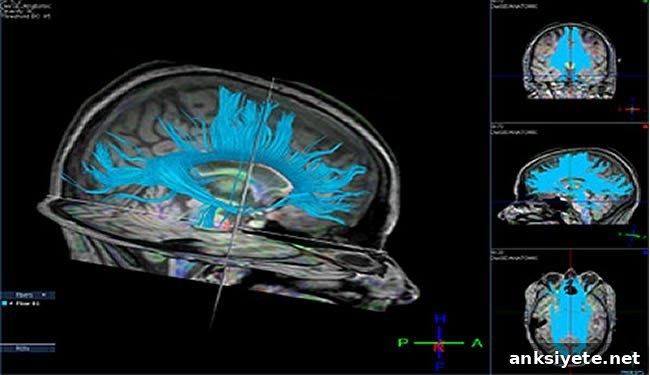
Patients respond very differently to concussion, but until now scientists did not fully understand why. Researchers at Albert Einstein College of Medicine of Yeshiva University and Montefiore Medical Center have used a new way of analyzing brain imaging data to show that each concussion patient displays a distinct spatial pattern of brain abnormalities that evolves over time.
This analytic advance could eventually improve how clinicians assess concussion patients, help predict which injuries are likely to produce lasting neurological problems, and provide an objective way to evaluate treatments, according to lead author Michael L. Lipton, M.D., Ph.D., associate director of the Gruss Magnetic Resonance Research Center at Albert Einstein College of Medicine and medical director of MRI services at Montefiore. The study’s findings appear in the online edition of Brain Imaging and Behavior.
Michael Lipton discusses how diffusion tensor imaging (DTI) reveals that concussion victims have individualized, changing patterns of brain abnormality. Dr. Lipton is associate director of the Gruss Magnetic Resonance Research Center at Albert Einstein College of Medicine and medical director of MRI services at Montefiore Medical Center.
The Centers for Disease Control and Prevention estimates that more than one million Americans sustain a concussion (mild traumatic brain injury, or mTBI) each year. In adults, concussions most often result from motor vehicle accidents or falls; in sports there are hundreds of thousands of cases annually affecting players of all ages. While many people make a full recovery, a significant minority—estimated in some studies at about 30 percent—experience persistent impairments such as changes in personality, cognitive difficulties, or trouble with planning and executive functions. A federal study characterized concussions as a major public health issue with substantial economic and social costs.
Earlier imaging work showed differences between groups of people with concussion and healthy controls, but those studies generally analyzed averaged effects across groups and could not reveal how individuals differ. “Most researchers have assumed that people with concussion have abnormalities in the same brain regions,” said Dr. Lipton, who is also associate professor of radiology, of psychiatry and behavioral sciences, and in the Dominick P. Purpura Department of Neuroscience at Einstein. “That assumption is unlikely to be true given variations in individual anatomy, differing injury mechanisms, and different susceptibilities to trauma.”
In the current study, the research team used diffusion tensor imaging (DTI), an MRI method sensitive to microstructural damage in white matter, to scan 34 consecutive patients (19 women and 15 men, ages 19 to 64) diagnosed with mTBI at Montefiore, along with 30 healthy control subjects. Patients were imaged within two weeks of injury and again at three months and six months afterward, allowing the researchers to track changes over time.
To analyze the scans, the investigators applied a software tool they developed called Enhanced Z-score Microstructural Assessment Pathology (EZ-MAP). EZ-MAP makes it possible to examine microstructural abnormalities across the entire brain of each individual patient rather than comparing only group averages. This per-patient approach reveals patterns of injury that would be obscured in group-level analyses.
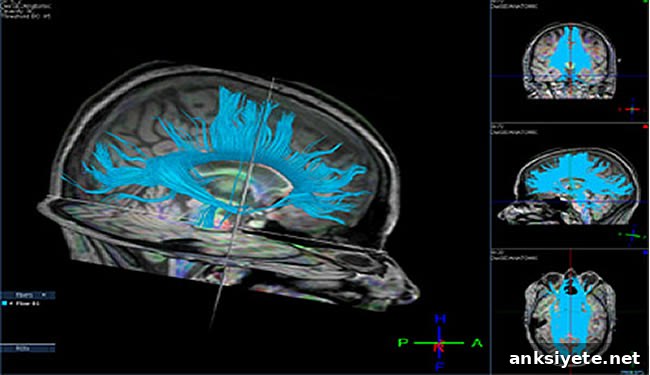
DTI measures the directionality of water diffusion in white matter tracts. One common DTI-derived metric, fractional anisotropy (FA), ranges from zero to one and indicates how uniformly water diffuses along fiber tracts; higher FA typically reflects more directional diffusion consistent with intact, well-structured white matter, while lower FA can indicate disruption of microstructure.
In this study, regions of abnormally low FA—interpreted as damaged or compromised white matter—were present in concussion patients but not in the healthy control group. Importantly, the location and extent of low-FA regions differed from patient to patient and changed during the follow-up interval. That is, each individual showed a unique spatial pattern of areas with reduced FA that evolved over time.
Unexpectedly, the researchers also found that many patients displayed regions of abnormally high FA, and these high-FA areas were spatially distinct from the low-FA regions. Elevated FA was widespread at every time point they examined, extending out to six months and appearing even in some patients scanned more than a year after injury. Dr. Lipton and colleagues suggest that increased FA may reflect compensatory or adaptive changes following injury—an attempt by the brain to strengthen or reorganize connections in response to damage. This bidirectional pattern, with both decreases and increases in FA, emphasizes the complexity of the brain’s response to mTBI.
Currently, concussion diagnosis depends largely on the circumstances of the injury plus symptoms such as headache, dizziness, cognitive complaints and behavioral changes. The combination of DTI and individualized analysis with EZ-MAP offers the promise of a more objective imaging-based marker that could support diagnosis, help identify patients at risk for persistent or worsening symptoms, and provide a quantitative tool for monitoring recovery or treatment effects.
Notes about this concussion research and article
The authors report no conflicts of interest.
Contact: Kim Newman – Albert Einstein College of Medicine
Source: Albert Einstein College of Medicine press release
Video Source: Video provided by Albert Einstein College of Medicine
Image Source: Diffusion tensor image was adapted from a previous press release from Albert Einstein College of Medicine
Original Research: “Robust Detection of Traumatic Axonal Injury in Individual Mild Traumatic Brain Injury Patients: Intersubject Variation, Change Over Time and Bidirectional Changes in Anisotropy” in the online edition of Brain Imaging and Behavior