
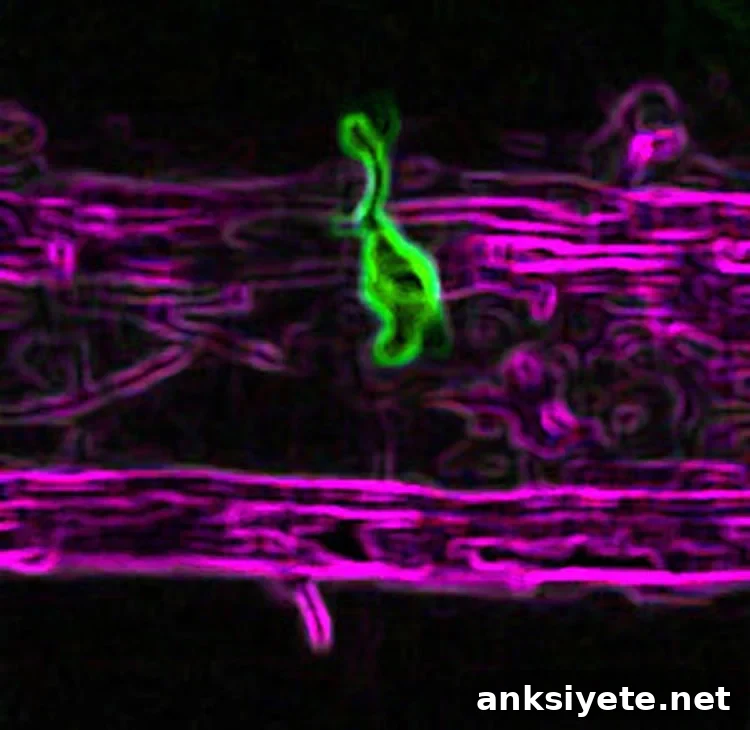
Summary: After injury, microglia can cross the spinal boundary from the central nervous system (CNS) into the peripheral nervous system (PNS). In the PNS they clear cellular debris at the injury site, then return to the CNS in an altered state. Researchers suggest this migration and altered state could contribute to damage seen in neurodegenerative and post-injury disorders.
Source: Notre Dame University
Inside the body, injury and disease leave behind cellular debris—broken fragments that must be removed for tissues to recover.
Microglia are the resident immune cells of the central nervous system, responsible for detecting damage and clearing cellular waste in the brain and spinal cord. Outside the CNS, in the peripheral nervous system that serves the limbs and sensory organs, macrophages perform a similar cleanup role. For years, researchers assumed these two cell types operated within their own territories: microglia inside the CNS, macrophages in the PNS.
New research from the University of Notre Dame, published in PLoS Biology, challenges that assumption. The study shows that, following certain injuries, microglia can squeeze through the spinal boundary and move into peripheral spinal roots. There they act as the primary debris-clearing cells, then return to the CNS carrying material from the injury site. That return journey leaves microglia in an altered functional state—a change that may have implications for neurodegenerative diseases and other nervous system disorders.
“Microglia are defined as central nervous system cells. So if they’re seen outside in the peripheral nervous system — that was surprising to us — that opens up a ton of new questions,” said Cody J. Smith, the Elizabeth and Michael Gallagher Assistant Professor of Biological Sciences at Notre Dame and a co-author of the study. “It has been shown during different disease states that macrophages in the peripheral can get into the CNS, but we certainly didn’t know or really expect for the central nervous system cells to cross over, because there was little literature that suggested that was likely.” The study was led by Lauren Green, who was a biology student at Notre Dame during the project.
The researchers modeled a brachial plexus injury in zebrafish to track how microglia and macrophages respond at the junction of the CNS and PNS. Brachial plexus injuries disrupt the network of nerves connecting the spinal cord and brain to the shoulders, arms, and hands; they occur in both traumatic and obstetrical contexts. Using time-lapse imaging, the team directly observed microglia migrating out of the spinal cord into peripheral roots.
Once in the PNS, microglia performed the critical task of clearing debris at the injury site. Notably, many of these microglia later re-entered the spinal cord carrying debris and other material. Importantly, the microglia that had traveled into the PNS returned to the CNS in an altered state, with functional changes that persisted after re-entry.
Altered microglial states are already associated with a range of neurological conditions. In disease, microglia can become overly active or dysregulated and remove not only damaged cells and debris but also healthy synapses or other structures needed for normal brain function. The finding that microglia can leave the CNS and return changed by their PNS experience raises new questions about how such migrations might influence neuropathic pain, neurodevelopmental conditions, and progressive neurodegenerative diseases.
“There was little thought these cells could leave the central nervous system, so there are few studies of microglia in the context of diseases and function within both central and peripheral nervous system diseases,” Smith said. “What happens when they do go into the brain after being in the PNS? What else are they capable of doing? Our study shows the full function, the full capability of these cells is not limited to the central nervous system. It opens up so many more exciting questions than it answers.”
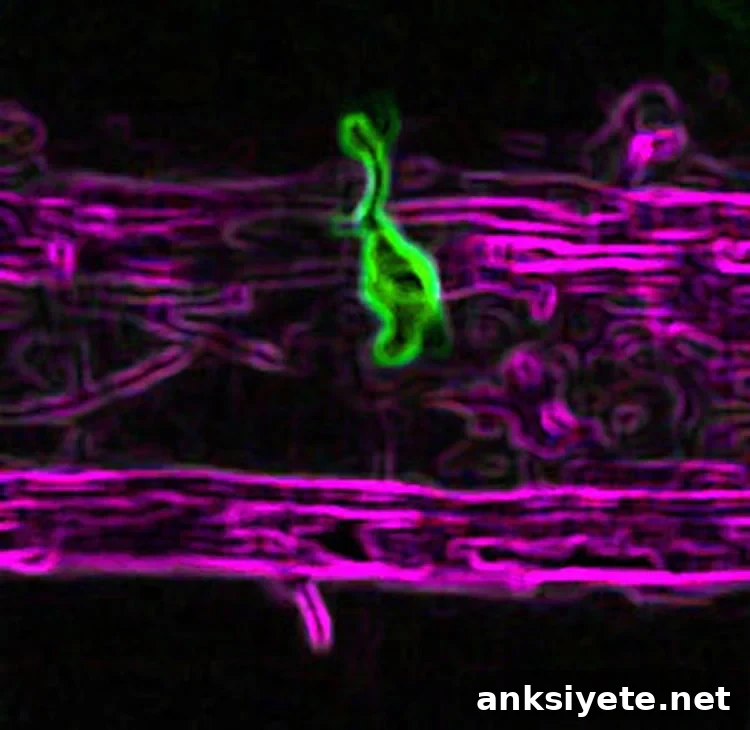
The study also identified two factors that influence microglial emigration: an induced emigration mechanism that depends on N-methyl-D-aspartate (NMDA) receptor activity, and a restriction mechanism based on contact-dependent repulsion between macrophages and microglia. Together these forces help determine how many microglia leave the CNS and how far they travel in the PNS before returning.
Because microglia that have entered the PNS can subsequently travel to distant CNS regions—including parts of the brain—while carrying debris, their migration could be a previously unrecognized route by which peripheral injury affects central nervous system health. The prospect that PNS-experienced microglia arrive in the brain carrying material from an injury site suggests a plausible link to long-term changes in brain function after peripheral trauma.
Julia C. Nebiolo is another co-author of the study. Funding for the research came from the Indiana State Department of Health Spinal Cord and Brain Injury Fund, the Alfred P. Sloan Foundation, and the University of Notre Dame’s Center for Stem Cells and Regenerative Medicine.
Original research: Green LA, Nebiolo JC, Smith CJ (2019) “Microglia exit the CNS in spinal root avulsion.” PLoS Biology 17(2): e3000159. DOI: 10.1371/journal.pbio.3000159.
Source:
Notre Dame University
Media Contacts:
Jessica Sieff – Notre Dame University
Image source:
Image adapted from the Notre Dame University news release.