
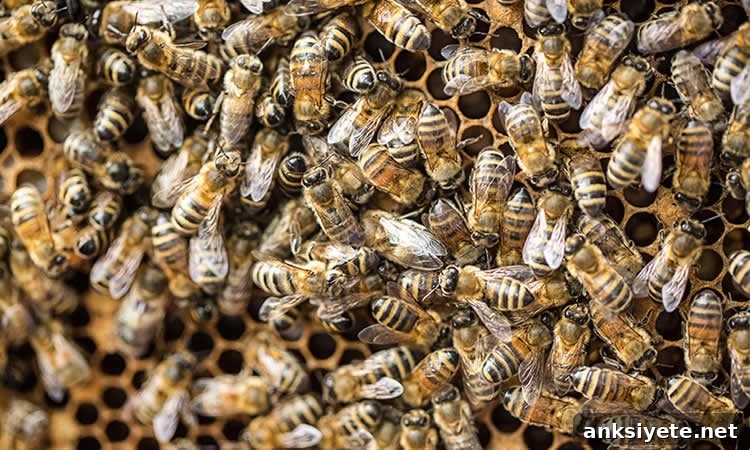
Summary: New research indicates honeybee colonies follow the same psychophysical laws that govern human brain decision-making, offering a simpler model for studying fundamental principles of collective information processing.
Source: University of Sheffield.
University of Sheffield researchers report that treating a honeybee colony as a single, coordinated superorganism—much like a brain—reveals the same decision-making laws observed in human and animal cognition.
The research team analyzed a theoretical model of how honeybees choose a nest site and interpreted the colony as a unified system that responds collectively to external cues. When observed at this higher level, interactions among individual bees produce decision dynamics comparable to how large networks of neurons produce coherent behavior in the brain.
Previous work has shown that psychophysical laws—regularities describing how stimulus strength, the number of options, and option quality affect decision speed and accuracy—emerge at the level of entire brains but not at the level of single neurons. This study extends that insight by showing the same pattern: individual bees do not necessarily follow these laws, yet the colony as a whole does.
Published in Scientific Reports, the study demonstrates that superorganisms such as honeybee colonies can obey psychophysical laws similar to those that structure human perceptual and decision processes. By revealing that these laws can arise outside neural tissue, the findings suggest the underlying mechanisms are more general principles of information processing and collective decision-making. Because bee colonies are experimentally and conceptually simpler than mammalian brains, they may serve as accessible systems to probe the origins of these universal rules.
The study directly examines three well-known psychophysical principles—Piéron’s Law, Hick’s Law, and Weber’s Law—and shows how each maps onto colony-level behavior during nest selection.
Piéron’s Law describes how decision time varies with stimulus strength: stronger or higher-quality options generally lead to faster choices. In the bee model, colonies decided more quickly when presented with two high-quality nest sites than when presented with two low-quality sites, mirroring the brain’s tendency to be faster when options are more attractive.
Hick’s Law addresses the influence of the number of alternatives on reaction time: as the number of options increases, decision time grows. The researchers found that colony decision times increased as the number of competing nest-site alternatives rose, matching the same slowdown seen in human and animal decision-making as choice set size expands.
Weber’s Law concerns the minimum detectable difference between stimuli: the discriminability between two options depends on their absolute magnitudes, producing a roughly linear relationship between baseline magnitude and the threshold needed for reliable distinction. Applied to nest-site selection, the model showed that the colony’s error rate and ability to choose the superior site depended on both the average quality of sites and the difference in quality between them, consistent with Weber-like scaling. The study also notes that Weber’s principle applies broadly across sensory domains—weight, light, sound—where a small added increment is noticeable at low magnitudes but less obvious at high magnitudes (for example, adding 1 lb to a 1 lb load is clearly felt, whereas adding 1 lb to a 30 lb load is much less perceptible).
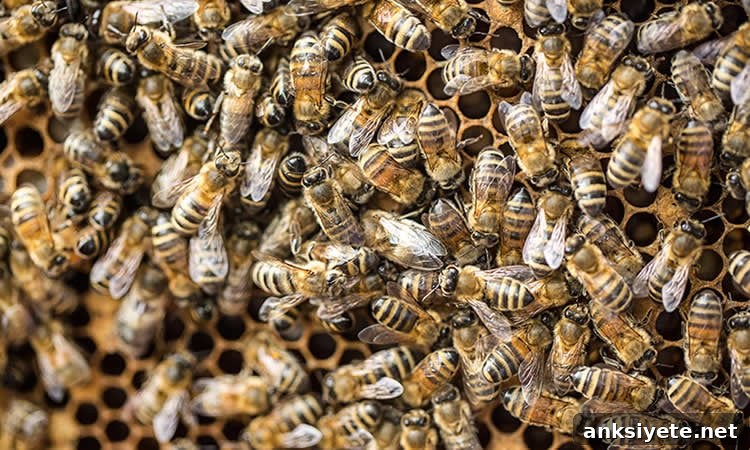
Dr. Andreagiovanni Reina, Research Associate in Collective Robotics at the University of Sheffield’s Department of Computer Science, commented that the results are exciting because they point to a deeper similarity between social insect collectives and nervous systems. Viewing a colony as a superorganism—an integrated unit composed of many autonomous individuals—makes it possible to draw parallels between bee-to-bee interactions and neuron-to-neuron signaling, which in turn helps identify general mechanisms that give rise to psychophysical laws.
Reina emphasized that bee nest selection provides a cleaner, more tractable example of decision dynamics than the complex neural circuits of animal brains. Because the colony-level behavior emerges from relatively well-understood individual interactions, it can serve as a practical platform to test theoretical predictions about how psychophysical regularities arise from distributed information processing.
Source: Mary Hickey — University of Sheffield
Publisher: NeuroscienceNews.com (organized summary)
Image source: Adapted from the University of Sheffield news release.
Original research: “Psychophysical Laws and the Superorganism” by Andreagiovanni Reina, Thomas Bose, Vito Trianni & James A. R. Marshall in Scientific Reports. Published online March 12, 2018. DOI: 10.1038/s41598-018-22616-y.
Theoretical analysis shows a superorganism can respond to stimulus variations following psychophysical laws known from human and animal studies. Using an empirically motivated model of honeybee house-hunting, the study describes a colony-level, value-sensitive decision process over potential nest sites. Results indicate colony decision time increases with the number of available nests (in line with Hick-Hyman law) and decreases with average nest quality (in line with Piéron’s law). Colony error rates also depend on mean quality and the difference in quality, consistent with Weber’s law. Because similar psychophysical patterns appear across diverse species and even unicellular organisms, these findings suggest that such laws reflect fundamental mechanisms of information processing and decision-making. The authors further propose a unified psychophysical formulation that integrates Hick-Hyman and Piéron’s laws and offers empirically testable predictions.
This article summarizes and clarifies the original university press release and the accompanying Scientific Reports paper, focusing on how honeybee colony behavior provides an accessible model to study the general principles that also govern brain-based decision-making.