
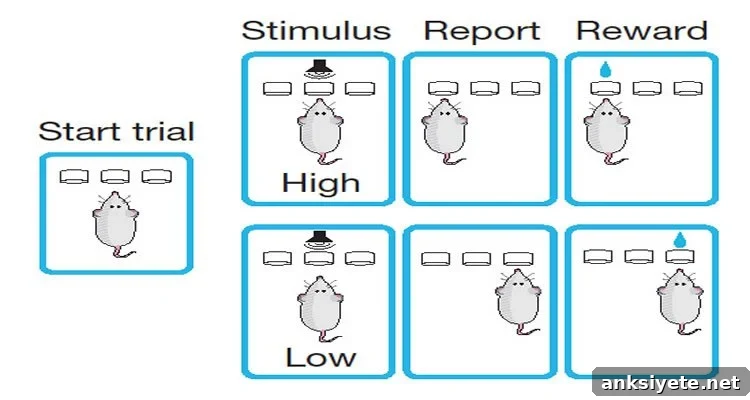
Postmortem brain slices can be “read” to determine how a mouse was trained to behave in response to specific sounds.
What once sounded like science fiction is now a demonstrated laboratory technique: researchers can cut a brain into thin slices and, by measuring properties of particular neurons and their synaptic connections, determine what an animal learned before it died. In a study published in Nature, scientists at Cold Spring Harbor Laboratory (CSHL) report that postmortem brain slices from rats reveal how the animals were trained to respond to distinct sounds. The work offers a clear example of how changes at the level of individual neurons and synapses encode learning and memory.
For decades, neuroscientists have suspected that learning and memory depend on changes in neuronal activity and synaptic strength. “Previous work has identified brain regions involved in learning,” says CSHL Professor Anthony Zador, who led the study. “Our goal was to go further, to identify how alterations at specific connections record a particular learned behavior.”
To investigate how auditory cues become behavioral choices, the team trained rats to associate a particular tone with a reward and to act based on subtle differences in sound timbre. For example, one tone signaled that the reward would be on the left side of a training chamber, while a different tone signaled a reward on the right. Over the course of training, the animals learned to translate those auditory cues into left or right choices reliably.
Earlier experiments by this group had pointed to a specific population of neurons that carry information from the auditory cortex to the auditory striatum as critical for the task. In the present study the researchers measured the strength of the connections — the synaptic weights — between neurons in the auditory cortex and target neurons in the auditory striatum as the animals learned. Their measurements revealed an instructive pattern: a spatial gradient of synaptic strength across the auditory striatum correlated with whether the rat had been trained to go left or right for the reward.
Given this correlation, the team tested a striking idea: whether they could use postmortem brain slices to infer, after the animal’s death, which way it had been trained to go. By carefully recording synaptic and neuronal properties in those slices, the researchers were able to predict the learned behavioral response. “We were amazed that our readouts matched the animals’ training every time,” Zador says. “We had decoded a small but meaningful part of the neural code that represents these memories. In effect, we could ‘read’ what the rats had learned from their brains after death.”
Experts not involved in the study noted the importance of these findings for the broader field of memory research. “For decades scientists have been trying to map memories in the brain,” said James Gnadt, Ph.D., a program director at the NIH’s National Institute of Neurological Disorders and Stroke (NINDS). “This study shows that scientists can precisely pinpoint the synapses where certain memories are expressed.”
The study links a behavioral outcome — choosing left or right for a reward based on an auditory cue — to measurable changes in synaptic connectivity between auditory cortex and auditory striatum. Because the observations are based on synaptic measurements in postmortem tissue, the method offers a new avenue for identifying the physical traces of memory, sometimes called engrams, by directly probing synapses and neuronal responses after training.
According to Zador, the approach is likely to be useful beyond simple auditory tasks. “We expect this method to generalize to other sensory systems and to more complex forms of learning,” he says, noting plans to apply the same strategy to vision and additional behavioral paradigms. Mapping how synaptic plasticity encodes learned associations in different circuits could advance our understanding of neural coding, memory storage, and decision-making processes.
This research was supported by grants from the U.S. National Institutes of Health and the Swartz Foundation.
Contact: Jaclyn Jansen – Cold Spring Harbor Laboratory
Source: Cold Spring Harbor Laboratory press release
Image Source: The image is adapted from the Cold Spring Harbor Laboratory press release.
Original Research: Abstract for “Selective corticostriatal plasticity during acquisition of an auditory discrimination task” by Qiaojie Xiong, Petr Znamenskiy and Anthony M. Zador in Nature. Published online March 2 2015 doi:10.1038/nature14225