
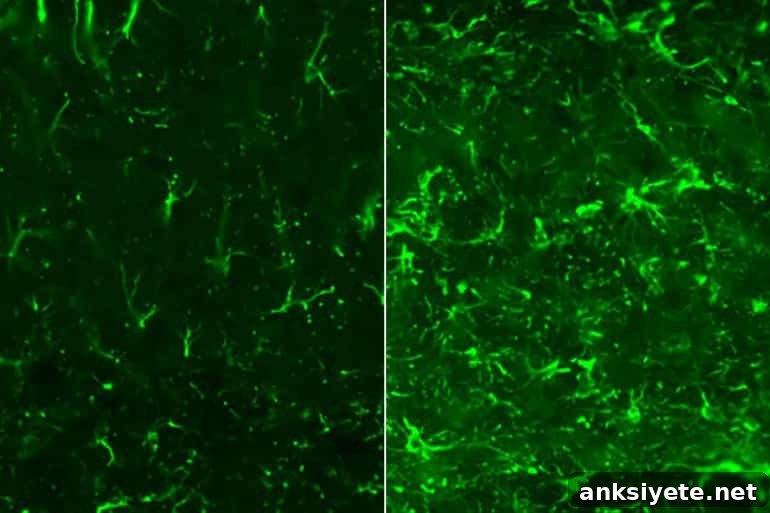
Summary: Researchers identified elevated levels of alpha2-Na+/K+ ATPase (alpha2-NKA), a protein that promotes toxic, inflammation-driving astrocytes, in brain samples from people who died of progressive supranuclear palsy (PSP), Alzheimer’s disease and other tau-related neurodegenerative disorders. In a mouse model, treating reactive astrocytes with the FDA‑approved drug digoxin reduced astrocyte reactivity, decreased neuroinflammation and slowed tau-driven neurodegeneration, suggesting a potential new therapeutic avenue for tauopathies.
Source: WUSTL
Alzheimer’s disease is the best-known member of a group of disorders called tauopathies, which are caused by pathological tangles of the protein tau.
A team at Washington University School of Medicine in St. Louis reports that targeting astrocytes—glial cells that can adopt an inflammatory, damaging state—reduces tau-associated brain injury and inflammation in mice. Their results, published in Science Translational Medicine, underscore the central contribution of astrocyte-driven inflammation to tauopathies and point toward new treatment strategies.
“Neuroinflammation is increasingly recognized as an important factor in Alzheimer’s disease, and much of that inflammation is driven by non-neuronal cells such as astrocytes,” said senior author Gilbert Gallardo, Ph.D., an assistant professor of neurology. “Our work shows that inflamed astrocytes meaningfully contribute to tau-linked damage and that calming their reactive state could reduce inflammation and delay disease progression.”
Under normal conditions, tau stabilizes the internal structure of neurons. When tau becomes abnormally aggregated into tangles, it contributes to inflammation, tissue loss and cognitive decline. Tau tangles arise in people with inherited tau gene mutations, after repeated head injuries, or in the context of other disease processes. In Alzheimer’s disease, tau pathology often follows earlier changes such as the deposition of amyloid‑beta plaques.
Reactive astrocytes—astrocytes that have adopted a harmful, proinflammatory phenotype—are commonly found near damaged neurons in many neurodegenerative diseases. In earlier research on amyotrophic lateral sclerosis (ALS), Gallardo’s group identified a specific astrocyte protein that promotes this toxic state. Based on that work, the team hypothesized that the same protein, alpha2-Na+/K+ adenosine triphosphatase (alpha2-NKA), might also drive astrocyte toxicity in tauopathies, including Alzheimer’s disease.
To test this idea, Gallardo, first author Carolyn Mann and co-author Celeste Karch, Ph.D., examined gene expression in human postmortem brain tissue. They analyzed samples from 80 individuals who died with Alzheimer’s disease, 82 who died with progressive supranuclear palsy (PSP), and 76 control donors who died of causes unrelated to neurodegeneration. Alpha2-NKA expression was significantly higher in the brains of people with Alzheimer’s and PSP than in control brains, implicating the protein in both disorders.
The researchers then used a mouse model engineered to develop tau tangles beginning around six months of age. By nine and a half months these mice display brain atrophy, inflammation and functional deficits such as impaired nest-building. Like the human samples, brains from these tauopathy mice showed increased alpha2-NKA levels that rose with age and disease severity.
Digoxin, a medication commonly used to manage certain heart conditions, inhibits alpha2-NKA activity. The team treated the tauopathy mice with digoxin to determine whether blocking alpha2-NKA could reduce astrocyte reactivity, neuroinflammation, tau accumulation, brain atrophy and behavioral deficits. Treatment was effective both when started early—before extensive tangle formation—and when begun later after pathology was already established.
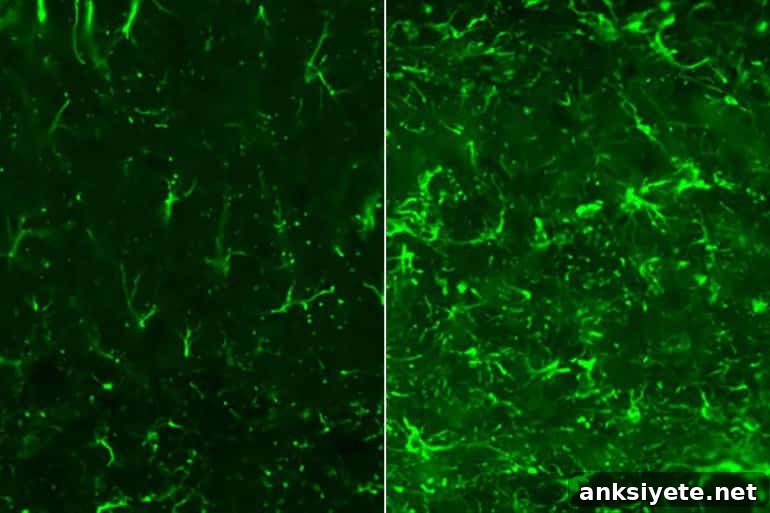
“The central takeaway is that suppressing the inflamed astrocyte state can halt disease progression,” Mann said. This finding is notable because most experimental Alzheimer’s therapies have focused on clearing pathological proteins like amyloid or tau directly from neurons. The Washington University study suggests that modulating the inflammatory response of astrocytes may be a complementary or alternative therapeutic strategy.
Beyond demonstrating efficacy in mice, the investigators explored mechanisms linking alpha2-NKA to tau pathology. They found that alpha2-NKA regulates the production of the proinflammatory protein lipocalin-2 (Lcn2). Overexpressing Lcn2 in tauopathy mice increased tau accumulation, and prolonged exposure of cultured neurons to Lcn2 promoted tau uptake in vitro—evidence that astrocyte-derived inflammatory signals can accelerate tau spread and pathology.
Although digoxin is FDA‑approved for certain cardiac conditions, its central nervous system effects and safety profile in neurodegenerative disease require careful study. Gallardo emphasized that additional preclinical and clinical research is needed before digoxin—or other alpha2-NKA–targeting approaches—can be considered as therapies for Alzheimer’s disease or other tauopathies.
About this neurodegeneration research news
Author: Press Office
Source: WUSTL
Contact: Press Office – WUSTL
Image: The image is credited to WUSTL
Original Research: Closed access.
“Astrocytic α2-Na + /K + ATPase inhibition suppresses astrocyte reactivity and reduces neurodegeneration in a tauopathy mouse model” by Gilbert Gallardo et al. Science Translational Medicine
Abstract
Astrocytic α2-Na + /K + ATPase inhibition suppresses astrocyte reactivity and reduces neurodegeneration in a tauopathy mouse model
Alzheimer’s disease (AD) is the most common form of dementia and is characterized by extracellular amyloid plaques and intracellular neurofibrillary tau tangles (NFTs). Neuroinflammation is an important, emerging contributor to AD pathophysiology. Astrocytes are glial cells that participate in neuroinflammatory reactions; reactive astrocytes (astrogliosis) are a prominent pathological feature of AD. The mechanisms by which astrocytes influence neurodegeneration in AD are not fully understood.
This study shows that astrocytic α2-Na+/K+ adenosine triphosphatase (α2-NKA) is elevated in postmortem human brain tissue from individuals with AD and progressive supranuclear palsy (a primary tauopathy). The same increase was observed in a mouse model of tauopathy. Pharmacological inhibition of α2-NKA markedly suppressed neuroinflammation and reduced brain atrophy. Genetic knockdown of α2-NKA in tauopathy mice halted further accumulation of tau pathology.
Mechanistically, α2-NKA promoted tauopathy in part by regulating the proinflammatory protein lipocalin-2 (Lcn2). Overexpression of Lcn2 in tauopathy mice enhanced tau pathology, and prolonged exposure of primary neurons to Lcn2 increased neuronal tau uptake in vitro. Together, these findings identify reactive astrocytes as active contributors to tau pathogenesis and establish α2-NKA as a key regulator of astrocyte-driven neuroinflammation.