
Summary: Researchers report that activating the prefrontal cortex through mental arithmetic tasks is associated with stronger emotional regulation and may support mental health.
Source: Duke.
New study points to possible brain-training approaches for emotional well-being
A brain-scanning study led by researchers at Duke University found that engaging a specific region of the prefrontal cortex while doing mental math correlates with better emotional health. The team published their results in Clinical Psychological Science and say the findings could inform future brain-training strategies to prevent or reduce symptoms of depression and anxiety.
Though calculating numbers and managing emotions may appear unrelated, both depend on the brain’s capacity to hold, update and manipulate information. The new study offers direct evidence linking these “cold” cognitive skills with “hot” emotional regulation in everyday life.
“Our work provides the first direct evidence that the ability to regulate emotions like fear and anger reflects the brain’s ability to make numerical calculations in real time,” said Matthew Scult, a neuroscience graduate student in the lab of senior investigator Ahmad Hariri, professor of psychology and neuroscience at Duke.
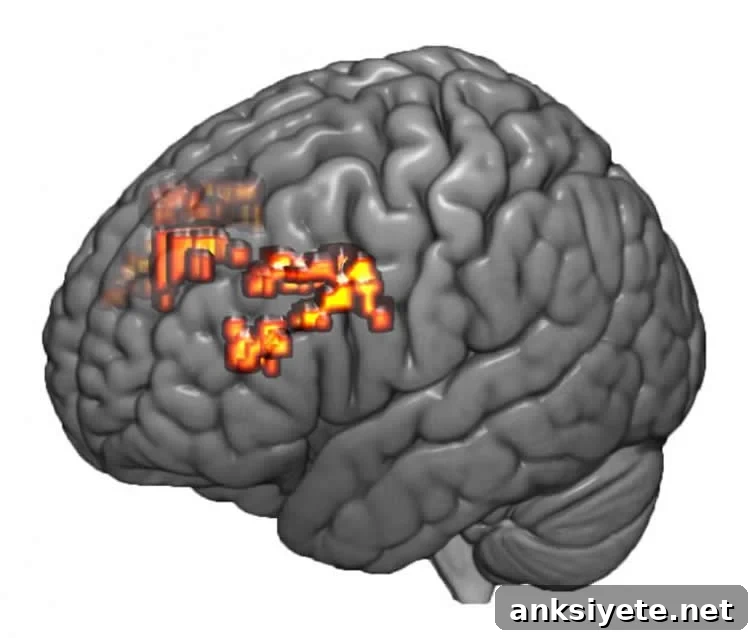
The researchers examined functional magnetic resonance imaging (fMRI) scans from 186 undergraduate participants enrolled in the Duke Neurogenetics Study, which investigates how genes, brain function and mental health relate. While in the scanner, each student solved math problems from memory—tasks designed to activate the dorsolateral prefrontal cortex (dlPFC), an area implicated in executive control and emotion regulation.
Participants also completed questionnaires and interviews that assessed mental health status and habitual coping strategies. The analysis revealed that individuals who showed greater dlPFC activation during the memory-based math tasks reported using cognitive reappraisal more frequently—that is, they were more likely to reinterpret or reframe difficult emotional situations.
Previous work has connected higher dlPFC activity with fewer symptoms of anxiety and depression and has shown that cognitive behavioral therapy (CBT) can increase activity in this region. In the current study, elevated dlPFC engagement during mental arithmetic was associated not only with better emotion-regulation habits but also with fewer depression and anxiety symptoms overall. This protective pattern was especially pronounced among participants who had recently experienced life stressors, such as academic setbacks.
Participants with higher dlPFC activation were also less likely to meet criteria for a clinical mental illness diagnosis. The authors caution, however, that the study is correlational: it remains unclear whether stronger dlPFC engagement from practicing mental calculations leads to improved emotional coping, or whether people who already regulate emotions well tend to show greater dlPFC activity when solving cold cognitive tasks.
To clarify causality, the research team plans to follow participants over time with repeated assessments and scans to determine whether changes in dlPFC activity predict later changes in emotion regulation and mental health or vice versa. If future longitudinal and interventional studies support causation, targeted training that strengthens prefrontal executive control could become a tool to help people manage stress and reduce the risk of mood and anxiety disorders.
“We hope, with these and future studies, that we can inform new strategies to help people regulate their emotions, and to prevent symptoms of anxiety and depression from developing in the first place,” Scult said.
Funding: Ahmad Hariri is affiliated with the Duke Institute for Brain Sciences. Support for the research included the National Science Foundation Graduate Research Fellowship and grants from the National Institutes of Health (including P30DA023026, R01AG049789, R01DA033369).
Source: Karl Bates – Duke
Image Source: NeuroscienceNews.com image credited to Annchen R. Knodt.
Original Research: “Thinking and Feeling: Individual Differences in Habitual Emotion Regulation and Stress-Related Mood Are Associated With Prefrontal Executive Control” by Matthew A. Scult, Annchen R. Knodt, Johnna R. Swartz, Bartholomew D. Brigidi and Ahmad R. Hariri. Clinical Psychological Science. Published online October 6, 2016. doi:10.1177/2167702616654688
Abstract
Thinking and Feeling: Individual Differences in Habitual Emotion Regulation and Stress-Related Mood Are Associated With Prefrontal Executive Control
Solving math problems from memory and regulating emotions both recruit prefrontal executive control processes. Prior research highlights the dorsolateral prefrontal cortex (dlPFC) as a key region for intentional emotion regulation and as relevant to mood and anxiety symptoms. The current study tested whether “cold” executive control, measured by dlPFC activity during memory-based arithmetic, relates to habitual use of cognitive reappraisal in daily life. The results show that greater dlPFC activation during cold executive tasks is associated with more frequent use of cognitive reappraisal. Moreover, among individuals experiencing higher life stress, increased dlPFC activity was linked to fewer mood and anxiety symptoms and lower rates of clinical diagnoses. These findings support continued investigation of prefrontal executive control as a potential intervention target for improving emotion regulation in mood and anxiety disorders.
“Thinking and Feeling: Individual Differences in Habitual Emotion Regulation and Stress-Related Mood Are Associated With Prefrontal Executive Control” by Matthew A. Scult et al., Clinical Psychological Science. Published online October 6, 2016. doi:10.1177/2167702616654688