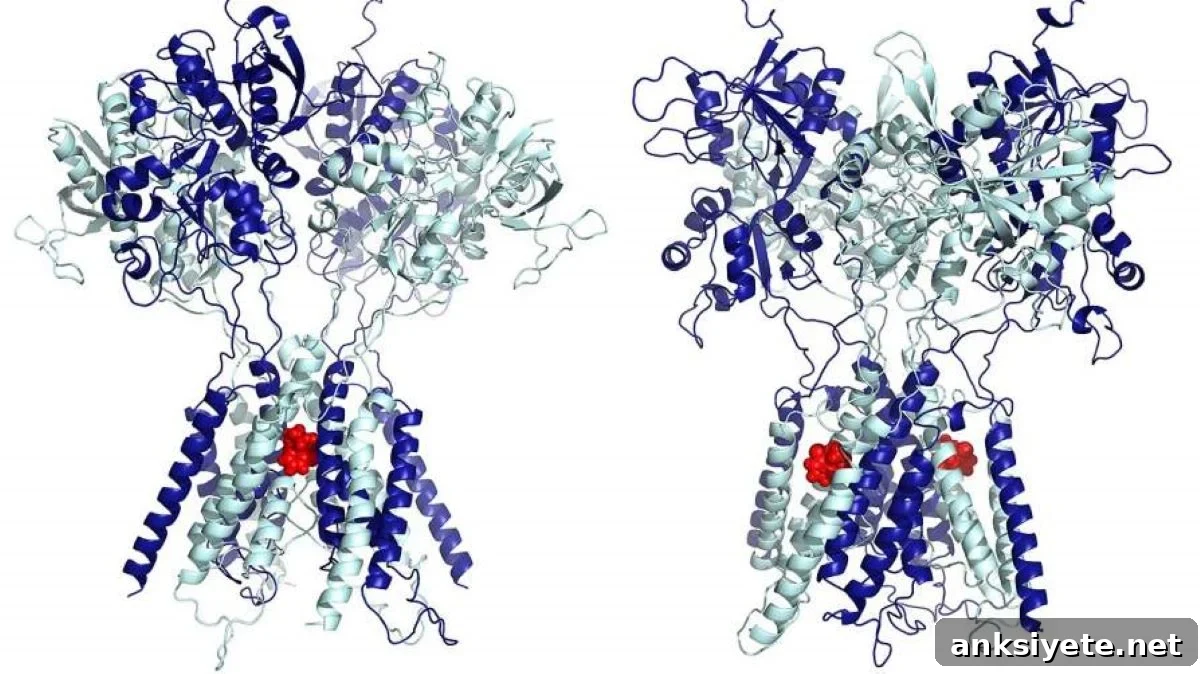
Summary: Researchers at the University at Buffalo have pinpointed how low-dose ketamine relieves depressive symptoms by selectively binding to specific sites on NMDA receptors. Unlike the anesthetic action seen at higher doses, low-dose ketamine lodges in lateral, membrane-accessible grooves on the receptor, subtly reducing tonic NMDA activity, boosting excitatory transmission, and triggering synaptic strengthening. These changes produce rapid antidepressant effects within hours and help maintain symptom relief after the drug clears from the body.
This discovery clarifies the molecular distinction between ketamine’s anesthetic and antidepressant actions and provides a blueprint for developing safer, orally available compounds that mimic ketamine’s benefits without its high-dose side effects.
Key facts:
- Low-dose ketamine binds to lateral hydrophobic sites on NMDA receptors, not the central pore.
- This selective binding preferentially reduces currents from tonically active (extra-synaptic) receptors while sparing brief synaptic activations, explaining rapid and lasting antidepressant effects.
- Identifying these lateral binding sites opens avenues to screen or design ketamine-like drugs that could be safer and taken orally.
Source: University at Buffalo
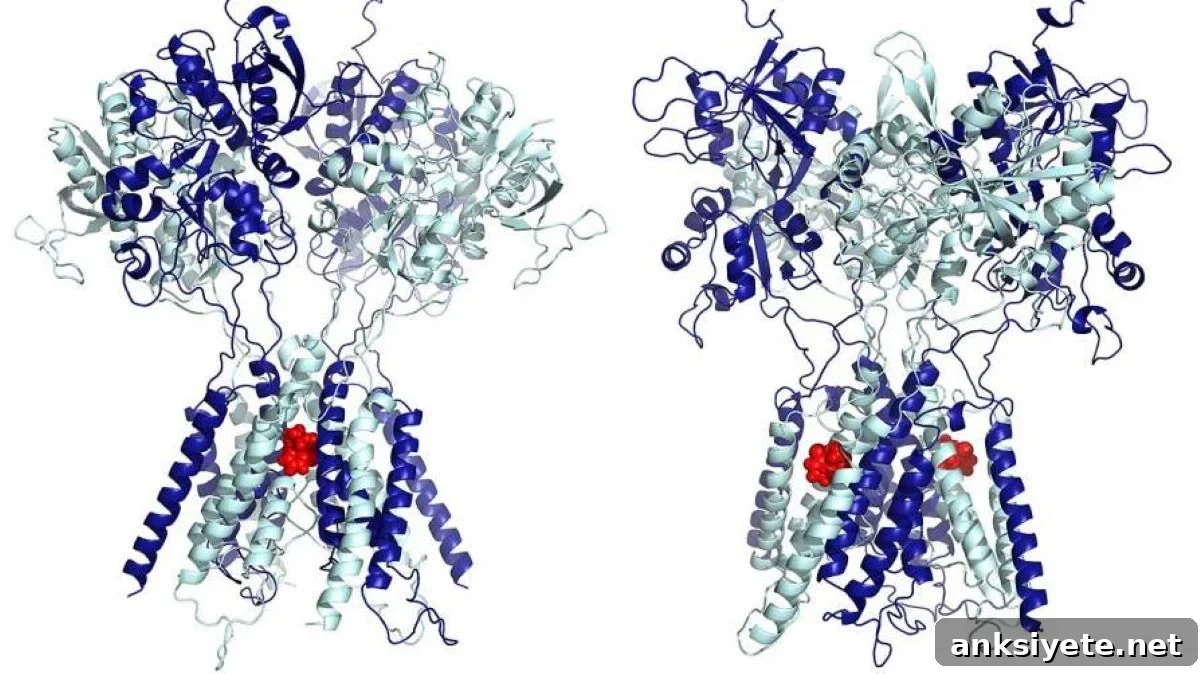
Neuroscientists at the University at Buffalo report in Molecular Psychiatry that low concentrations of ketamine—at the nanoscale—attach to two lateral grooves on NMDA receptors. This allosteric interaction slows receptor opening and preferentially dampens tonic NMDA currents, producing an immediate increase in network excitability that alleviates depressive symptoms. The transient rise in excitatory transmission also promotes synaptic remodeling, which helps sustain improved mood after ketamine is metabolized.
Ketamine has a long clinical history as an anesthetic since the 1960s. Beginning in the early 2000s, researchers discovered that much lower, sub-anesthetic doses produce strikingly fast and sustained antidepressant responses, sometimes relieving severe depressive symptoms and suicidal ideation within hours and lasting days to a week. That rapid onset addresses a critical gap in treatment when standard antidepressants can take weeks to become effective.
How selectivity explains safety and rapid action
NMDA receptors are widespread in the brain and crucial for cognition, learning and consciousness. Drugs that indiscriminately block all NMDA receptors tend to produce unacceptable side effects. The UB team shows that ketamine’s antidepressant profile arises from its ability, at very low concentrations, to act selectively on NMDA receptors that are tonically active in the background—mainly extra-synaptic receptors—while leaving fast, synaptic signaling largely intact. That selectivity likely underlies ketamine’s therapeutic window: antidepressant benefits without the profound dissociation seen at anesthetic doses.
An undergraduate researcher in the lab first noticed that ketamine produced stronger inhibition on receptors that were chronically active than expected from previous studies. Following that clue, the team combined single-receptor electrophysiology, structure-based mutagenesis, and three-dimensional molecular simulations to map how ketamine alters receptor behavior across a wide concentration range.
By tracking the activity of individual NMDA receptor molecules, the researchers identified that low-dose ketamine stabilizes receptors in pre-open states, reducing gating efficiency in a voltage- and pH-dependent manner. This partial, allosteric inhibition preferentially reduces tonic currents generated by ambient neurotransmitter levels and spares the brief activations typical of synaptic transmission. The net effect is an immediate boost in excitatory transmission and a subsequent cascade that promotes synaptic formation and strengthening—changes that can persist beyond the drug’s presence.
Structural simulations performed by collaborators in the Department of Physics predicted the specific amino acid residues that form the lateral hydrophobic binding sites. Those calculations show strong interactions that explain ketamine’s high affinity at low doses. At higher concentrations, ketamine occupancy extends into the receptor’s central ion-conducting pore, producing a full channel block and the anesthetic effect.
Implications and next steps
Locating the lateral binding sites provides concrete targets for drug discovery. The logical next step is to conduct computational screens and experimental testing for existing compounds or new molecules that fit these grooves, with the goal of finding orally available, non-addictive therapeutics that reproduce ketamine’s rapid antidepressant action without its high-dose liabilities.
Lead authors on the study are Jamie A. Abbott, PhD (Department of Biochemistry) and Han Wen (Department of Physics). Co-authors include Sheila Gupta, Wenjun Zheng, Beiying Liu and Gary J. Iacobucci. The work was funded by the National Institutes of Health.
About this psychopharmacology and depression research news
Author: Ellen Goldbaum
Source: University at Buffalo
Contact: Ellen Goldbaum – University at Buffalo
Image credit: Jamie Abbott
Original research: Closed access. “Allosteric inhibition of NMDA receptors by low dose ketamine” by Jamie Abbott et al., Molecular Psychiatry.
Abstract
Allosteric inhibition of NMDA receptors by low dose ketamine
Ketamine, an established general anesthetic, produces rapid and sustained antidepressant effects at much lower doses than those required for anesthesia. While anesthetic concentrations block excitatory transmission by binding deep within the NMDA receptor pore and preventing ion flow, the molecular targets for antidepressant concentrations were previously unclear. Using electrophysiology, structure-guided mutagenesis, and kinetic modeling, the authors show that at nanomolar concentrations ketamine interacts with membrane-accessible hydrophobic sites distinct from the pore. These allosteric interactions stabilize pre-open receptor states and produce an incomplete, voltage- and pH-dependent reduction in gating that preferentially diminishes tonic, extra-synaptic currents while sparing brief synaptic activations. The identified hydrophobic sites likely account for clinical effects unique to low-dose ketamine and represent promising targets for developing safe, effective neuroactive therapeutics.