
Summary: A new study finds that deep brain stimulation (DBS) in memory-related regions does not improve memory and instead impairs performance.
Source: Cell Press.
Researchers at Columbia University report that direct electrical stimulation of brain regions involved in memory formation does not enhance memory and instead produces measurable impairments. Published December 7 in Neuron, the study tested stimulation of the entorhinal region and hippocampus and found memory accuracy declines ranging roughly from 5% to 20%. No participants experienced improved memory with the stimulation protocol used. These results challenge earlier reports that suggested a memory benefit from similar stimulation.
These findings do not rule out all possibilities for DBS as a treatment for memory disorders stemming from disease or injury. Instead, they indicate that the particular stimulation parameters tested—brief bursts of 50 Hz stimulation during memory encoding—reduced performance, and that alternative stimulation approaches may be required to produce beneficial effects. “We may need a different kind of stimulation protocol to affect this region in a good direction,” says lead investigator Joshua Jacobs, assistant professor of biomedical engineering at Columbia’s Fu Foundation School of Engineering and Applied Science.
Jacobs and colleagues launched this research in response to a 2012 report in the New England Journal of Medicine that described a substantial improvement in memory when subjects received stimulation during encoding. That initial finding was notable but also surprising, because other neurophysiological evidence suggested the same type of stimulation could inhibit neurons and potentially harm memory formation. To resolve the discrepancy, the Columbia team designed a study to replicate and extend the earlier work with a larger, more statistically powered sample and more precise behavioral measures.
Both the earlier study and the Columbia experiments used neurosurgical epilepsy patients who already had electrodes implanted for clinical seizure mapping. This clinical population allows researchers to deliver direct electrical stimulation to deep brain structures and to observe effects on behavior without additional invasive procedures.
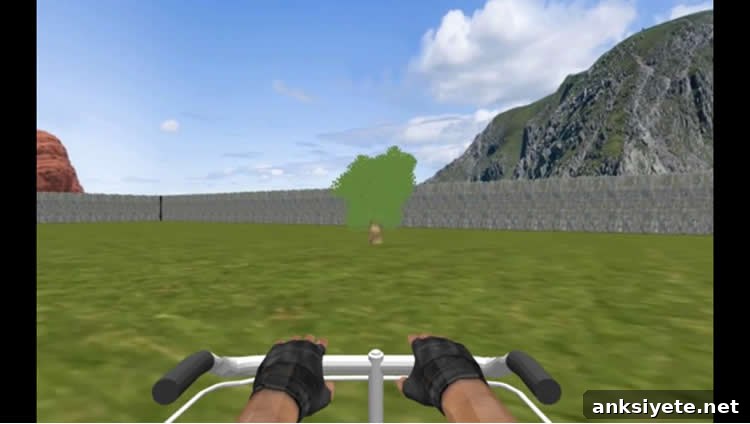
The Columbia team tested memory with both spatial and verbal tasks. In the spatial task, participants navigated a 3D virtual environment to find an object and learned its location. During encoding trials in stimulation sessions, subjects received electrical pulses at 50 Hz for approximately five seconds while studying the object location. In control sessions, no stimulation occurred. A separate verbal task required subjects to study lists of words while stimulation was delivered for about 4.6 seconds during encoding on stimulated trials.
Key methodological differences increased the new study’s sensitivity. Jacobs’ team tested many more memory retrievals per session—48 recalls per session, compared with eight in the earlier work—and enrolled 49 participants versus 7 in the prior study. The larger sample size and greater number of trials provide more reliable statistical power to detect effects of stimulation.
The results were clear: none of the participants showed statistically significant memory improvement when stimulation was delivered during encoding. Across both tasks, stimulation of the entorhinal region produced an average decrease in memory accuracy of approximately 9% relative to non-stimulated trials. Stimulation of the hippocampus showed an average impairment of about 8%. Overall impairments across stimulated regions and tasks ranged from roughly 5% to 20%.
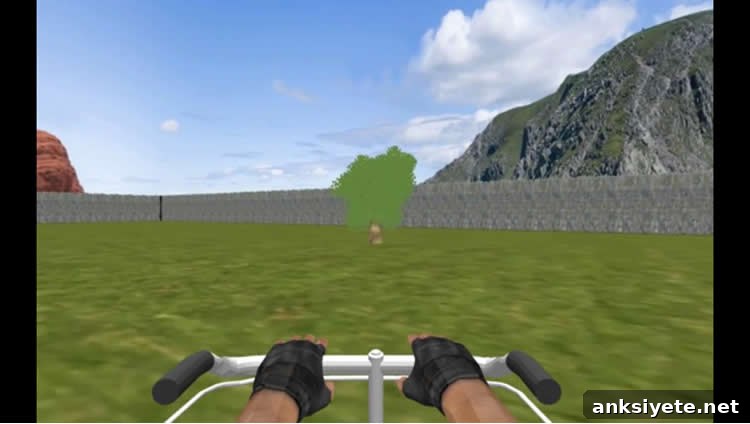
An important procedural distinction in the spatial test likely influenced outcomes. In the Columbia study, the recall phase required participants to return to the virtual environment without the object present and navigate to the remembered location; researchers then measured the distance between each recalled location and the true location. In contrast, the earlier positive report allowed the object to remain visible during recall, which could have introduced a confound if participants simply spotted the object during navigation and were credited with successful memory retrieval.
Early studies of novel neuromodulation techniques commonly contain methodological confounds. Follow-up investigations that improve task design, increase sample sizes, and refine measurement approaches are essential to determine which effects are robust and which were artifacts of specific protocols. “Theirs was a first study of its kind. It’s important to improve the protocol in a way that quantifies spatial memory more precisely,” Jacobs notes.
Although the stimulation protocol used in this study impaired memory, the experiments demonstrate that electrical stimulation can alter complex cognitive processes such as memory encoding. That causal influence motivates continued work to develop stimulation strategies that respond dynamically to brain activity and potentially enhance memory. Jacobs and colleagues are pursuing more advanced, closed-loop DBS approaches that adapt stimulation in real time to ongoing neural signals with the goal of producing positive effects on memory rather than impairment.
Source: Joseph Caputo, Cell Press
Original research: “Direct Electrical Stimulation of the Human Entorhinal Region and Hippocampus Impairs Memory” published in Neuron on December 7, 2016. Authors include Joshua Jacobs and collaborators; the study reports that 50 Hz stimulation during encoding impairs both spatial and verbal memory, supporting a causal role for the medial temporal lobe in memory encoding and underscoring the need for refined DBS methods.
Abstract — Key points
Deep brain stimulation in the entorhinal region and hippocampus, delivered at 50 Hz during memory encoding, impaired both spatial and verbal episodic memory in neurosurgical patients. These results demonstrate a causal involvement of the human medial temporal lobe in memory encoding and indicate that more refined stimulation techniques will be necessary if DBS is to be used to improve memory function.