
Summary: A new study finds that, unlike bacteria, fungi in the gut do not appear to be associated with Parkinson’s disease (PD). The findings argue against using intestinal anti-fungal therapies to treat PD symptoms.
Source: IOS Press
Researchers at the University of British Columbia evaluated whether the fungal component of the gut microbiome—the mycobiome—is linked to Parkinson’s disease. Published in the Journal of Parkinson’s Disease, the study used fungal-specific sequencing to examine fecal samples from Parkinson’s patients and matched control participants. The results showed no meaningful differences in fungal composition between the two groups and found no fungal associations with motor, cognitive, or gastrointestinal symptoms in PD.
“While multiple studies since 2014 have mapped bacterial changes in the gut microbiome of people with PD, the fungal portion of the gut has remained largely unexplored,” said lead investigator Silke Appel-Cresswell, MD, of the Pacific Parkinson’s Research Centre and Djavad Mowafaghian Centre for Brain Health at UBC. This study specifically targeted fungal DNA using ITS-2 amplicon sequencing to fill that knowledge gap.
The cross-sectional study enrolled 95 people diagnosed with Parkinson’s disease and 57 control participants from the Pacific Parkinson’s Research Centre. Each participant provided a single fecal sample and underwent a clinical visit in which PD symptoms were assessed. After quality filtering, 106 participants (64 with PD and 42 controls) had sufficient detectable fungal DNA for compositional analysis; the remainder had negligible fungal genomic content in their samples.
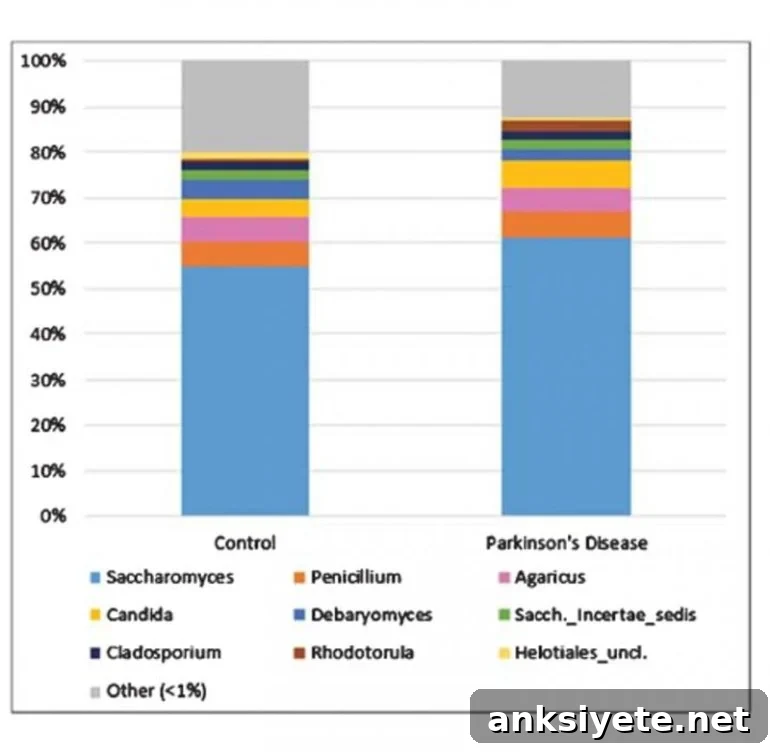
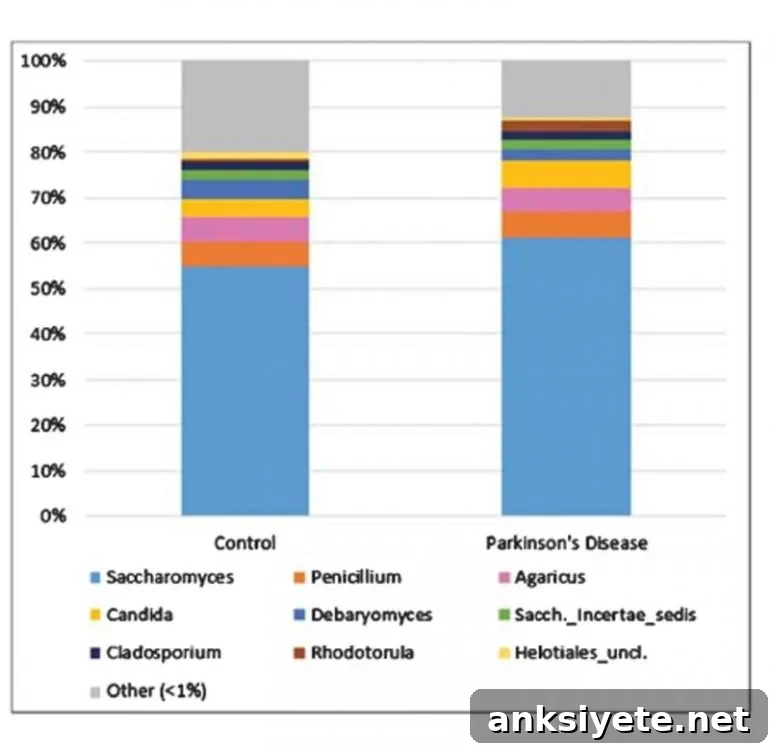
Overall fungal presence in the gut samples was very low. Most fungal genera detected were likely environmental or dietary in origin rather than persistent gut residents. Saccharomyces emerged as the most abundant fungal genus across samples, reflecting its widespread presence in foods and the environment. Importantly, no fungal taxa showed significant differences in abundance between PD patients and controls, nor were any fungal measures associated with clinical measures of disease.
One notable observation was that PD patients exhibited a lower ratio of fungal DNA relative to bacterial DNA compared with controls. This reduction in overall fungal abundance could reflect a gut environment in PD that is less hospitable to fungi, though the study does not establish cause or mechanism. The authors emphasize that this finding does not support the idea of fungal overgrowth or dysbiosis driving PD symptoms.
The research team highlights the importance of publishing well-conducted negative results. By reporting findings that do not support a role for gut fungi in Parkinson’s disease, the study helps prevent the misdirection of future research funding toward unlikely therapeutic strategies and contributes to a more balanced scientific record.
Dr. Appel-Cresswell noted, “These data are an important piece of the larger puzzle of how the gut microbiome may influence Parkinson’s disease. Patients and clinicians can be reassured that, based on this study, gut fungal overgrowth is unlikely to be a contributing factor to PD-related motor or non-motor symptoms.”
The gut–brain connection remains an active and evolving area of Parkinson’s research. PD is a progressive neurological disorder affecting movement, balance, and muscle control, and it is one of the most common age-related neurodegenerative diseases. Growing interest in how gut microbes influence brain health has driven many studies focused on bacteria; this work adds clarity by showing that the fungal portion of the microbiome, at least as detected in fecal samples using current methods, does not appear to play a major role in PD.
About this Parkinson’s disease research news
Source: IOS Press
Contact: Diana Murray – IOS Press
Image: The image is credited to Parkinson Canada/Parkinson Society British Columbia
Original Research: “The Gut Mycobiome in Parkinson’s Disease” by Appel-Cresswell et al., Journal of Parkinson’s Disease (closed access)
Abstract
The Gut Mycobiome in Parkinson’s Disease
The gut microbiome has been increasingly implicated in Parkinson’s disease; however, most existing studies employ bacterial-specific sequencing and have not investigated non-bacterial microbiome constituents. This cross-sectional study used fungal-specific internal transcribed spacer (ITS)-2 amplicon sequencing to assess associations between the fungal gut microbiome and PD. Fungal load among participants was extremely low, and the genera identified were largely of dietary or environmental origin. A significantly lower proportion of fungal DNA relative to bacterial DNA was observed in PD patients, but no fungal taxa differed in abundance between patients and controls, and no fungi were associated with motor, cognitive, or gastrointestinal features in patients.