
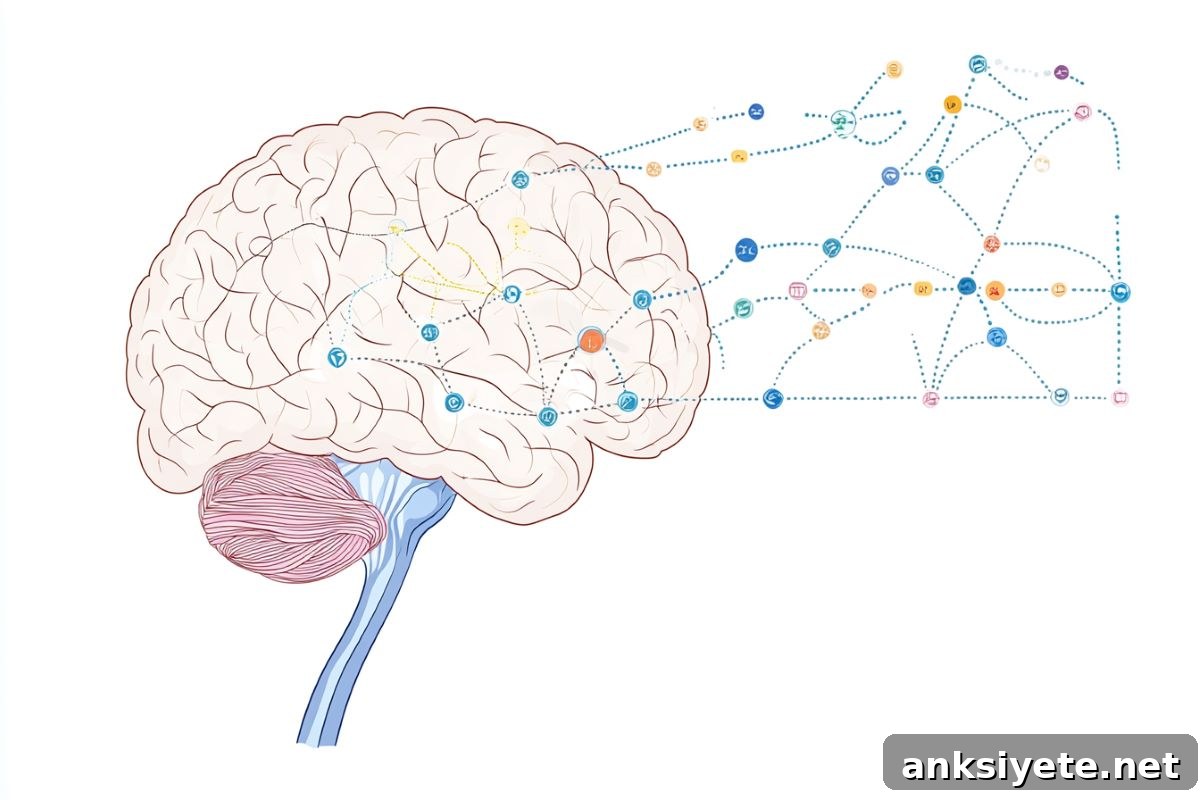
Summary: New research from Virginia Tech shows that the brain’s reward-learning system can help guide more personalized treatments for depression. By measuring two neural signals—expected value and prediction error—researchers identified markers that forecast recovery potential and reveal how individuals respond differently to rewards and setbacks.
This work moves beyond symptom suppression to target the neural processes that underlie specific features of depression, such as anhedonia. The results point toward brain-based therapies that can be matched to each person’s learning patterns, enabling more precise and potentially longer-lasting care.
Key Facts:
- Key Brain Signals: Neural expected value and prediction error predict remission potential in depression.
- Personalized Therapy: Interventions can be tailored to address core symptoms like anhedonia by targeting how the brain learns from rewards and setbacks.
- Future Impact: Reinforcement-learning models could transform depression treatment into a precise, individualized approach.
Source: Virginia Tech
A brain signal that activates when we anticipate rewards may help predict recovery from depression, and Virginia Tech researchers are exploring how to use it in tailored treatments.
Professors Pearl Chiu and Brooks Casas at the Fralin Biomedical Research Institute are developing a personalized approach by studying how people with depression process rewards and setbacks.
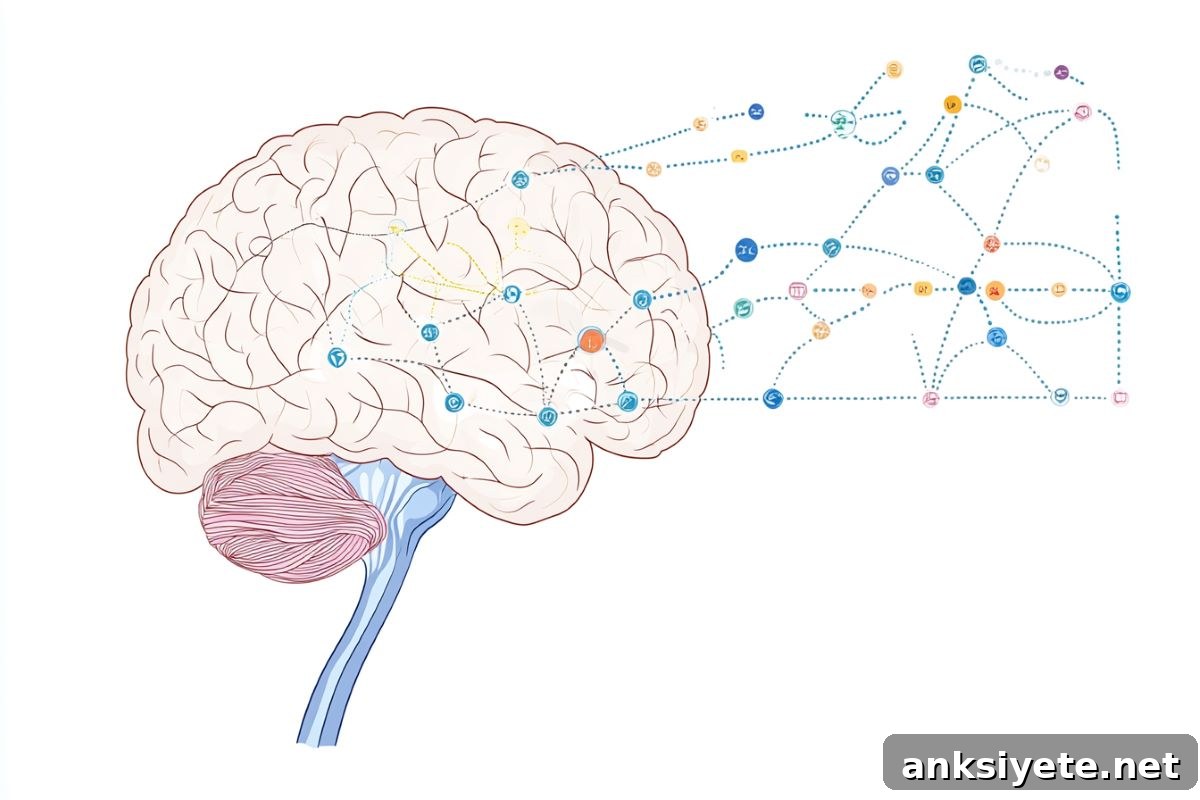
Published in the Journal of Affective Disorders, the study focused on two computationally defined brain signals—prediction error and expected value—and evaluated their ability to forecast symptom improvement in people with depression.
Unlocking the brain’s reward system
Major depression affects millions and is a leading cause of disability, yet many patients do not fully benefit from existing treatments. The researchers emphasize that depression is heterogeneous: different people show different learning patterns and emotional responses that map onto particular symptoms.
Using reinforcement-learning models, the investigators examined how the brain’s reward-learning circuitry operates in people with depression, with special attention to those experiencing anhedonia—the diminished capacity to experience pleasure. They analyzed dopamine-related brain responses to identify activity patterns associated with recovery.
These neural responses reflect how well the brain learns from outcomes, and the team proposes that therapies could be designed to reshape these learning processes—reinforcing beneficial responses to rewards and adjusting reactions to setbacks.
Researchers identify key markers for recovery
The study found that both neural expected value (nEV) and neural prediction error (nPE) are meaningful indicators of who is more likely to remit from depression. Expected value—the brain’s estimate of future reward—consistently predicted remission across treatment contexts. Prediction error—the signal that compares expected and actual outcomes and drives learning—provided additional, complementary information.
Combined, these signals offer a richer picture of an individual’s learning style and how that style relates to clinical outcome. The researchers suggest that observing how someone responds to rewards and setbacks can guide the design of treatments that align with that person’s neural profile.
“By tracking individual responses to reward and loss, we can design interventions that fit each person’s learning pattern,” Casas said, highlighting the potential for more personalized mental health care. Vansh Bansal, the study’s first author, noted that this work brings clinical practice closer to individualized approaches grounded in neuroscience.
Bridging brain science and therapy
Building on prior work, the team has begun testing reinforcement-learning informed questions and exercises designed to change how people with depression update expectations after experiences. Simple therapeutic prompts—such as asking, “What did you expect to happen?”—are being explored as tools to shift learning patterns and improve adaptive responses.
This strategy aims to do more than alleviate symptoms temporarily. By targeting the mechanisms that drive symptoms, clinicians may be able to offer interventions tailored to each patient’s neural response profile—whether that involves behavioral activation to boost reward sensitivity or techniques to recalibrate expectation-building and error-processing.
The approach represents a practical bridge between laboratory neuroscience and clinical treatment, with the goal of developing evidence-based methods that retrain the brain’s reward system and support sustained recovery.
A future of personalized depression treatment
Looking forward, the researchers envision clinical tools that assess a patient’s reinforcement-learning signals and recommend targeted interventions. For some people this may mean exercises to restore pleasure responsiveness; for others it could involve strategies that strengthen positive prediction updating.
Such a framework would allow therapists to offer precise, individualized techniques that address the underlying learning mechanisms contributing to each person’s depression rather than applying a uniform treatment to all.
“Our aim is to combine neuroscience and behavioral therapy so treatment matches the brain’s tendencies,” Chiu said. Casas added that tailoring care to individual learning styles could help achieve more durable recovery and resilience.
Chiu and Casas are also faculty in the Department of Psychology at Virginia Tech’s College of Science. The study included collaborators and contributors from multiple institutions and disciplines.
About this depression and neuroscience research news
Author: Leigh Anne Kelley
Source: Virginia Tech
Contact: Leigh Anne Kelley – Virginia Tech
Image: Image credited to Neuroscience News
Original Research: Open access. “Reinforcement learning processes as forecasters of depression remission” by Pearl Chiu et al., Journal of Affective Disorders.
Abstract
Reinforcement learning processes as forecasters of depression remission
Background
Aspects of reinforcement learning have been linked to specific symptoms of depression and may help predict the course of the illness. Understanding these processes can inform individualized care.
Methods
The study applied support vector machine classifiers to blood‑oxygen-level dependent (BOLD) responses related to neural prediction error (nPE) and neural expected value (nEV) measured during a probabilistic learning task, testing whether these signals could forecast depression remission. The analysis also examined whether treatment status or symptom profiles moderated predictions.
Participants included 55 individuals (n = 39 female) diagnosed with depression at baseline; 36 completed standard cognitive behavioral therapy and 19 were followed during the naturalistic course of illness. All participants were assessed for remission at follow-up.
Results
Both nPE and nEV classifiers predicted remission significantly better than chance, with the nEV classifier outperforming the nPE classifier. Treatment status did not significantly alter classifier accuracy. An interaction emerged between nPE-forecasted remission status and levels of anhedonia, but not with negative affect or anxious arousal, when controlling for nEV-forecasted remission.
Limitations
The sample size, while comparable to related studies, constrained options for maximizing and validating model performance. The researchers addressed this using standard procedures for model optimization, including a 90:10 train/test split and bootstrapped sampling.
Conclusions
Findings support nEV and nPE as meaningful biobehavioral signals for understanding depression outcomes independent of treatment status, with nEV serving as a stronger predictor of remission. Reinforcement-learning variables show promise as components of an individualized medicine framework for depression care.