
Walt Whitman’s famous line, “I am large, I contain multitudes,” has taken on new biological meaning.
New research from Harvard Medical School and Boston Children’s Hospital shows that as we develop, individual brain cells can carry different genomes. The study, published Oct. 2 in Science, documents substantial numbers of somatic mutations—genetic changes that arise after conception and are not inherited—in the neurons of otherwise healthy human brains. These results open a path to studying how post-conception mutations shape brain development, aging, and disease.
“Many have wondered whether somatic mutations contribute to neurodevelopmental or neurodegenerative conditions, but technological limits made it hard to answer,” said Peter Park, co-senior author and associate professor of biomedical informatics at Harvard Medical School.
The team overcame those limits by combining single-cell genome sequencing with precise analytical methods. Their approach revealed patterns of mutation that both reflect the genes neurons use most and record the lineage history of brain cells.
“These mutations act like a durable memory of where a cell came from and what it has done,” said Christopher A. Walsh, co-senior author, HMS Bullard Professor of Pediatrics and Neurology and chief of the Division of Genetics and Genomics at Boston Children’s Hospital. “This work demonstrates that, given the resources, it is possible to reconstruct the developmental history of the human brain.”
Walsh added that the same methods may illuminate healthy and pathological aging and help explain what makes human brains distinct from those of other species.
Taking a history
For decades, inherited (germline) mutations have been the primary focus when studying genetic causes of brain disorders such as Alzheimer’s disease, autism, and schizophrenia. The contribution of somatic mutations—changes that occur in non-reproductive cells during development or life—was unclear. Until recently, researchers did not know whether somatic variants were present in the brain at levels high enough to matter.
“Single-cell technology was essential for finding them,” Walsh said.
The researchers concentrated on somatic single-nucleotide variants (SNVs). Each SNV can be extremely rare, sometimes occurring in only one or a few cells. Because whole-tissue sequencing averages DNA across many cells, such rare changes can be missed. Sequencing the genomes of individual neurons, however, exposes these low-frequency variants.
Because sequencing individual cells is resource-intensive, the team sequenced 36 neurons from the cerebral cortex of three deceased individuals without diagnosed brain disease, ages 15, 17, and 42. They also compared neuronal genomes to matched heart tissue to distinguish mutations shared across tissues from those limited to the brain.
On average, each neuron carried roughly 1,500 somatic single-nucleotide variants.
By comparing mutations across neurons and other tissues, the researchers could determine which variants were shared and which were unique. They sampled multiple brain regions to estimate how widespread particular mutations were and to infer the developmental timing of mutational events.
Grouping neurons by shared mutations offered clear clues about lineage. Neurons that share many mutations likely descended from the same stem-cell ancestor; mutations shared by only a few cells indicate more recent divergence. If a mutation arose very early in development, it could appear both inside and outside the brain. Mutations that occur later may be restricted to specific brain regions.
Using this logic, some neuronal lineages were mapped back to particular stages of embryonic development, effectively tracing a partial timeline of cell divisions that formed the cortex.
Use it and lose it
Somatic mutations can arise from a range of processes: ultraviolet light causes mutations in skin, and rapid cell division can introduce errors in cancer. In neurons, however, the dominant pattern looked different.
“We expected replication errors to dominate, but instead we found mutations associated with active gene expression,” Walsh said.
Park’s analyses showed that the genes with the most mutations were often the ones most actively transcribed in neurons. In other words, the act of turning a gene on appears to increase the chance of accumulating certain types of DNA damage.
“People talk about ‘use it or lose it’ for the brain,” Walsh observed. “Our results suggest a complementary truth: ‘use it and risk some loss.’ Each time a gene is activated, there is a small risk of mutation.”
These findings raise important questions: Do somatic mutations accumulate with age and contribute to neurodegeneration? Are diverse somatic changes harmful, neutral, or sometimes protective? Do mutation rates differ among individuals and across brain regions? The research team plans to investigate when and why these mutations arise, whether rates vary between people, and how other classes of somatic mutations shape brain biology.
Park summed up the mixed reassurance and mystery revealed by the work: “I’m full of mutations but I’m walking around, pretty healthy. It shows how much we still don’t understand.”
Co-first authors of the study were Michael Lodato and Mollie Woodworth, postdoctoral researchers in pediatrics at Boston Children’s Hospital, and Semin Lee, postdoctoral researcher in biomedical informatics at Harvard Medical School.
Funding: This research received support from grants from several National Institutes of Health institutes and from the Manton Center for Orphan Disease Research. Christopher A. Walsh is a distinguished investigator of the Paul G. Allen Family Foundation and an investigator of the Howard Hughes Medical Institute.
Source: Stephanie Dutchen, Harvard Medical School
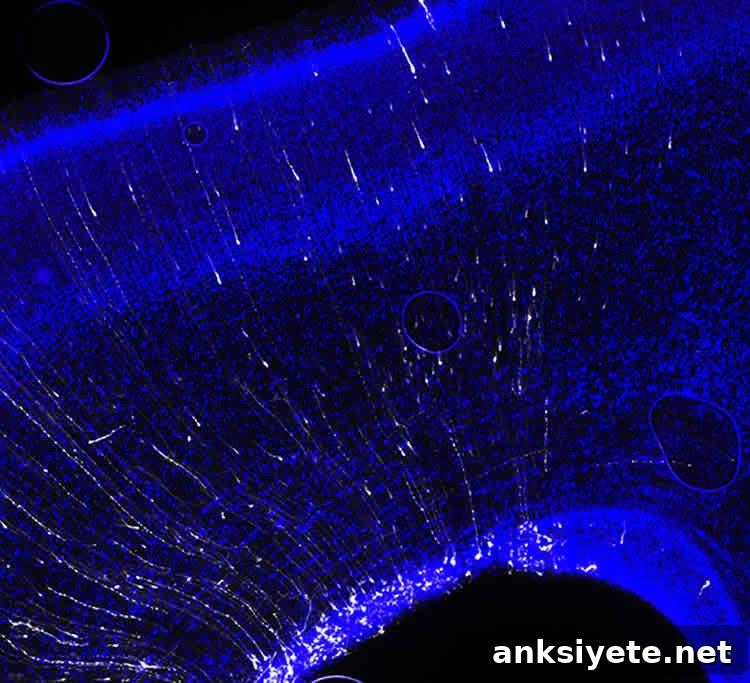
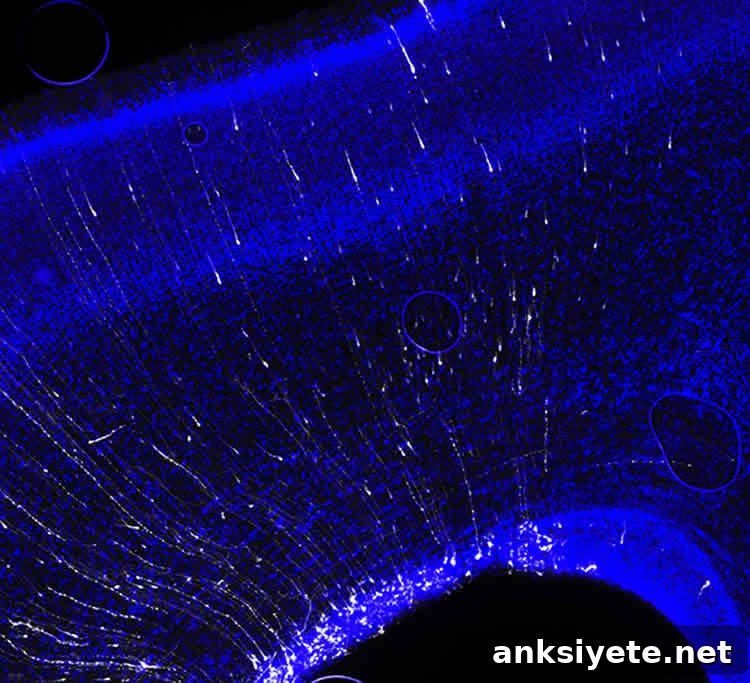
Image credit: Peter Wang and Matthew Johnson
Original research: “Somatic mutation in single human neurons tracks developmental and transcriptional history” by Michael A. Lodato et al., published in Science.
Abstract
Somatic mutation in single human neurons tracks developmental and transcriptional history
Neurons remain postmitotic for decades, making their genomes vulnerable to DNA damage over a lifetime. This study surveys somatic single-nucleotide variants (SNVs) in the human brain by single-cell sequencing of 36 neurons from the cerebral cortex of three individuals without known brain disease. The researchers identified thousands of somatic SNVs. Unlike many germline and cancer SNVs that reflect errors in DNA replication, neuronal mutations often reflect damage associated with active transcription. These somatic variants create nested lineage patterns that can be dated relative to developmental milestones and reveal a polyclonal organization of the cerebral cortex. In sum, somatic mutations in neurons provide a durable record of cellular history from development through postmitotic activity.