
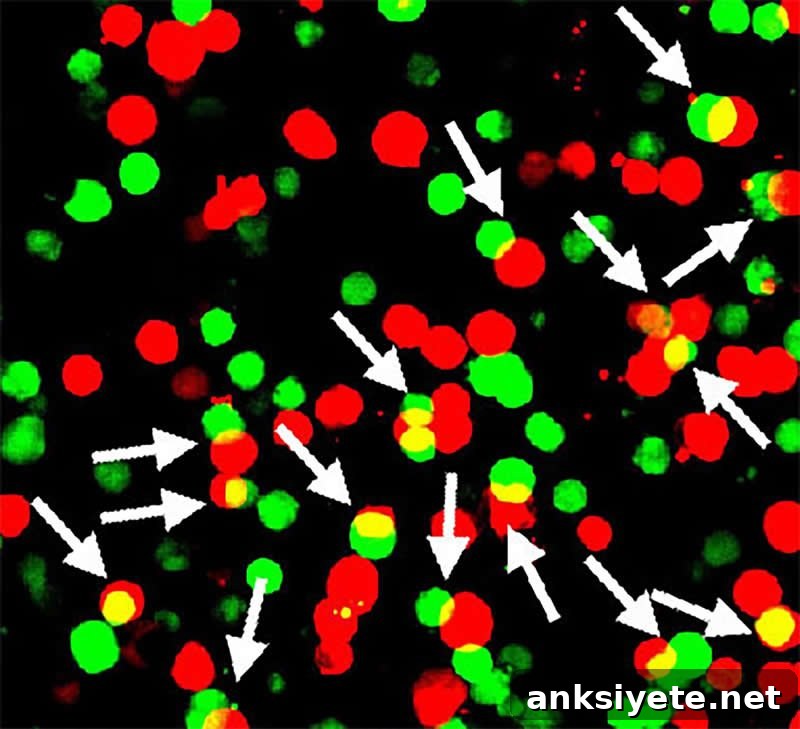
Summary: A new study challenges existing ideas about how benzodiazepines, such as Valium (diazepam), calm nervous activity. Researchers at the National Institutes of Health report that an auxiliary, “sticky” protein encoded by the gene Shisa7 plays a key role in regulating inhibitory neural circuits and in shaping the sedative effects of benzodiazepines on those circuits.
Source: NIH/NINDS
Between 1999 and 2017 the United States saw a tenfold increase in deaths related to overdoses of Valium and other benzodiazepines. These drugs are widely prescribed to treat anxiety, muscle spasms and sleep disorders. For decades, scientists believed benzodiazepines acted directly on GABAA receptors alone to enhance inhibitory signaling. In a publication in Science, researchers from the National Institutes of Health report evidence that this model is incomplete: the effects of benzodiazepines can depend on whether an auxiliary protein, Shisa7, is associated with GABAA receptors.
Wei Lu, Ph.D., a Stadtman Investigator at the NIH’s National Institute of Neurological Disorders and Stroke (NINDS) and senior author of the study, explained, “We found that Shisa7 plays a critical role in the regulation of inhibitory neural circuits and in the sedative effects some benzodiazepines produce on circuit activity. These findings could inform the development of more effective treatments for neurological and neuropsychiatric disorders that involve dysregulated inhibition.”
Dr. Lu’s laboratory focuses on genes and molecules that govern synapses, the communication points between neurons. In this work, his team collaborated with Chris J. McBain, Ph.D., senior investigator at the Eunice Kennedy Shriver National Institute of Child Health and Human Development (NICHD), to examine inhibitory synapses that use GABA (gamma-aminobutyric acid) as their neurotransmitter. At these synapses, presynaptic neurons release GABA which is detected by postsynaptic GABAA receptors to reduce excitability in downstream neurons.
Previously, benzodiazepines were thought to act directly and sufficiently on GABAA receptors to increase inhibitory signaling. The NIH team found instead that the presence of Shisa7 bound to GABAA receptors can strongly influence receptor abundance, kinetics and responsiveness to benzodiazepines. Their investigation began with a question about Shisa7’s role, informed by earlier studies of Shisa family proteins.
The Shisa family was first identified in 2004 in developmental studies of frogs and named after a mythological guardian figure with a large head. Members of this family had been shown to bind and regulate glutamate receptors at excitatory synapses. Unexpectedly, prior work suggested Shisa7 did not affect certain glutamate receptors, prompting Dr. Lu’s group to test whether Shisa7 might operate in a different synaptic context.
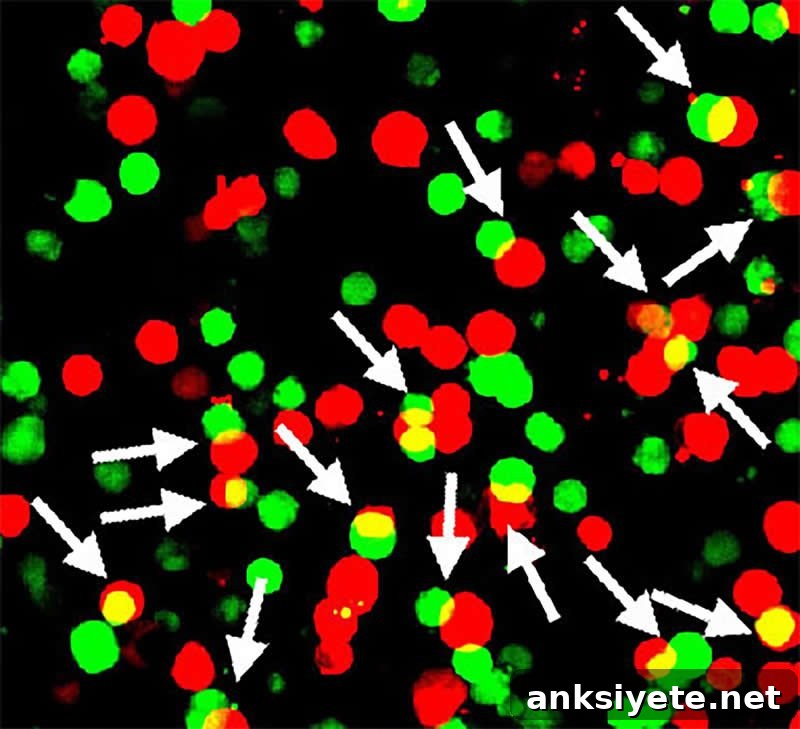
Using molecular and imaging approaches, postdoctoral fellow Wenyan Han, Ph.D., and colleagues analyzed Shisa family members in mouse neurons and discovered that Shisa7 is uniquely enriched at GABAergic inhibitory synapses. Advanced microscopy revealed Shisa7 clustered together with GABAA receptors at synaptic sites. Genetic deletion of Shisa7 in neurons reduced synaptic GABAA receptor numbers and weakened the electrical currents generated by synaptic GABA responses.
Biochemical and electrophysiological experiments indicated a direct interaction: Shisa7 binds to GABAA receptors, accelerates receptor deactivation after GABA exposure, and markedly amplifies the receptor’s response to diazepam. In recorded currents, the presence of Shisa7 nearly doubled diazepam’s enhancement of GABAA receptor activity, implying Shisa7 increases benzodiazepine sensitivity.
“These results suggest that Shisa7 directly shapes inhibitory synaptic responses under a variety of conditions, including the presence of benzodiazepines,” said Dr. McBain.
Behavioral experiments in mice further supported Shisa7’s role in benzodiazepine action. In an elevated maze test designed to measure anxiety-like behavior, wild-type mice became less anxious after diazepam and spent more time exploring open arms of the maze. Mice lacking Shisa7 did not show this diazepam-induced reduction in anxiety: their behavior was unchanged by the drug. Similarly, high doses of diazepam induced sleep and impaired motor coordination in wild-type animals, whereas mice without Shisa7 were far less susceptible to diazepam-induced sedation and stumbling.
Dr. Lu emphasized the potential clinical significance: many neurological drugs target synaptic receptors, but auxiliary subunits like Shisa7 also modulate receptor trafficking, function and pharmacology. Considering auxiliary proteins may open new avenues for designing medications that more precisely target GABAA receptor signaling.
The research team plans to explore in greater detail how Shisa7 influences inhibitory circuitry and its potential roles in neurological disorders where inhibitory signaling is disrupted.
Funding: This research was supported by the intramural programs of NINDS, NICHD, NIDCD, and the National Heart, Lung, and Blood Institute, and by grants from the Australian National Health and Medical Research Council (1058542, 1120947).
Source: NIH/NINDS
Media contact: Christopher G. Thomas – NIH/NINDS
Image credit: Lu lab, NIH/NINDS.
Original research (citation): Han et al., “Shisa7 is a GABAA receptor auxiliary subunit controlling benzodiazepine actions,” Science, 2019. DOI: 10.1126/science.aax5719.
Abstract (summary): Shisa7, a single-pass transmembrane protein, localizes to GABAergic inhibitory synapses and interacts with GABAA receptors. Shisa7 regulates receptor abundance at synapses, accelerates channel deactivation, and strongly enhances diazepam’s action on GABAA receptors. Genetic deletion of Shisa7 selectively impairs GABAergic transmission and reduces diazepam effects in mice. These findings identify Shisa7 as a regulator of GABAA receptor trafficking, function and pharmacology, revealing a previously unrecognized molecular factor that modulates benzodiazepine action in the brain.