
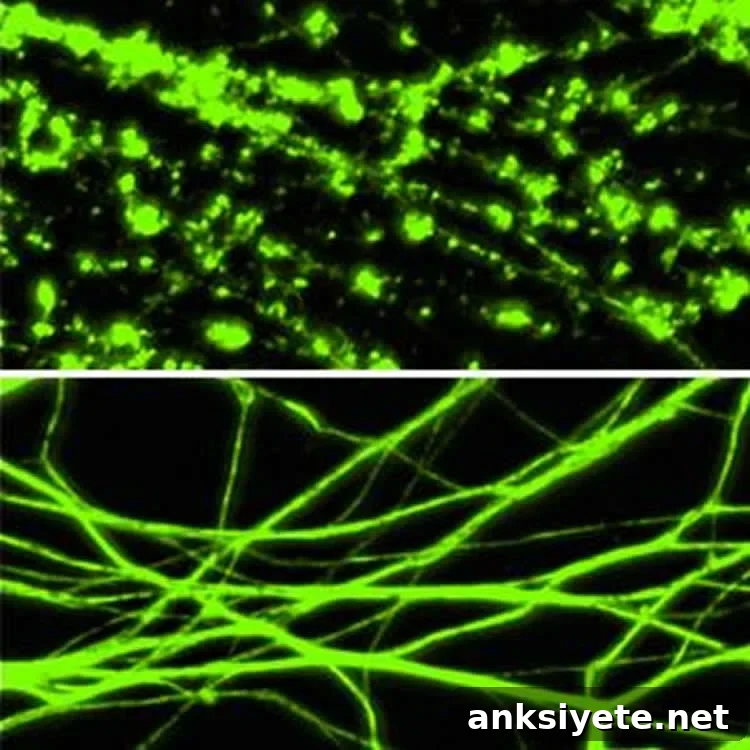
New research reveals how nerves — whether damaged by disease or traumatic injury — begin to die, uncovering targets for drugs that could slow or stop peripheral neuropathies and major neurodegenerative diseases such as Alzheimer’s, Parkinson’s and amyotrophic lateral sclerosis (ALS).
Peripheral neuropathy damages nerves in the hands, feet and other extremities, producing persistent pain, burning, stinging, itching and heightened sensitivity to touch. The condition commonly occurs with diabetes and can also be a side effect of chemotherapy.
The study, conducted by researchers at Washington University School of Medicine in St. Louis and published online April 23 in the journal Science, describes a biochemical pathway that triggers axon degeneration and points to new therapeutic approaches aimed at preserving nerve function.
Nerve cells communicate via long extensions called axons, which act like cables to transmit electrical and chemical signals. Those signals are essential for thinking and memory, movement, sensation and language. When axons degenerate, nerve signaling breaks down, which is a hallmark and often an initiating event in many neurological disorders and in traumatic nerve injuries.
The researchers focused on SARM1, a protein already implicated in axon degeneration. Working across model systems — cultured neurons, fruit flies and mice — the team showed that SARM1 functions as a molecular switch that, when activated, rapidly destroys the axon’s energy supply and triggers self-destruction of the axon.
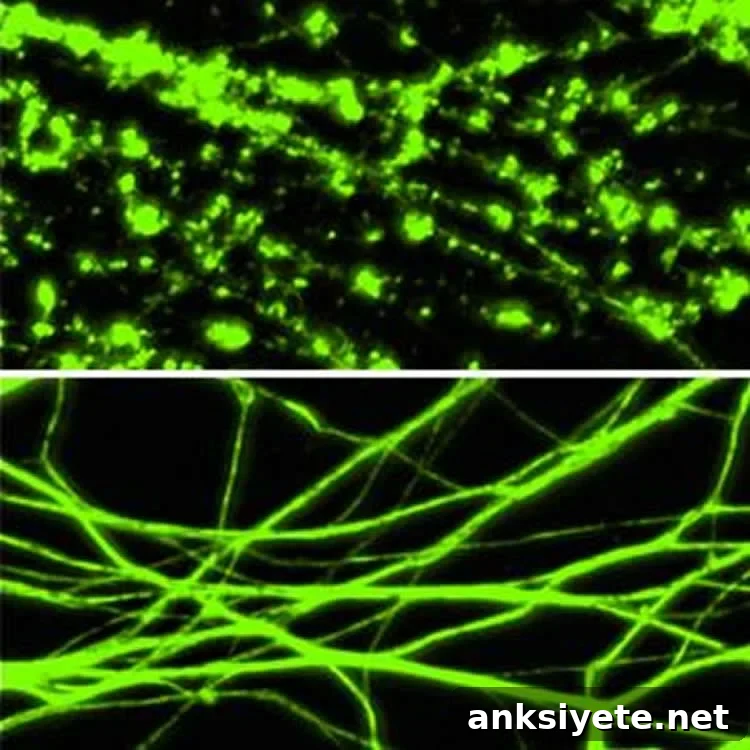
The team demonstrated that within minutes of SARM1 activation, there is a massive decline in nicotinamide adenine dinucleotide (NAD), a molecule central to cellular energy production. Loss of NAD causes an energetic collapse in the axon, leading to rapid degeneration.
“When a nerve is diseased or injured, SARM1 becomes more active, initiating a series of events that quickly causes an energetic catastrophe within the axon, and the axon undergoes self-destruction,” said Josiah Gerdts, MD/PhD student and first author on the paper.
Importantly for potential treatments, the researchers showed that supplementing neurons with a precursor to NAD — nicotinamide riboside — could prevent axon degeneration and neuronal cell death in cells where SARM1 had been activated. Treated neurons maintained NAD levels and remained energized, demonstrating that boosting NAD synthesis can counteract SARM1-triggered destruction.
Nicotinamide riboside has appeared in prior animal studies that link it to improved cellular health and longevity, though benefits in humans remain unproven and require further clinical investigation. The authors emphasize that much more research is necessary to determine whether NAD-boosting compounds or drugs that directly block SARM1 could be effective and safe therapies for patients.
“We have uncovered new details that let us piece together a major pathway involved in axon degeneration,” said senior author Jeffrey Milbrandt, MD, PhD, head of the Department of Genetics. “This is an important step forward and helps to identify new therapeutic targets. That we were able to block axon degeneration in the lab also gives us hope that drugs could be developed to treat patients suffering from a variety of neurological conditions.”
About the findings and therapeutic potential
Axon degeneration disrupts communication between neurons and contributes to functional decline in many diseases. By identifying SARM1 as a trigger that locally destroys NAD within axons, this research provides a clear mechanistic link between injury or disease signals and energetic collapse. The work points to two complementary strategies for protecting nerves: enhancing NAD synthesis in vulnerable neurons and developing inhibitors that prevent SARM1 activation or its destructive activity.
These strategies could have broad implications across peripheral neuropathies and central nervous system disorders where axon loss is an early or driving event. Blocking axon degeneration could preserve nerve signaling and slow progression of symptoms, reducing pain and disability in affected patients.
Research support and source
Funding: Supported by the National Institutes of Health (NIH) grants RO1DA020812, RO1AG013730, RO1NS065053, RO1NS087632, RO1NS078007 and F31NS074517, and by a grant from Vertex Pharmaceuticals.
Source: Washington University School of Medicine in St. Louis. Image credit: Milbrandt lab.
Abstract
SARM1 activation triggers axon degeneration locally via NAD+ destruction
Axon degeneration is an intrinsic self-destruction program underlying axon loss during injury and disease. SARM1 is an essential mediator of this process. The study reports that SARM1 initiates a local program involving rapid NAD+ breakdown after injury. Engineered SARM1 experiments demonstrated that SARM1 activity is required after axon injury to induce degeneration, and that dimerization of SARM1’s TIR domain alone is sufficient to trigger local axon destruction. SARM1-induced NAD+ loss can be counteracted by increased NAD+ synthesis, helping to explain potent axon protection in certain mutant models.
“SARM1 activation triggers axon degeneration locally via NAD+ destruction” by Josiah Gerdts, E.J. Brace, Yo Sasaki, Aaron DiAntonio, and Jeffrey Milbrandt, Science, published online April 23, 2015.