
Scientists at the Walter and Eliza Hall Institute have, for the first time, visualized the molecular changes in a critical cell‑death protein that trigger cells to die.
This discovery offers new, high‑resolution insight into how programmed cell death, or apoptosis, is initiated at the molecular level and suggests routes for developing medicines that can either prevent inappropriate loss of cells or promote the death of diseased cells.
Apoptosis is an essential biological process that controls cell numbers, sculpts developing tissues and removes damaged or potentially dangerous cells. When this process is disrupted, it can contribute to a range of diseases. Insufficient apoptosis can allow damaged or mutated cells to survive and proliferate, a central feature of many cancers, while excessive apoptosis—particularly of neurons—has been implicated in neurodegenerative disorders.
Researchers led by Dr Peter Czabotar and Professor Peter Colman in the Structural Biology division of the Walter and Eliza Hall Institute, together with Dr Dana Westphal from the institute’s Molecular Genetics of Cancer division, have produced detailed structural images that reveal how the protein Bax undergoes conformational changes that lead to apoptosis. The results were published in the journal Cell.
Dr Czabotar explained that while the importance of Bax activation in apoptosis had been recognized for some time, the precise molecular steps that convert Bax from an inactive to an active, membrane‑disrupting state were not clear. “A key moment in apoptosis is the formation of pores in the mitochondrial membrane,” he said. “Once the mitochondrial membrane is breached, the cell loses its ability to maintain energy production and commits to death. Bax is a primary executor of that membrane rupture, and seeing how Bax switches on is a major advance for understanding the mechanics of cell death.”
To capture these structural transitions, the team used powerful X‑ray beams at the Australian Synchrotron to determine three‑dimensional structures of Bax in distinct conformational states. The data show how small protein fragments, known as BH3 peptides, bind to Bax and induce a dramatic opening of the molecule. This opening resembles a key turning a lock: it converts Bax from a dormant shape into an active form that can interact with additional Bax molecules.
Once activated, Bax molecules can associate, forming oligomeric complexes that insert into the mitochondrial membrane and create pores. The resulting loss of mitochondrial integrity releases factors that irreversibly drive the cell into apoptosis. The structural snapshots captured by the WEHI team illustrate both the initial BH3‑mediated unlocking and the subsequent Bax‑to‑Bax interactions that nucleate oligomer formation.
These findings have clear translational relevance. By revealing the structural details of Bax activation, the work points to strategies for designing drug‑like agents that either block or mimic this process. In conditions where excessive apoptosis contributes to disease—such as certain neurodegenerative disorders—drugs that stabilize Bax in its inactive conformation or prevent BH3 peptides from triggering activation could help protect vulnerable cells. Conversely, in cancers where cells evade death, compounds that promote Bax activation and oligomerization could force resistant cells to undergo apoptosis, offering a potential new approach to cancer therapy.
Dr Czabotar noted the dual potential: “Now that we can see how Bax changes shape as it becomes active, it may be possible to design molecules that either prevent that change and protect cells, or induce the change to eliminate harmful, immortal cells.” The structural information provides a molecular blueprint to guide the rational design of such agents.
Research support and acknowledgements
This research was supported by multiple funding bodies, including the National Health and Medical Research Council, the Australian Research Council, the Australian Cancer Research Foundation, Cancer Council Victoria, the German Research Foundation, the Leukemia and Lymphoma Society (US) and the Victorian Government. The work drew on expertise in structural biology and molecular genetics and benefited from access to synchrotron facilities.
Contact: Vanessa Solomon – Walter and Eliza Hall Institute
Source: Walter and Eliza Hall Institute press release
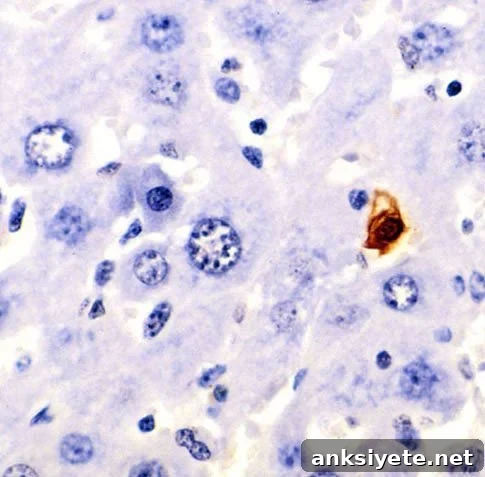
Image Source: The apoptosis image is credited to Laboratory of Experimental Pathology, Division of Intramural Research, NIEHS (NIH). The image is in the public domain.
Original Research: Czabotar PE, Westphal D, Dewson G, Ma S, Hockings C, Fairlie WD, Lee EF, Yao S, Robin AY, Smith BJ, Huang DCS, Kluck RM, Adams JM, Colman PM. “Bax crystal structures reveal how BH3 domains activate Bax and nucleate its oligomerization to induce apoptosis.” Cell. Published online January 31, 2013. DOI: 10.1016/j.cell.2012.12.031